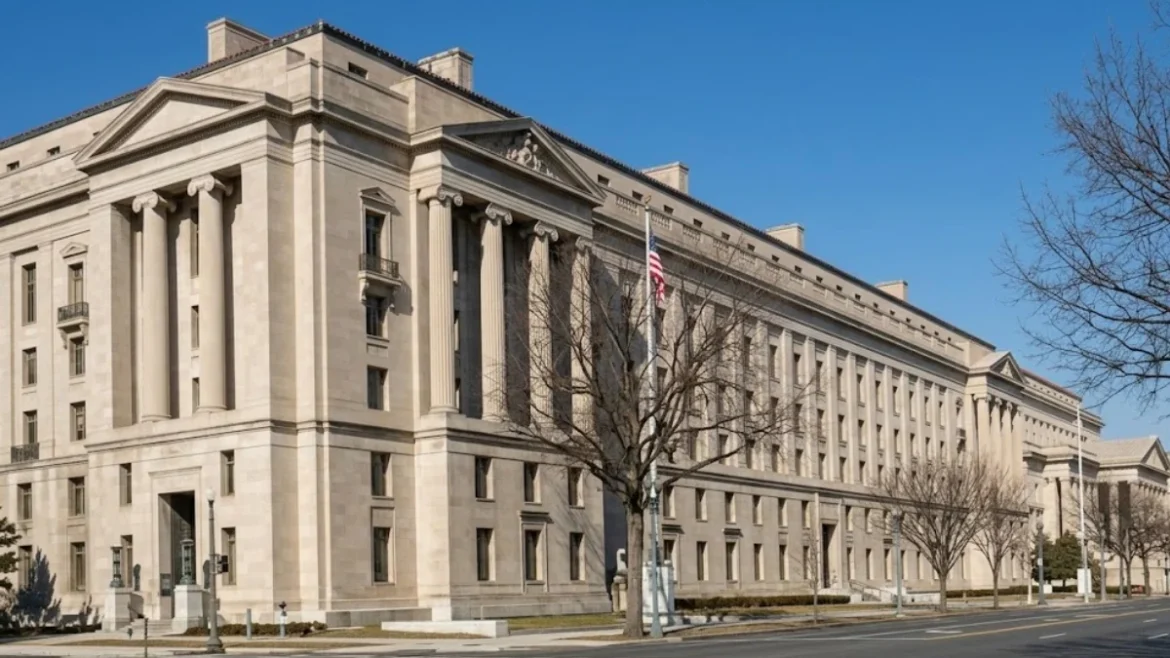
The United States Department of Justice, acting on behalf of the Environmental Protection Agency and in coordination with the Arkansas Department of Energy and Environment’s Division of Environmental Quality, has officially lodged a proposed settlement with Domtar A.W. LLC. This settlement aims to resolve a series of alleged violations of the federal Clean Air Act and the Arkansas Water and Air Pollution Control Act at the company’s massive kraft pulp and paper mill located in Ashdown, Arkansas. The agreement, filed as a proposed consent decree in the U.S. District Court for the Western District of Arkansas, marks a significant enforcement action against one of the largest industrial operations in the region. Under the terms of the settlement, Domtar will pay a substantial civil penalty and commit to millions of dollars in infrastructure upgrades and environmental mitigation projects designed to curb hazardous emissions and modernize its monitoring protocols.
The Ashdown Mill, operated by Domtar A.W. LLC—a subsidiary of the Delaware-registered Domtar Corporation—is a cornerstone of the global pulp and paper industry. Described by the company as one of the largest fluff pulp production facilities in the world, the mill is a vital link in the supply chain for various consumer goods, including absorbent hygiene products, communication papers, and packaging materials. However, the scale of such operations brings significant environmental responsibilities. The recent legal action underscores the federal and state government’s insistence that even the largest industrial players must adhere strictly to environmental safeguards designed to protect surrounding communities and the atmosphere.
Detailed Breakdown of the Settlement and Penalties
The proposed consent decree outlines a comprehensive financial and operational roadmap for Domtar to rectify its past failures and ensure future compliance. At the forefront of the settlement is a $1.5 million civil penalty. This fine is to be split evenly between the federal government and the state of Arkansas, reflecting the collaborative nature of the investigation and the dual jurisdiction of the violated environmental laws. Beyond the immediate financial penalty, the settlement mandates a series of "injunctive relief" measures. These are court-ordered actions that Domtar must take to bring its facility into compliance with the law.
The estimated cost for Domtar to implement these required projects and upgrades is at least $2.6 million. When combined with the civil penalty, the total financial impact on the company exceeds $4.1 million. The required projects are multifaceted, focusing on both hardware upgrades and procedural overhauls. Key among these is the installation of advanced pollution control technology on the facility’s brown stock washer system. Additionally, the company must update its leak detection and repair (LDAR) procedures, increase the frequency of its monitoring activities, and conduct rigorous performance testing on its industrial boilers to ensure they meet federal emission standards.
The Nature of the Violations: Brown Stock Washers and Hazardous Emissions
Central to the government’s complaint was Domtar’s failure to adequately capture and control air emissions from its brown stock washer. In the kraft pulping process, a brown stock washer is a critical piece of equipment used to separate and wash waste liquid, often referred to as "black liquor," from the pulp fibers. This process is inherently volatile and, if not properly managed, can release high concentrations of hazardous air pollutants (HAPs).
The Clean Air Act’s New Source Performance Standards (NSPS) and the National Emissions Standards for Hazardous Air Pollutants (NESHAP) require specific controls to be in place for such equipment. The Justice Department alleged that Domtar failed to install these required controls, leading to the uncontrolled release of gases. One of the primary concerns highlighted in the complaint is the emission of hydrogen sulfide (H2S). Known for its distinct and unpleasant "rotten egg" odor, hydrogen sulfide is more than just a nuisance; it is a highly toxic gas that can cause respiratory issues, headaches, and, at high concentrations, more severe neurological effects or even death.
The complaint further detailed a systemic failure in the mill’s monitoring and inspection routines. In one particularly egregious instance cited by the DOJ, the facility allegedly failed to conduct required inspections for a period of 53 consecutive days. During this lapse, a leaking valve went undetected, allowing illegal and uncontrolled amounts of pollutants to escape into the atmosphere. This lack of oversight meant that for nearly two months, the facility was operating in direct violation of its permits without any internal mechanism identifying or stopping the environmental damage.
Identification of Hazardous Air Pollutants and Environmental Impact
The environmental impact of the violations at the Ashdown Mill extends beyond hydrogen sulfide. The Justice Department noted that without proper performance testing on the mill’s boilers and adequate monitoring of the washing systems, the true extent of the hazardous air pollutants released into the Arkansas skies remains unknown. However, the types of pollutants typically associated with these violations are well-documented and pose significant risks to both human health and the environment.
The pollutants identified in the case include:

- Volatile Organic Compounds (VOCs): These are precursors to ground-level ozone (smog), which can trigger asthma attacks and contribute to permanent lung damage.
- Methanol: A primary HAP in the pulp and paper industry, methanol is a toxic alcohol that can affect the central nervous system.
- Carbon Monoxide (CO): A colorless, odorless gas that interferes with the blood’s ability to carry oxygen.
- Chlorinated Compounds: This includes chlorine dioxide and hydrochloric acid, both of which are highly corrosive and irritating to the eyes, skin, and respiratory tract.
By failing to maintain its pollution controls and skipping mandatory testing, Domtar effectively bypassed the regulatory "safety net" intended to keep these chemicals at safe levels. The settlement aims to close these gaps by requiring a third-party auditor to review and revise the facility’s leak detection and repair plan, ensuring that future operations are transparent and verifiable by regulators.
Mitigation Projects and Future Safeguards
To address the harm caused by past excess emissions, the consent decree requires Domtar to undertake two specific environmental mitigation projects. These projects go beyond simple compliance and are intended to provide a net benefit to the environment to offset the period of non-compliance.
First, Domtar will install specialized capping valves on certain parts of its system. these valves are designed to provide an extra layer of security against leaks of VOCs and HAPs, providing a mechanical failsafe where previous procedures failed. Second, the company is tasked with updating its biological wastewater treatment system. While wastewater treatment is often thought of in terms of water quality, these systems can also be significant sources of air emissions as volatile chemicals "strip" out of the water and into the air. The upgrades will focus on capturing these HAPs and VOCs within the treatment process before they can be released into the environment.
Official Responses and Regulatory Context
The settlement has drawn praise from both federal and state officials who emphasized the importance of corporate accountability in environmental stewardship. Adam Gustafson, Principal Deputy Assistant Attorney General of the Justice Department’s Environment and Natural Resources Division (ENRD), stated that the settlement demonstrates the department’s unwavering commitment to protecting public health. He noted that by committing to these controls and monitoring practices, Domtar is finally moving in the right direction to resolve its long-standing violations.
Administrator Scott Mason of EPA Region 6 echoed these sentiments, highlighting the collaborative effort required to bring the case to a resolution. "This settlement ensures that Domtar will take the necessary precautions to maintain and control its facility’s pollution controls among other corrective actions," Mason said. He also extended gratitude to the Arkansas Department of Energy and Environment for their coordination, noting that Domtar’s eventual cooperation was a key factor in reaching the settlement without further protracted litigation.
The case was handled by attorneys within the ENRD’s Environmental Enforcement Section, following an intensive investigation by the EPA and the Arkansas Division of Environmental Quality. This partnership reflects a broader trend of "cooperative federalism," where state and federal agencies pool resources to tackle large-scale industrial pollution that crosses local boundaries.
Broader Implications for the Pulp and Paper Industry
The enforcement action against Domtar serves as a stern warning to the broader pulp and paper industry. As one of the most energy-intensive and chemically complex manufacturing sectors, the industry is under increasing scrutiny to reduce its carbon footprint and toxic output. The Ashdown Mill case highlights that regulators are focusing not just on the existence of pollution controls, but on the rigorous maintenance and monitoring of those controls.
For many industrial facilities, "equipment on the ground" is only half the battle; the "paperwork and procedure" side—including LDAR programs and performance testing—is equally critical in the eyes of the law. The requirement for a third-party auditor in this settlement suggests that the EPA is increasingly skeptical of self-monitoring at large-scale facilities and may continue to demand independent oversight as a standard component of future settlements.
Next Steps and Public Participation
While the settlement has been lodged with the court, it is not yet final. Following standard legal procedure for environmental consent decrees, the agreement is now subject to a 30-day public comment period. This allows members of the community, environmental advocacy groups, and other stakeholders to review the terms of the settlement and provide feedback to the Department of Justice.
The complaint and the proposed consent decree are available for public viewing on the Department of Justice website. After the comment period expires, the DOJ will review the submissions and, barring any major unforeseen issues, will ask the court to officially enter the decree as a final judgment. For the residents of Ashdown and the surrounding Little River County, the settlement represents a promise of cleaner air and a more transparent relationship with one of the region’s largest employers. For Domtar, it marks the beginning of a multi-year process to modernize its environmental infrastructure and regain its standing as a compliant corporate citizen.