
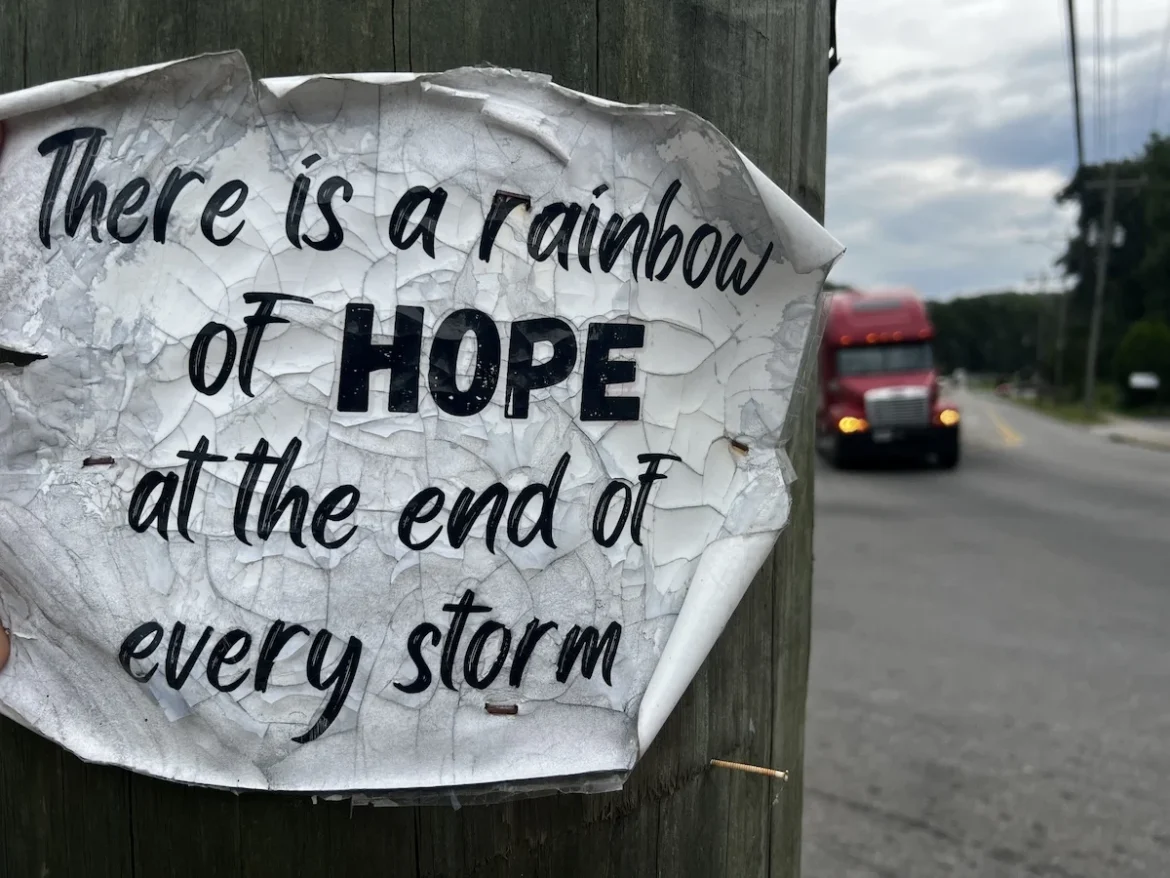
The landscape of sustainable finance is undergoing a profound structural evolution, shifting away from passive environmental, social, and governance (ESG) labeling toward active, place-based, and systemic capital allocation. Across the United States and global markets, institutional investors, community development financial institutions (CDFIs), and mission-driven asset managers are redesigning how capital flows into overlooked regions, underserved populations, and sustainable industries. From rural Appalachian towns rebuilding after climate shocks to innovative venture funds tackling regenerative agriculture and disability-focused technologies, the impact investing sector is increasingly prioritizing direct community resilience and structural economic equity.
Building Economic Resilience from the Ground Up: The Case of Old Fort, North Carolina
Place-based economic development has long been recognized as a powerful tool for localized regeneration, yet its true efficacy is often tested only during acute crises. In the small mountain town of Old Fort, North Carolina, a deliberate strategy centered around outdoor recreation has demonstrated how community investments in economic resilience can pay dividends when disaster strikes.
Historically dependent on manufacturing industries that gradually left the region, Old Fort faced significant economic stagnation. To reverse this decline, local stakeholders—spearheaded by community drivers such as Jason McDougald of the local youth summer camp Camp Grier—pivoted toward the town’s natural assets. By developing an expansive, growing network of hiking and mountain biking trails within the adjacent Pisgah National Forest, Old Fort positioned itself as an emerging hub for outdoor recreation and ecotourism.
The economic response was immediate and localized. As soon as the initial six miles of trails were opened to the public, local entrepreneurs responded by opening half a dozen new storefronts in the historic downtown area. By late 2026, the trail network had expanded to 21 miles, catalyzing the opening of at least 24 new businesses since 2022. This intentional integration of ecological stewardship and commercial revitalization highlights the core thesis of place-based financial ecosystems: when local communities control and direct the development of their own assets, the resulting economic infrastructure is inherently more robust.
This revitalization model serves as the focal point of Power in Place, a documentary series highlighting grassroots financial ecosystems across diverse American geographies, including Philadelphia, Chicago, Minneapolis, and New Jersey. Analysts note that these localized models provide critical insights for regional planners seeking to insulate working-class towns from macroeconomic volatility and climate-induced disruptions.
Unlocking Trillions: Cash as an Active Tool for Community Wealth Building
While venture capital and private equity often dominate headlines in sustainable finance, a massive pool of capital remains largely underutilized: corporate and individual cash holdings. In the United States alone, more than $18 trillion sits idle in traditional bank accounts, viewed primarily as a passive asset reserved for daily operations, short-term liquidity, or emergency reserves.
A growing movement within the impact investing community is seeking to transform this paradigm. Financial technology platforms and specialized networks are working to reclassify cash as an active catalyst for community development. By routing commercial and retail deposits away from monolithic financial institutions and into a decentralized network of over 1,000 mission-driven financial institutions—including community development financial institutions (CDFIs), minority depository institutions (MDIs), community banks, and low-income-designated credit unions—depositors can generate significant social dividends without sacrificing liquidity or security.
These localized financial intermediaries deploy deposited capital directly into the communities they serve, providing affordable mortgages for low-income families, working capital for small businesses, financing for local agricultural operations, and funding for municipal infrastructure projects. Financial analysts point out that redirecting even a fraction of the $18 trillion in stagnant cash deposits into mission-aligned institutions could unlock tens of billions of dollars in new lending capacity for historically marginalized and capital-starved communities across the country.
Financing the Future of Regenerative Agriculture and Inclusive Technologies
In the realm of dealflow, institutional impact investors are increasingly targeting asset classes that conventional venture capital and private equity markets routinely overlook. A prominent example is the recent $2.5 million investment made by Boston-based nonprofit impact investor Social Finance into the Fractal Agriculture Regenerative Management (FARM) Fund, managed by Fractal Agriculture.
The FARM Fund operates on an innovative equity-investment model designed to support US-based row-crop farmers. Unlike traditional debt-heavy agricultural financing models that can trap farmers in cycles of high interest and operational vulnerability, the FARM Fund acquires equity stakes in farms while granting operators the right to buy back those shares over time. Crucially, the fund incentivizes sustainable land management by offering direct financial discounts for every regenerative agricultural practice implemented, such as cover cropping, no-till farming, and advanced soil health management.
This investment was executed through Social Finance’s Impact First Fund, a vehicle established in 2023 to channel capital into high-impact enterprises and first-time fund managers operating in neglected markets. Alongside the FARM Fund commitment, Social Finance also allocated capital to Enable Ventures, a specialized technology venture capital fund that has successfully raised over $50 million to invest in disability-focused tech solutions and bridge the wealth gap for disabled entrepreneurs.
According to statements released by Social Finance, both investments share common strategic attributes: they target first-time managers, support populations historically overlooked by mainstream financial systems, and deploy scalable market solutions that would otherwise fail to secure traditional financing. Industry experts view these transactions as a bellwether for the maturation of impact-first investing, proving that concessionary and catalytic capital can effectively bridge the "missing middle" for innovative entrepreneurs.
Redefining Corporate Exits: Steward Market and the Evolution of Ethical M&A
As mission-driven businesses, Certified B Corporations, and social enterprises mature, a critical structural challenge has emerged: how to execute ownership transitions and mergers and acquisitions (M&A) without compromising the foundational values of the enterprise. Historically, the corporate M&A playbook—exemplified by massive retail brand rollups—has prioritized rapid consolidation, financial efficiency, and scale, often at the expense of corporate culture, employee stability, and social mission.
To address this systemic vulnerability, industry veterans are building alternative market infrastructure. Hannah Sandmeyer, a former corporate acquisitions strategist for the retail brand rollup firm Thrasio, launched Steward Market, a subscription-based marketplace designed specifically to connect sellers of mission-driven enterprises with values-aligned buyers.
The launch of Steward Market highlights a growing realization within the sustainable business community: while the B Corp movement and social enterprise models have successfully demonstrated commercial viability, they have historically lacked robust mechanisms to survive ownership changes. When founders retire, seek liquidity, or face external pressures, traditional acquisition channels frequently dismantle the very social missions the companies were founded to advance.
Steward Market seeks to correct this market failure by sorting business listings according to specific ethical certifications, environmental practices, and governance structures. Furthermore, the platform allows prospective buyers
to explicitly signal their long-term ownership intentions—ranging from transitions to employee stock ownership plans (ESOPs) to commitments to keeping existing management teams intact. Industry advocates emphasize that establishing ethical exit pathways is essential for maintaining investor confidence in the long-term viability of the stakeholder capitalism model.
Leadership Transitions and Talent Movements Across the Impact Sector
As the impact investing sector scales, institutional leadership transitions continue to shape strategic priorities across major philanthropic platforms and global development finance institutions.
In the philanthropic and impact investment space, Builders Vision officially named Matt Knott as its permanent chief executive officer. Knott had previously served as the interim head of the $20 billion investment and philanthropy platform for a year, guiding its portfolio strategy across sustainable food systems, ocean health, and resilient communities.
Concurrently, boardrooms and executive suites across global sustainable finance are seeing notable appointments. Village Capital added George Sandilands to its board of directors, while Finnfund promoted Kristian Stenbacka to the position of investment associate. In Europe, the Center for Sustainable Finance and Private Wealth expanded its global board by appointing Günther Dobrauz-Saldapenna, managing partner of Henley & Partners.
Within development finance and conservation, the British International Investment (BII) elevated Kate Perkins to the role of debt investment director, bolstering its capacity to finance infrastructure and enterprise growth in emerging markets. The Nature Conservancy announced the appointment of Simon Plested as its global talent lead to oversee organizational development.
The robust pipeline of career opportunities across the sector reflects steady employment demand. Organizations such as Founders First Capital Partners, MCE Social Capital, Closed Loop Partners, and the California State Teachers’ Retirement System (CalSTRS) have actively opened recruitment pipelines for capital markets associates, underwriting specialists, operational analysts, project directors, and chief operating officers.
Broader Implications for the Future of Sustainable Finance
The convergence of place-based resilience financing, the activation of idle cash deposits, innovative impact-first fund vehicles, and ethical corporate exit marketplaces points toward a more mature, systemic phase of impact investing. No longer confined to niche portfolios or peripheral asset classes, these strategies address fundamental structural flaws in traditional financial markets.
As policymakers, institutional allocators, and community leaders grapple with compounding economic and environmental challenges, the emphasis on local agency, regenerative asset management, and mission preservation is expected to accelerate. Whether through a 21-mile trail network in North Carolina or a multi-million-dollar equity fund for regenerative farmers, the common denominator across modern impact finance is clear: capital is most effective when it is deployed to build long-term, self-sustaining community power.
