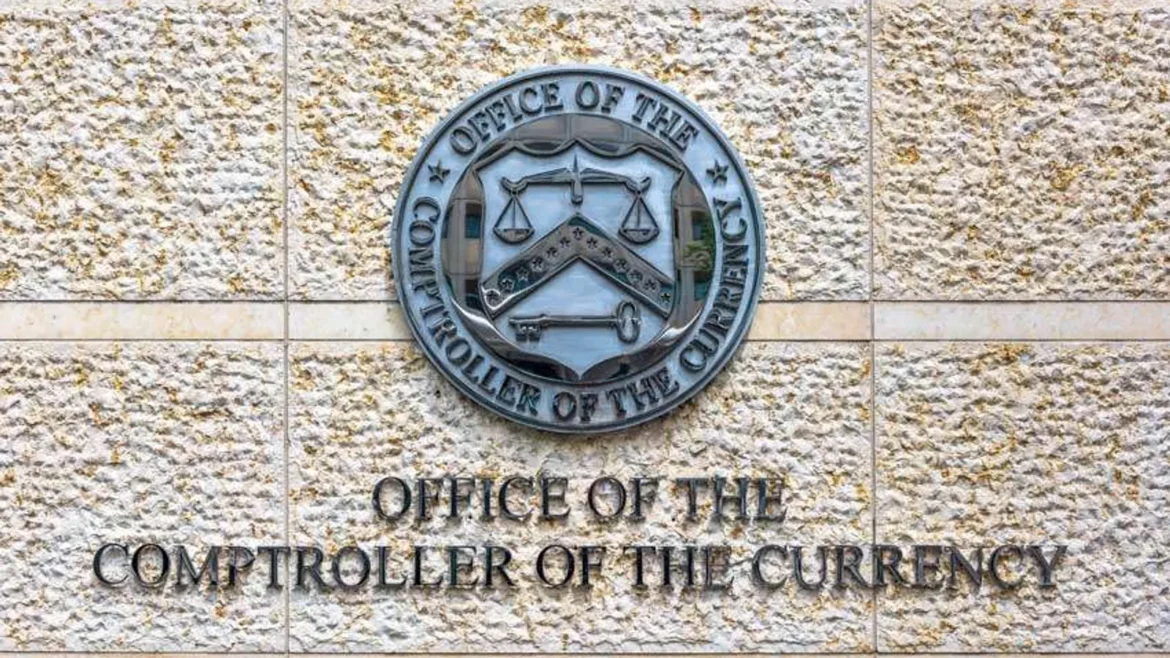
Upstart Holdings has secured conditional regulatory approval from the Office of the Comptroller of the Currency (OCC) to establish its own national bank, marking a significant milestone for the artificial intelligence-driven lending marketplace. The announcement, made on Thursday, July 24, 2026, by Upstart, signifies the culmination of an extensive application process that has been underway for approximately four-and-a-half months. This development positions Upstart to directly offer its lending products nationwide and to hold Federal Deposit Insurance Corporation (FDIC)-insured deposits, potentially reshaping its operational model and deepening its integration into the financial ecosystem.
A Rigorous Path to National Bank Charter
The journey to obtaining conditional approval from the OCC has been described by an Upstart executive as "challenging extensively throughout the process," a sentiment that underscores the thorough scrutiny involved in granting a national bank charter. This rigorous vetting is standard practice, ensuring that institutions seeking such a privilege demonstrate robust operational frameworks, sound risk management, and a clear commitment to regulatory compliance. The OCC’s decision reflects a belief that Upstart has met these stringent requirements, at least on a preliminary basis.
The application for the national bank charter was submitted in early March 2026. Since then, Upstart has navigated a multi-agency review, with ongoing applications for deposit insurance from the FDIC and for bank holding company status from the Federal Reserve. These remaining approvals are critical for Upstart Bank to fully commence operations as a deposit-taking institution.
The establishment of Upstart Bank is envisioned to be a strategic enhancement rather than a replacement for its existing business model. The company intends to continue originating loans nationwide and to accept FDIC-insured deposits. Crucially, other financial institutions will persist in purchasing loans originated by Upstart, indicating that the new bank is designed to complement and strengthen its established network of partnerships. This dual approach allows Upstart to leverage its AI technology for broader loan origination while simultaneously building its own deposit base and offering a more comprehensive suite of financial services.
Advancing the Mission of Accessible Credit
Paul Gu, co-founder and newly appointed CEO of Upstart, expressed enthusiasm for the conditional approval, stating, "Upstart Bank will allow us to lower the cost of lending and bring our full product offering to all 50 states, advancing our mission to radically reduce the cost and complexity of credit for all Americans." This objective aligns with Upstart’s foundational commitment to utilizing technology to expand access to affordable credit. By controlling its own banking charter, Upstart aims to achieve greater operational efficiency and potentially offer more competitive rates to a wider consumer base.
Gu further emphasized the ongoing collaboration with regulatory bodies. "The bank-hopeful will continue to work with the OCC, the FDIC and the Federal Reserve on the remaining steps needed to become a bank," he confirmed. This indicates that while the OCC’s conditional approval is a significant hurdle cleared, the path to full operational status requires continued engagement and successful navigation of the remaining application processes.
Leadership and Operational Philosophy
Annie Delgado, Upstart’s Chief Risk Officer, has been designated as the proposed CEO of Upstart Bank. Her perspective on the regulatory process highlights a commitment to both efficiency and stringent oversight. "It’s important for the public to understand that efficiency doesn’t diminish oversight," Delgado stated. "A well-run charter process can be both timely and rigorous. We’ve been challenged extensively throughout the process, and that’s exactly what should happen when an institution is seeking the privilege of becoming a national bank." Her remarks suggest a belief that the regulatory framework, while demanding, is designed to ensure the integrity and stability of the banking system, and that Upstart’s engagement with it has been constructive and thorough.
Upstart’s strategic decision not to open physical branches signals a continued embrace of a digital-first banking model. This approach is supported by regulatory consultant Klaros Group, which advised Upstart on its application. Michele Alt, co-founder at Klaros, characterized the conditional approval as "speedy," especially in the context of recent regulatory decisions.
A Welcoming Environment for Financial Innovators
Alt’s observation about the current regulatory climate is particularly noteworthy. She contrasted Upstart’s conditional approval with the OCC’s first charter denial since at least 2010, which was issued to the fintech company Wise. This suggests a potentially more receptive stance towards financial innovators within the current administration. "This administration is far more welcoming of financial innovators than we’ve seen for a while," Alt commented. However, she cautioned that "an open door is an invitation, not a guarantee. The application process is rigorous and examiner standards remain very high. We’re proud to have worked with Upstart and gratified that their application met with conditional approval, as that remains a very high bar." This perspective reinforces the idea that while regulatory pathways may be more accessible, the standards for approval remain exceptionally high.

A Trend Towards Fintech Banking Charters
The OCC has seen an uptick in banking charter applications under Comptroller Jonathan Gould compared to previous leadership. While many of these have been national trust charters, which offer a more limited scope of operations, Upstart is among a cohort of companies conditionally granted a full national bank charter. Other notable fintechs that have received similar conditional approvals include Nubank, Mercury, and Valt Bank. Erebor Bank stands out as having successfully obtained full approval for a national bank charter.
This trend indicates a broader shift in the financial landscape, with regulators increasingly engaging with and conditionally approving applications from technology-focused companies seeking to operate as traditional banks. For Upstart, this conditional approval is a critical step towards realizing its vision of integrating AI-powered lending with a regulated banking framework, aiming to enhance both its market reach and its capacity to serve a diverse range of consumers seeking credit. The success of Upstart Bank will be closely watched as a case study in the evolving relationship between fintech innovation and traditional banking regulation.
Supporting Data and Market Context
The fintech lending market has seen substantial growth over the past decade. In 2025, the global fintech lending market size was valued at approximately $7.5 billion and is projected to grow at a compound annual growth rate (CAGR) of 25% from 2026 to 2032, according to market research reports. This expansion is driven by increasing consumer demand for faster, more convenient, and often more accessible loan products than those offered by traditional banks. Upstart’s AI-driven platform is designed to analyze a wider array of data points, potentially leading to more accurate risk assessments and the ability to serve individuals who might not qualify for traditional bank loans.
The volume of loans originated by Upstart provides further context. In 2025, Upstart facilitated billions of dollars in loans through its platform, partnering with various financial institutions. The establishment of Upstart Bank is expected to provide greater flexibility in how these loans are funded and managed. The ability to accept FDIC-insured deposits can reduce reliance on wholesale funding markets, potentially leading to more stable and predictable funding costs. This could translate into more competitive pricing for borrowers.
The operational model of Upstart Bank, as outlined, is a hybrid approach. By continuing to partner with other financial institutions for loan purchases, Upstart mitigates the risk associated with holding all originated loans on its own balance sheet. This strategy is prudent, particularly in a fluctuating economic environment. The bank charter will enable Upstart to offer a more integrated experience for its partners and potentially develop new financial products that leverage its AI capabilities and banking infrastructure.

Implications for the Broader Financial Industry
The successful establishment of Upstart Bank could serve as a catalyst for further innovation within the banking sector. It demonstrates that a technology company can navigate the complex regulatory landscape to achieve a full national bank charter. This may encourage other fintech companies to pursue similar strategies, leading to increased competition for traditional banks and potentially driving further technological adoption across the industry.
Furthermore, the focus on reducing the cost and complexity of credit aligns with broader policy goals of increasing financial inclusion. By making credit more accessible and affordable, Upstart Bank could play a role in supporting economic growth and empowering individuals and small businesses. The OCC’s willingness to grant conditional charters to innovative firms like Upstart suggests a forward-looking approach to financial regulation, one that seeks to balance consumer protection with the promotion of technological advancement and market competition.
The ongoing dialogue between regulators and innovators is crucial for the future of financial services. Upstart’s journey underscores the importance of transparency, rigorous compliance, and a collaborative approach between industry participants and regulatory bodies. As Upstart Bank moves through its final approval stages, its performance and strategic decisions will be closely monitored by industry observers, regulators, and consumers alike, offering valuable insights into the future of AI-powered banking.