
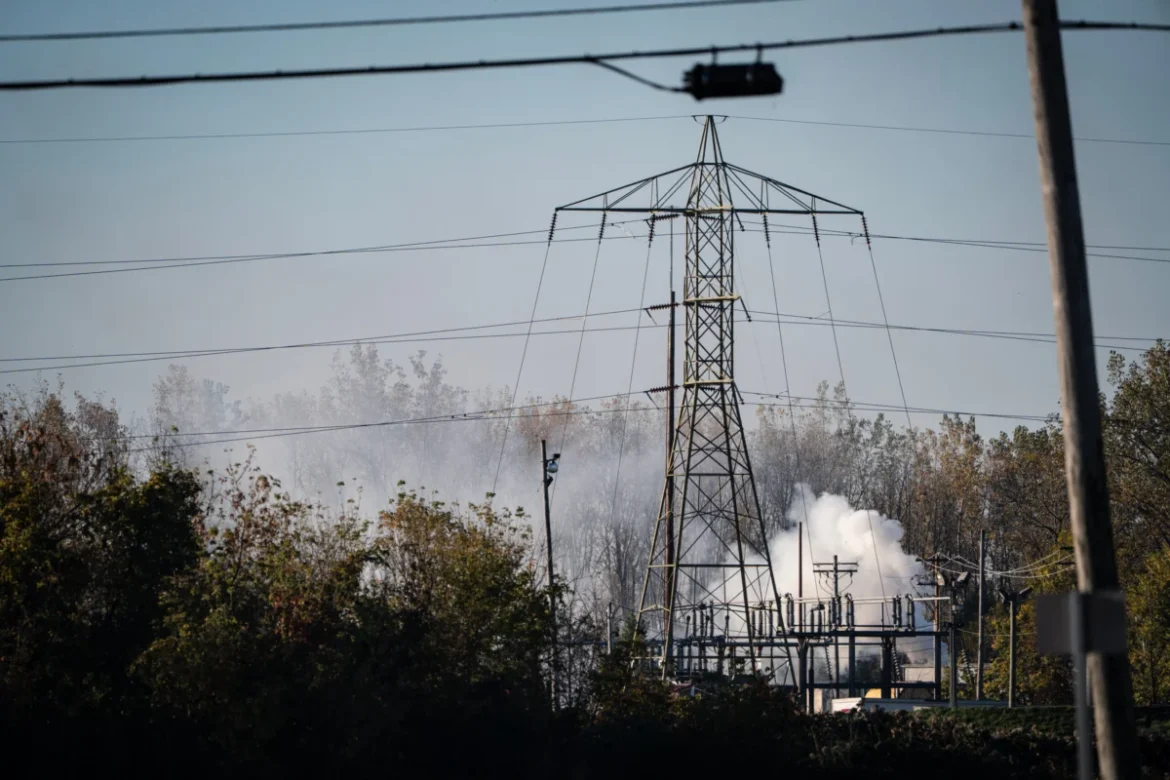
Toledo officials officially rescinded all remaining evacuation orders on Friday, signaling an end to a tense, multi-day public safety crisis triggered by a volatile chemical reaction at the MC Tank Terminal. The incident, which began late Tuesday night, forced hundreds of residents from their homes and prompted a large-scale emergency response from local fire, hazmat, and medical teams. While the immediate threat has been mitigated, the event has sparked significant scrutiny regarding industrial safety protocols and the management of hazardous materials within the metropolitan area.
The crisis, which centered on the containment of glycidyl methacrylate—a reactive industrial chemical utilized in the production of high-performance plastics, paints, and coatings—was ultimately traced back to a preventable human error. Mayor Wade Kapszukiewicz, speaking at a press conference on Friday, confirmed that an employee at the terminal inadvertently initiated a hazardous chemical reaction by introducing improper temperature levels during a routine liquid transfer process.
A Chronology of the Crisis
The sequence of events began on Tuesday night, when local emergency services were alerted to a potential rupture at the MC Tank Terminal. As the chemical reaction escalated within the tank, the potential for a catastrophic breach forced local authorities to act swiftly to protect the surrounding community.
By Wednesday morning, the scope of the potential danger had necessitated the establishment of a formal evacuation zone. Hundreds of residents in the immediate vicinity were instructed to vacate their homes as hazardous materials teams established a perimeter. Throughout the following 48 hours, Toledo Fire and Rescue worked in coordination with environmental specialists to monitor air quality and stabilize the pressure levels within the affected vessel.
The venting process—a delicate operation required to depressurize the tank without releasing dangerous concentrations of the chemical into the atmosphere—continued through Thursday. It was not until late Thursday night that officials declared the venting complete, allowing specialized hazmat teams to gain physical access to the site. Following an intensive inspection, Toledo Fire and Rescue Battalion Chief Blake Molnar confirmed the site was secure. "At this time, we do feel confident that the site is safe," Molnar stated, paving the way for the lifting of the evacuation orders on Friday morning.
The Nature of the Chemical Hazard
Glycidyl methacrylate, the substance at the center of the emergency, is a common but volatile industrial chemical. While it plays an essential role in the manufacturing sector—improving the durability and finish of coatings and plastics—it carries inherent risks when handled improperly.
According to safety data sheets, exposure to glycidyl methacrylate can cause respiratory irritation, skin sensitivities, and, in high concentrations, more severe physiological impacts. Because the chemical is prone to polymerization—a reaction where molecules link together in a chain, generating significant heat—temperature control is the most critical factor in its storage.
Mayor Kapszukiewicz emphasized that while the reaction was "very serious," the containment measures successfully prevented the worst-case scenarios. "There was no fire, there was no explosion," the Mayor noted. "There was a very serious chemical reaction, which now happily has run its course."
Medical Impact and Public Health Assessment
The public health response was immediate and focused on early detection. Dr. Brian Kaminski, vice president of medical affairs for ProMedica hospitals, reported that approximately 60 patients sought medical evaluation in the wake of the leak.
Most individuals presented with minor, non-life-threatening symptoms, such as eye, nose, or throat irritation, consistent with mild chemical exposure. A small subset of patients, specifically those with pre-existing respiratory or underlying health conditions, were admitted for observation as a precautionary measure. Dr. Kaminski confirmed that all patients are expected to make a full recovery, and there have been no reports of long-term health complications related to the incident.
Environmental and municipal officials have been monitoring air quality data since the incident began. According to the Mayor, the data indicates that the concentration of the chemical in the ambient air did not reach levels that would cause a "long-term meaningful impact on human health." This assessment provided the necessary assurance for the city to allow residents to return to their homes.
Corporate Responsibility and Accountability
MC Tank Transport, the operator of the facility, has publicly acknowledged the error and accepted responsibility for the incident. The admission follows initial investigations suggesting that the rupture was the direct result of an operator error during a fluid transfer.
"The company has accepted responsibility for what happened," Mayor Kapszukiewicz said, noting that while the immediate crisis is over, the investigation into the exact circumstances—including potential training failures or mechanical oversight—remains active. The local government is expected to work closely with state and federal environmental agencies to review the terminal’s safety procedures to prevent a recurrence of such an event.
Broader Implications for Industrial Safety
The Toledo incident serves as a stark reminder of the complexities inherent in industrial operations situated near residential areas. For many urban centers, the proximity of chemical processing plants to neighborhoods creates a perpetual need for robust emergency preparedness and transparent communication.
Critics and industry observers alike are already calling for a thorough review of the oversight mechanisms governing facilities like the MC Tank Terminal. Questions remain regarding the adequacy of current safety training programs and whether automated failsafes could have prevented the manual error that led to the chemical reaction.
The incident also highlights the vital importance of municipal disaster response capabilities. The rapid deployment of hazmat units and the efficient coordination between hospital systems and city officials are credited with preventing a potentially larger health crisis. As the community returns to normalcy, the focus will inevitably shift toward accountability and the implementation of stricter safety mandates.
"We’re now finally able to return to some level of normalcy here in our community," Mayor Kapszukiewicz stated. However, the path forward will involve a rigorous debriefing process. Local authorities have committed to conducting an exhaustive investigation to ensure that every question is answered and that the facility adheres to the highest standards of safety before full-scale operations resume.
Moving Forward: The Investigation and Recovery
As of Friday, the site remains under monitoring, although the immediate hazard has been neutralized. The investigation, which is being supported by both local and potentially state-level environmental investigators, will focus on three key areas:
- Procedural Compliance: Was the employee following established Standard Operating Procedures (SOPs) during the transfer, and were those SOPs sufficient for the handling of volatile chemicals?
- Equipment Reliability: Did the equipment perform as expected, or did the hardware fail to provide adequate warnings before the reaction reached a critical state?
- Emergency Notification Systems: Was the communication chain between the terminal and the public efficient enough to minimize community exposure?
The financial and regulatory consequences for MC Tank Transport are yet to be determined. Often, such incidents result in fines, mandatory safety audits, and potential litigation. For the residents of Toledo, the event marks a period of significant disruption, but the swift resolution and the absence of long-term health impacts have provided a measure of relief.
In the coming weeks, the city plans to hold community meetings to address ongoing concerns and provide updates on the investigation. The goal, according to city officials, is not only to recover from the incident but to reinforce the infrastructure and protocols that keep the public safe in an industrial environment.
While the incident did not result in the widespread destruction that some feared, it has undeniably left an impact on the community. The return to normalcy is a welcome step, but the lessons learned from the "very serious chemical reaction" will likely shape industrial safety regulations in the region for years to come.
