
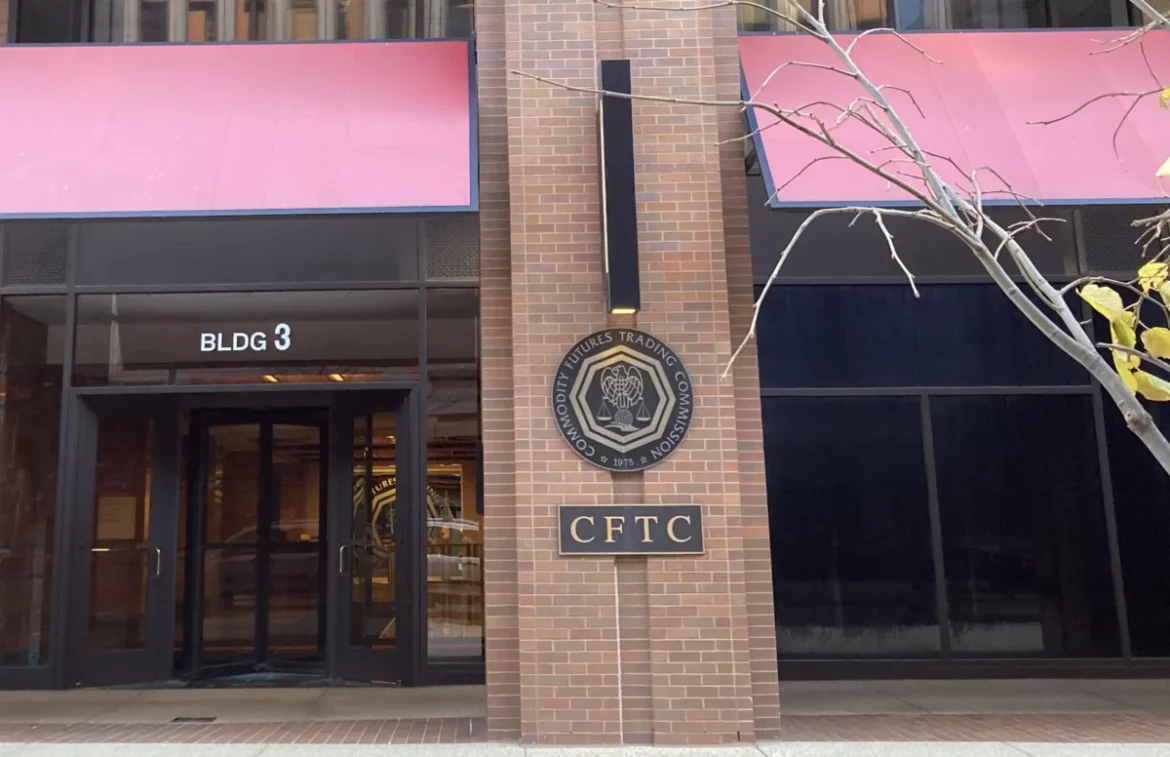
The Commodity Futures Trading Commission (CFTC) has recently finalized a significant rule change regarding margin requirements for uncleared swaps, a move set to broaden the scope of money market funds (MMFs) eligible for use as initial margin. This regulatory adjustment, which permits MMFs engaging in reverse repurchase agreements (reverse repo), repurchase agreements (repo), and securities lending to qualify as collateral, marks a pivotal shift in how market participants manage their exposures in the vast over-the-counter (OTC) derivatives market. The amendment specifically impacts a substantial portion of the market, given the dominance of interest rate swaps and foreign exchange (FX) swaps in OTC derivatives activity.
A Deeper Dive into the Rule Change
Prior to this amendment, the CFTC’s regulations on initial margin for uncleared swaps permitted MMFs as collateral only if they exclusively invested in cash and government securities. Critically, MMFs that utilized reverse repo, repo, and securities lending were explicitly excluded from this eligibility. This restriction effectively limited the pool of qualifying MMFs, even those considered highly secure due to their underlying assets. The newly adopted rule eliminates this specific exclusion, thereby expanding the array of MMFs that can be deployed as collateral for uncleared swap transactions.
The change is particularly impactful for government MMFs, which, under the Securities and Exchange Commission’s (SEC) Rule 2a-7, frequently employ reverse repo transactions. These transactions involve the MMF lending cash to a counterparty in exchange for receiving government securities as collateral, a practice widely considered to be low-risk duewing to the high quality of the collateral. Data from the Office of Financial Research (OFR) cited by the CFTC indicated that U.S. MMFs’ participation in Treasury repo transactions stood at approximately $1.7 trillion as of October 2025, underscoring the scale of activity within this segment. Should the cash borrower default, the MMF retains possession of the government securities, safeguarding its principal. The CFTC’s decision acknowledges this inherent safety mechanism, distinguishing these operations from higher-risk investments. It is crucial to note that prime money market funds, which hold corporate or non-government securities and have been at the center of past market stresses, remain ineligible as collateral under the CFTC’s updated rule, maintaining a clear line between different risk profiles.
The Regulatory Framework for Uncleared Swaps
The stringent margin requirements for uncleared swaps originated from the Dodd-Frank Wall Street Reform and Consumer Protection Act of 2010. Enacted in the aftermath of the 2008 global financial crisis, Dodd-Frank aimed to mitigate systemic risk within the financial system, particularly in the opaque OTC derivatives markets. A cornerstone of these reforms was the mandate for robust risk management practices, including the collection and exchange of initial margin (IM) and variation margin (VM) for uncleared swap transactions.
Initial margin is collateral collected from a counterparty at the beginning of a trade and held throughout the life of the trade to cover potential future exposure, effectively buffering against losses if a counterparty defaults. Variation margin, on the other hand, is collected daily to cover current mark-to-market changes in the value of a swap. The goal of IM is to reduce the incentive for excessive risk-taking and to ensure that firms have sufficient resources to absorb losses, thereby preventing a cascade of defaults that could threaten financial stability. The CFTC, alongside other global regulators like the European Market Infrastructure Regulation (EMIR) in the EU and equivalent bodies in the UK and Asia, developed and implemented these rules, largely harmonized under the framework set by the Basel Committee on Banking Supervision (BCBS) and the International Organization of Securities Commissions (IOSCO). The original exclusion of MMFs using reverse repo reflected a cautious stance in the nascent stages of these regulations, prioritizing the purest forms of cash and government securities as collateral.
Understanding Money Market Funds and Their Role
Money market funds are investment vehicles that offer investors a highly liquid, low-risk way to invest in short-term debt instruments. Governed by the SEC’s Rule 2a-7, MMFs are categorized based on the types of assets they hold. Government MMFs invest at least 99.5% of their total assets in cash, government securities, and/or repurchase agreements collateralized by government securities or cash. Prime MMFs, by contrast, invest in a broader range of short-term debt, including corporate commercial paper and other non-government instruments. Tax-exempt MMFs primarily invest in municipal debt.
The distinction between these categories is critical, particularly when evaluating their suitability as collateral. Government MMFs are widely considered the safest type of MMF due to the credit quality of their underlying assets. Their use of reverse repo is a standard practice for managing liquidity and generating modest returns while maintaining a high degree of safety. The cash lent in a reverse repo is secured by high-quality government securities, significantly reducing counterparty credit risk.
However, the history of MMFs is not without its challenges. The 2008 financial crisis saw the Reserve Primary Fund "break the buck" – its net asset value (NAV) falling below $1 per share – due to its exposure to Lehman Brothers commercial paper. This event triggered widespread panic and significant outflows from prime MMFs, threatening the stability of short-term funding markets. More recently, in March 2020, during the initial phase of the COVID-19 pandemic, prime and tax-exempt MMFs experienced substantial redemption pressures, necessitating intervention from the Federal Reserve to stabilize these vital markets. These episodes led to further reforms under the SEC, aimed at enhancing MMF resilience through measures like swing pricing and redemption gates, particularly for non-government MMFs. The CFTC’s continued exclusion of prime MMFs as eligible collateral directly reflects lessons learned from these historical stresses, ensuring that only the most robust and secure MMF structures are permitted for critical margin functions.
CFTC’s Rationale and Deliberations
The CFTC’s decision to amend its rule followed a thorough review process, including a period for public comments on the proposed changes. The Commission’s rationale is rooted in a re-evaluation of the risk profile associated with government MMFs utilizing reverse repo. CFTC officials emphasized that the underlying collateral in such transactions—U.S. government securities—is among the safest assets globally. This fundamental characteristic, combined with the structural safeguards inherent in the reverse repo mechanism, led the Commission to conclude that the previous exclusion was overly restrictive and did not accurately reflect the low-risk nature of these specific MMFs.
During its deliberations, the Commission considered various suggestions from stakeholders, including proposals to cap the volume of repo activity undertaken by eligible MMFs, impose an additional "haircut" (a discount applied to the collateral’s value to account for potential market fluctuations), or mandate that these funds’ repo transactions be centrally cleared. The CFTC ultimately declined to attach such additional strings to the rule change. This decision was notably influenced by the ongoing regulatory landscape concerning Treasury market clearing. The SEC’s compliance date for central clearing of certain Treasury market transactions, including repos, has been extended to June 30, 2027. The CFTC reasoned that imposing its own central clearing requirement on MMF repo activities for collateral purposes would be premature and potentially misaligned with the broader, evolving regulatory efforts led by the SEC to enhance the resilience of the Treasury market. The Commission’s approach reflects a careful balance: fostering greater efficiency and collateral availability while remaining vigilant against systemic risks, all within the context of inter-agency coordination.
Market Impact and Potential Benefits
The expanded eligibility of MMFs is expected to have several positive impacts on the uncleared swaps market. With the global OTC derivatives market estimated to be in the hundreds of trillions of dollars (notional value), even minor adjustments to collateral rules can have significant ripple effects. Interest rate swaps alone constitute the largest segment, followed by foreign exchange swaps, making the availability of suitable collateral a critical operational concern for financial institutions.
Firstly, the rule change will increase the overall pool of eligible initial margin collateral. By allowing a broader range of government MMFs, firms engaged in uncleared swap transactions will have greater flexibility in sourcing and managing their collateral portfolios. This increased availability can help alleviate potential bottlenecks in collateral supply, especially during periods of market stress or heightened demand for high-quality liquid assets (HQLA).
Secondly, the change may lead to reduced collateral costs for market participants. When collateral options are limited, firms may face higher costs for obtaining and holding the required assets. By broadening the eligible MMFs, the rule could introduce more competition and efficiency in the collateral market, potentially lowering the implicit costs associated with uncleared swap transactions. This could free up other forms of HQLA for alternative uses or for meeting cleared margin requirements, optimizing firms’ balance sheets.
Furthermore, the amendment could enhance operational efficiency. For many institutions, government MMFs are a readily accessible and highly liquid investment vehicle. Integrating a wider selection of these funds into their collateral management frameworks simplifies processes and reduces the administrative burden of identifying and transferring eligible assets. The $1.7 trillion in U.S. MMFs involved in Treasury repo transactions highlights the significant capacity that is now unlocked, offering a substantial reservoir of low-risk assets for meeting margin obligations.
The Future of Collateral: Tokenization and DLT
The CFTC’s decision also intersects with ongoing discussions about the future of collateral management, particularly the burgeoning interest in tokenized collateral and the application of distributed ledger technology (DLT). Money market funds have been central to these conversations, with many industry participants exploring how tokenized shares of MMFs or tokenized representations of their underlying assets could revolutionize collateral processes.
Tokenization promises to enhance efficiency by enabling near-instantaneous settlement of collateral transfers, reducing operational costs, and improving transparency. If MMF shares can be tokenized and managed on a DLT platform, they could provide an even more agile and accessible form of collateral. The CFTC’s expansion of eligible MMFs for uncleared margin directly supports this trend by validating a wider range of MMF structures as acceptable assets. As DLT solutions mature, the ability to use a broader universe of MMFs—especially those considered highly secure like government MMFs—as tokenized collateral could significantly streamline margin calls, optimize liquidity management, and reduce settlement risk in both traditional and digital asset markets. However, the regulatory and technological frameworks for full-scale adoption of tokenized collateral are still evolving, posing challenges related to legal certainty, interoperability, and cybersecurity.
Looking Ahead: Cleared vs. Uncleared and Global Perspectives
It is crucial to reiterate the distinction between eligibility for uncleared margin and cleared margin. While the CFTC has expanded the types of MMFs for uncleared swaps, eligibility criteria for centrally cleared derivatives remain a separate matter. Central counterparties (CCPs), which sit between two parties to a trade and guarantee its performance, typically maintain even more stringent requirements for eligible collateral due to their systemic importance. Their rules are often designed to minimize risk exposure across a vast network of participants and ensure rapid liquidity in the event of a default. Therefore, MMFs eligible for uncleared margin may not automatically qualify for cleared margin, underscoring the layered nature of derivatives regulation.
Globally, other jurisdictions continue to refine their own margin rules, and the CFTC’s move may prompt similar considerations from regulators in the EU, UK, and Asia. While a degree of international harmonization exists, differences in national financial market structures and regulatory philosophies can lead to variations in eligible collateral lists. This divergence can create complexities for globally active financial institutions, which must navigate multiple sets of rules. The ongoing debates surrounding the resilience and structure of the Treasury market, especially in light of the SEC’s extended clearing mandates, will undoubtedly continue to shape regulatory approaches to collateral management in the coming years.
In conclusion, the CFTC’s rule change represents a pragmatic adjustment aimed at enhancing the efficiency and flexibility of collateral management in the uncleared swaps market without compromising prudential standards. By recognizing the low-risk profile of government MMFs that utilize reverse repo, the Commission has unlocked a significant pool of high-quality collateral. This development is poised to streamline operations for market participants, potentially reduce costs, and aligns with the broader industry trend towards more dynamic and efficient collateral solutions, including those leveraging digital assets. As the financial landscape continues to evolve, such nuanced regulatory adaptations will be vital in ensuring both market stability and operational fluidity.
