
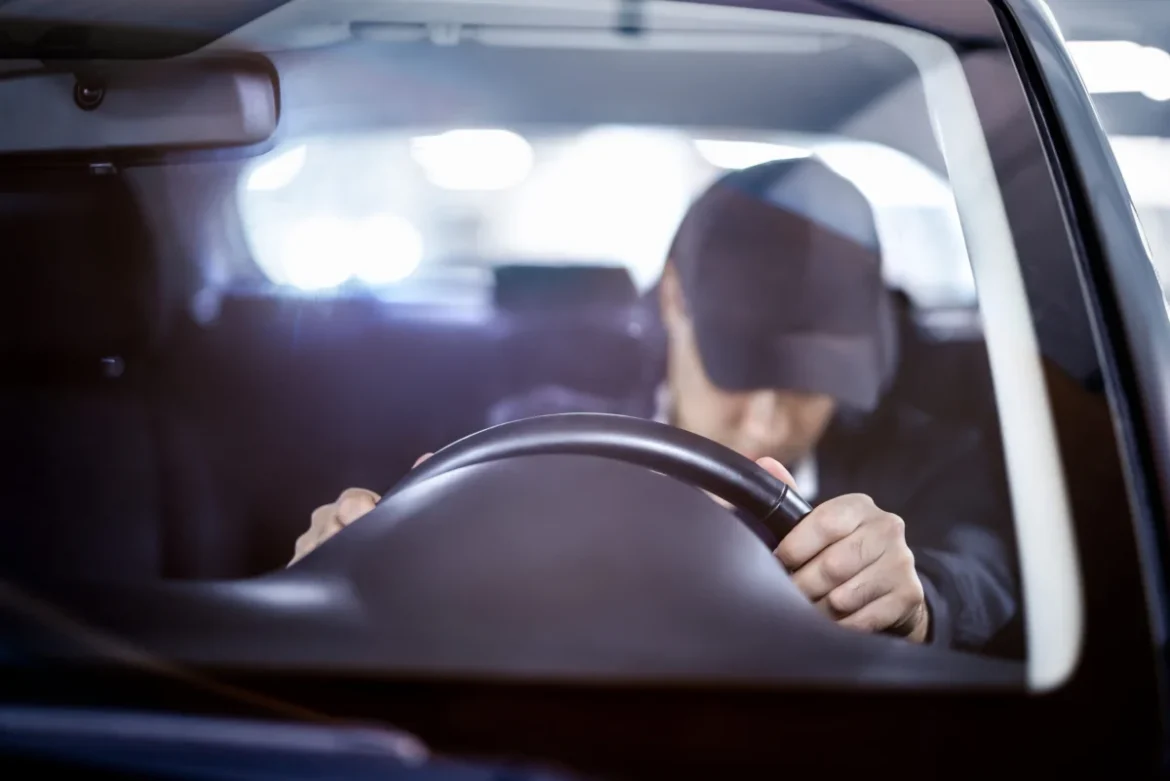
As the United States prepares to observe Drowsy Driving Prevention Week from November 1 through November 7, a sobering new analysis from the National Sleep Foundation (NSF) has brought the hidden crisis of sleep-deprived motorists into sharp focus. The 2026 Drowsy Driving Report, released this week, quantifies a pervasive public health issue that remains significantly under-addressed in both national traffic safety discourse and legislative policy. According to the data, an estimated 145 million American adults—representing 61% of the driving population—have operated a vehicle while impaired by sleepiness at least once. Even more concerning is the frequency of this behavior; nearly 35 million drivers admit to driving while drowsy on a monthly basis.
The findings arrive at a critical juncture for the automotive and public health sectors. While advancements in vehicle safety features, such as lane-departure warnings and automated emergency braking, have proliferated, the human element of fatigue remains a persistent, often lethal, variable. The NSF’s report serves as a diagnostic tool, highlighting not only the prevalence of the issue but also a dangerous knowledge gap among the driving public, with 40% of adult drivers failing to identify the most fundamental warning signs of sleep-related impairment.
The Magnitude of the Threat
Drowsy driving is frequently categorized alongside distracted and impaired driving, yet it often escapes the same level of rigorous enforcement and public awareness campaigns. Data from the AAA Foundation for Traffic Safety underscore the gravity of the threat, revealing that one out of every five deadly motor vehicle crashes in the United States is linked to drowsy driving. This statistic elevates the issue from a common inconvenience to a leading cause of preventable mortality on American roadways.
The physiological impact of sleep deprivation on driving performance is profound. Experts note that being awake for 18 hours is equivalent to having a blood alcohol concentration (BAC) of 0.05%, while being awake for 24 hours is equivalent to a BAC of 0.10%, which exceeds the legal limit for driving in all 50 states. Despite these biological realities, the social stigma surrounding drowsy driving remains weak compared to driving under the influence of alcohol or narcotics. The NSF report suggests that this lack of social pressure, combined with a lack of individual recognition of fatigue, creates a cycle where millions of drivers unknowingly put themselves and others at risk.
Chronology of Awareness and Legislative Advocacy
The campaign against drowsy driving is not a new endeavor, but it has seen a marked shift in strategy over the past decade. The following timeline tracks the evolution of this public health movement:
- 2015-2018: Early advocacy groups and the National Highway Traffic Safety Administration (NHTSA) began isolating "drowsy driving" as a distinct category in crash data, moving away from grouping it under general "distraction" statistics.
- 2020: The COVID-19 pandemic induced significant changes in sleep patterns and work-life balance, which researchers identified as a potential trigger for increased instances of fatigue-related accidents as workers returned to commuting.
- 2023: The emergence of advanced Driver Monitoring Systems (DMS) and AI-integrated cabin cameras sparked a national conversation about mandated safety technology.
- 2026: The release of the current NSF report signals a transition from "awareness-only" campaigns toward active advocacy for systemic, technology-based, and legislative solutions.
The Call for Technological and Legal Intervention
A pivotal finding in the 2026 report is the public’s evolving stance on potential remedies. For years, the debate surrounding traffic safety centered on individual responsibility. However, the current data suggests a significant shift in public sentiment toward institutional safeguards. Millions of surveyed drivers now express support for requiring driver-alertness technology—such as sensors that detect eye movement or steering patterns—to be standard in all new vehicles.
Furthermore, there is a growing consensus regarding the role of education in licensing. Many respondents advocated for the integration of comprehensive sleep education modules into the driver’s licensing process, ensuring that new drivers understand the physiological limits of their bodies before they are permitted on public roads.
Perhaps most striking is the shift in judicial and legal attitudes. A majority of those polled indicated support for stricter legal consequences when drowsy driving is determined to be the primary cause of serious harm or death. This reflects a desire to treat drowsy driving with the same severity as other forms of reckless or impaired operation, potentially setting the stage for future legislative battles in state houses across the country.
Expert Analysis: The Gap in Recognition
Joseph Dzierzewski, PhD, senior vice president of Research and Scientific Affairs at the National Sleep Foundation, emphasized that the data reveals a fundamental disconnect between perception and reality. "Every signal in this year’s report points the same way: drowsy driving is common, it’s under-recognized, and the public is ready for solutions," Dr. Dzierzewski stated.
The concern, according to the report, is that when 40% of drivers cannot identify basic indicators—such as frequent blinking, drifting between lanes, or the inability to remember the last few miles driven—the individual is unable to make an informed decision to pull over. This "blind spot" in self-assessment makes the problem uniquely difficult to solve through traditional public service announcements alone, as the driver often believes they are capable of operating a vehicle even when they are critically impaired.
Implications for Public Policy
The implications of the 2026 NSF report are far-reaching, extending into the realms of insurance regulation, automotive manufacturing standards, and public health policy. If the current trends hold, the insurance industry may begin to look at driver-monitoring technology as a prerequisite for lower premiums, mirroring the way telematics have been used to monitor speed and braking habits.
For automotive manufacturers, the mandate for "alertness technology" represents both a technical challenge and a market opportunity. As vehicle autonomy increases, the focus on the "human-machine interface" becomes paramount. Manufacturers are increasingly tasked with not only building cars that can navigate, but also monitoring the physiological state of the operator.
From a policy perspective, the report provides a roadmap for legislators. By framing drowsy driving as a systemic failure rather than just a series of individual mistakes, the NSF is encouraging a move toward standardized safety protocols. This could include:
- Mandatory Safety Features: Federal requirements for fatigue-detection sensors in new passenger vehicles.
- Educational Mandates: Inclusion of sleep hygiene and impairment recognition in mandatory driver education programs for minors and adults.
- Public Health Integration: Linking traffic safety with broader sleep health initiatives, acknowledging that chronic sleep deprivation is a public health crisis that spills over into the transportation sector.
Conclusion: A Path Forward
The 2026 Drowsy Driving Report is more than a statistical summary; it is an indictment of the status quo. With 145 million drivers having experienced the dangers of sleep-induced impairment, the issue has touched nearly every American family. As the nation approaches Drowsy Driving Prevention Week, the challenge lies in translating this data into actionable change.
The move toward technology-driven solutions, coupled with a more rigorous approach to driver education, offers a clear path toward reducing the one-in-five fatality rate associated with fatigue. However, as Dr. Dzierzewski noted, the first step remains individual awareness. Until drivers are empowered to recognize the warning signs of their own fatigue, the road will remain a dangerous place. The report serves as a final, urgent call for a multi-faceted approach that addresses the intersection of technology, law, and human physiology to ensure that the journey is as safe as the destination.
As stakeholders review these findings, the expectation is that the findings will drive not only discussion but a tangible shift in how the United States regulates and manages the risks associated with sleep and the modern commute.
