

Zurich-based climate technology pioneer Climeworks has announced a significant technical breakthrough at its Mammoth facility in Iceland, effectively doubling the carbon dioxide capture performance of its direct air capture (DAC) operations while simultaneously halving the operational costs associated with each ton of carbon removed. This development marks a pivotal moment in the nascent carbon removal industry, suggesting that the engineering hurdles preventing the scaling of DAC technology are beginning to yield to sustained innovation and real-world operational data.
The Evolution of Direct Air Capture
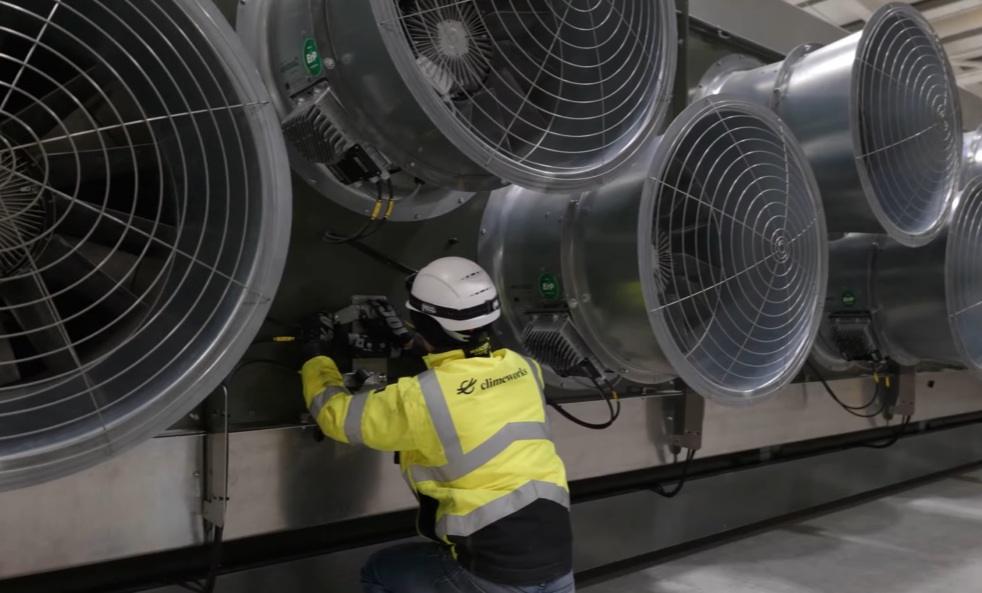
Direct Air Capture technology functions by utilizing large-scale fans to pull ambient air through specialized filters, or sorbents, which chemically bind to CO2. Once the sorbent is saturated, the filter is heated to release the captured carbon, which is then either utilized in industrial applications or, as is the case with Climeworks’ Iceland projects, permanently mineralized underground in basaltic rock formations.
Climeworks, established in 2009 by co-founders Christoph Gebald and Jan Wurzbacher, has long been a frontrunner in this field. The company’s trajectory is best illustrated by its rapid infrastructure growth:
- 2017: Climeworks launches the world’s first commercial DAC plant in Hinwil, Switzerland.
- 2021: The company commissions "Orca," the first large-scale plant in Iceland, setting a precedent for permanent geological storage.
- 2024: The "Mammoth" facility commences operations, significantly scaling up the capture capacity beyond that of its predecessor.
- 2026: The announcement of major performance upgrades at Mammoth confirms the maturation of the company’s modular design approach.
Technical Advancements Driving Efficiency
The recent gains at the Mammoth plant are the result of an intensive 18-month optimization period. According to technical briefings provided by the company, the improvements center on two critical pillars: chemistry and mechanical engineering.
The primary advancement involves the proprietary sorbent material. By refining both the chemical formulation and the manufacturing process of these filters, Climeworks has increased the capacity of the material to bond with CO2 molecules. A higher-capacity sorbent allows for more carbon to be captured per cycle, directly impacting the throughput efficiency of the facility.
Simultaneously, the company implemented a series of mechanical and operational refinements. By upgrading the internal components of the collector containers—the individual units that house the filter systems—the company has successfully brought the facility’s output back up to its original design run rates, having overcome the typical "teething issues" that often plague first-of-a-kind industrial technology deployments. The result of these combined efforts is a more than 100% improvement in CO2 throughput, fundamentally changing the economic viability of the carbon removal process.
Strategic Roadmap: The 2027 Outlook
Climeworks has not signaled a slowdown in its research and development efforts. The company confirmed that it is currently preparing for the deployment of its next-generation DAC technology, which is slated for testing at the Mammoth site in early 2027.
The technical specifications of this upcoming iteration are particularly notable. Laboratory testing has demonstrated a tenfold increase in the operational lifespan of the sorbent materials. Because the replacement of these filters represents a significant portion of the operational expenditure in DAC plants, this change promises to further drive down costs. Furthermore, the company reported a fourfold improvement in "process densification." In practical terms, this means that future installations will require fewer individual collector containers to achieve the same net carbon dioxide removal (CDR) production. This increased density is expected to reduce the land footprint and the complexity of the balance-of-plant infrastructure.
Industry Implications and Economic Context
The economic viability of DAC has historically been the primary point of skepticism among climate economists. The high energy intensity and the costs associated with the chemical reagents have kept the price of removal at levels that, while acceptable for voluntary corporate climate action, remain far above the levels required for mass-market adoption.

By halving the operating costs per ton, Climeworks is moving the industry closer to the elusive "hundred-dollar-per-ton" threshold, a target frequently cited by researchers as the tipping point for the widespread adoption of carbon removal as a tool for large-scale climate mitigation.
Jan Wurzbacher, co-founder and co-CEO, emphasized the importance of the Mammoth facility not just as a production site, but as a "living laboratory." In his assessment, the ability to iterate on live, operational systems provides a competitive advantage that cannot be replicated in a purely theoretical or lab-based environment. The facility serves as a testing ground where technological upgrades can be validated under real-world weather conditions, which, in the harsh environment of Iceland, are notoriously challenging.
Market Reactions and Future Scaling
The performance improvements at Mammoth are likely to influence the broader carbon credit market. Companies that purchase carbon removal credits—often referred to as high-quality, permanent CDR—rely on the long-term viability and transparency of providers like Climeworks to meet their net-zero targets. The demonstration that these facilities can become more efficient over time reduces the risk profile for investors and long-term buyers.
Furthermore, the data collected during this 18-month period provides critical insights for the engineering community at large. As other firms explore various DAC methodologies, such as liquid solvent systems or alternative solid sorbents, the success of Climeworks in stabilizing and upgrading their modular plant design provides a blueprint for how industrial climate technology can be scaled incrementally.
Challenges and Sustainability
Despite the positive news, the industry faces ongoing challenges. The energy required to run these facilities must be sourced from renewable or low-carbon origins to ensure that the process is carbon-negative. The location in Iceland is strategic, as it benefits from abundant geothermal energy, which provides both the electricity needed for the fans and the heat required to release the CO2 from the sorbents.

However, as the company seeks to expand globally, it will need to replicate this access to low-carbon, low-cost energy in other jurisdictions. The "process densification" mentioned by the company will be a crucial factor in this expansion, as it will allow for more efficient use of energy and land, potentially lowering the barrier to entry for regions that do not possess the unique geological and energy advantages of Iceland.
Looking Toward the Future
The path forward for carbon removal remains complex. While the technical achievements at the Mammoth plant are significant, they represent one piece of a much larger puzzle. International regulatory frameworks, such as the voluntary carbon markets and government-backed carbon removal subsidies, will need to continue evolving to provide the price certainty that will allow for the capital-intensive construction of dozens, and eventually hundreds, of facilities on the scale of Mammoth.
Climeworks’ announcement serves as an empirical validation of the "learning-by-doing" hypothesis in the climate tech sector. As the company prepares for its 2027 upgrades, the industry will be watching closely to see if these gains in efficiency can be maintained at scale. The transition from the "pilot phase" to "industrial maturity" is rarely linear, but the data emerging from Iceland suggests that the industry is firmly on the right trajectory. For now, the focus will remain on stabilizing these improvements and translating the laboratory success of the next-generation sorbents into the harsh, demanding reality of industrial carbon removal.
