

The landscape of retail investing has long forced individuals to choose between two distinct extremes: the hands-off convenience of automated digital platforms, or the granular control of self-directed brokerage accounts. Robo-advisors historically provided diversified, low-cost, research-backed portfolios that practically ran themselves, but they often lacked the flexibility for investors who wanted to express specific market theses—such as hedging against inflation with gold, overweighting real estate, or focusing on high-dividend equities. On the flip side, manually managing a customized portfolio meant enduring the administrative burdens of regular rebalancing, dividend reinvestment, and complex tax optimization.
In a strategic move to reconcile this long-standing industry dichotomy, digital investment pioneer Betterment has officially launched its new Custom Portfolios feature. The product allows investors to merge the robust, diversified foundation of Betterment’s professionally constructed asset allocations with their own bespoke stock and exchange-traded fund (ETF) selections. By bridging automated portfolio maintenance with individual asset customization, the platform aims to capture a growing segment of retail investors who demand both personalized strategy execution and algorithmic efficiency.
The Evolution of Automated Wealth Management
To understand the significance of Betterment’s latest product rollout, one must look at the broader evolution of the digital advisory industry over the past decade and a half. Founded in 2008 in the wake of the global financial crisis, Betterment popularized the concept of "robo-advising," introducing automated, algorithm-driven financial planning services to the mass affluent. By utilizing modern portfolio theory, fractional shares, and automated rebalancing, these platforms lowered the barriers to sophisticated wealth management.
Initially, these systems relied on rigid, model-based portfolios. While highly effective for long-term, passive wealth accumulation, they offered very little room for personalization. If an investor wished to tilt their portfolio toward a specific sector—such as clean energy, technology, or real estate—or exclude certain assets based on personal values, they typically had to abandon the automated platform and manage a separate brokerage account by hand.
Over time, consumer demand shifted. As retail participation surged during the early 2020s, a new generation of investors emerged—financially literate, highly connected, and eager to take a more active role in their investment decisions while still demanding the backend efficiencies that automation provides. Competitors began experimenting with fractional customization, but integrating bespoke asset choices without compromising automated tax strategies remained a significant engineering and operational hurdle. Betterment’s Custom Portfolios represent a direct response to this market maturation, offering users access to a library of over 5,500 ETFs and individual stocks that can be seamlessly blended into existing or newly created accounts.
Mechanics of Customization: Balancing Personal Strategy with Automated Maintenance
The core architecture of a Betterment Custom Portfolio is designed to accommodate individual strategic preferences without sacrificing the quantitative discipline that automated platforms provide. An investor starting with a globally diversified foundation can now slot in specific funds, thematic strategies, or individual equities right alongside the allocations chosen by Betterment’s internal investing team.

In practice, this flexibility opens up numerous strategic pathways. For instance, an investor concerned about macroeconomic volatility might choose to hedge their baseline portfolio by allocating a specific percentage to gold. Another investor might implement a real estate tilt to capitalize on urban housing trends, or prioritize dividend-paying equities to generate higher current income. While these specific allocations may diverge from Betterment’s standard methodology, the platform treats them as integrated components of the broader portfolio.
Crucially, the heavy lifting of portfolio maintenance remains automated. Manual portfolio management involves continuous monitoring to ensure that asset allocations do not drift excessively from target percentages. When dividends are paid out, self-directed investors must manually redeploy that cash to maintain balance. Furthermore, executing trades without automated tax considerations can trigger unintended capital gains liabilities. Betterment’s system absorbs these administrative tasks, automatically rebalancing allocations and reinvesting dividends according to the user’s specified parameters.
Advanced Tax Optimization and Tax-Loss Harvesting
One of the most complex challenges in self-directed investing is tax management. Strategies such as tax-loss harvesting—selling securities at a loss to offset capital gains and reduce taxable income—require constant vigilance and precise timing. Automated platforms have traditionally excelled at this because algorithms can continuously scan thousands of accounts for harvesting windows that human investors might easily miss.
With the introduction of Custom Portfolios, Betterment has extended its algorithmic tax-loss harvesting capabilities to accommodate user-selected assets. The platform’s underlying technology pairs custom ETF picks with similar, highly correlated replacement funds when available, unlocking new harvesting opportunities that would be exceptionally difficult to identify and execute manually.
Industry analysts note that tax optimization is often where automated wealth management delivers its most tangible monetary value. By automating the identification of wash-sale constraints, optimal asset location across taxable and tax-advantaged accounts, and loss harvesting, platforms can potentially boost an investor’s after-tax returns over long horizons. Extending these capabilities to customized portfolios ensures that investors do not have to sacrifice tax efficiency in exchange for personalization.
Real-Time Analytics and Decision-Support Tools
To assist investors in navigating a vastly expanded investment universe, Betterment has integrated robust, real-time analytical tools directly into the Custom Portfolio interface. Historically, self-directed investors looking to evaluate the sector weightings, geographic exposure, and historical performance of a bespoke portfolio had to rely on a fragmented collection of external spreadsheets, browser bookmarks, and third-party financial software.
The new analytical suite breaks down user portfolios from high-level asset classes—such as major U.S. and international equity buckets—down to granular sector and country exposures. As users adjust the weights of individual holdings or swap out funds, the interface updates its analysis in real time, providing immediate feedback on portfolio concentration and risk exposure.
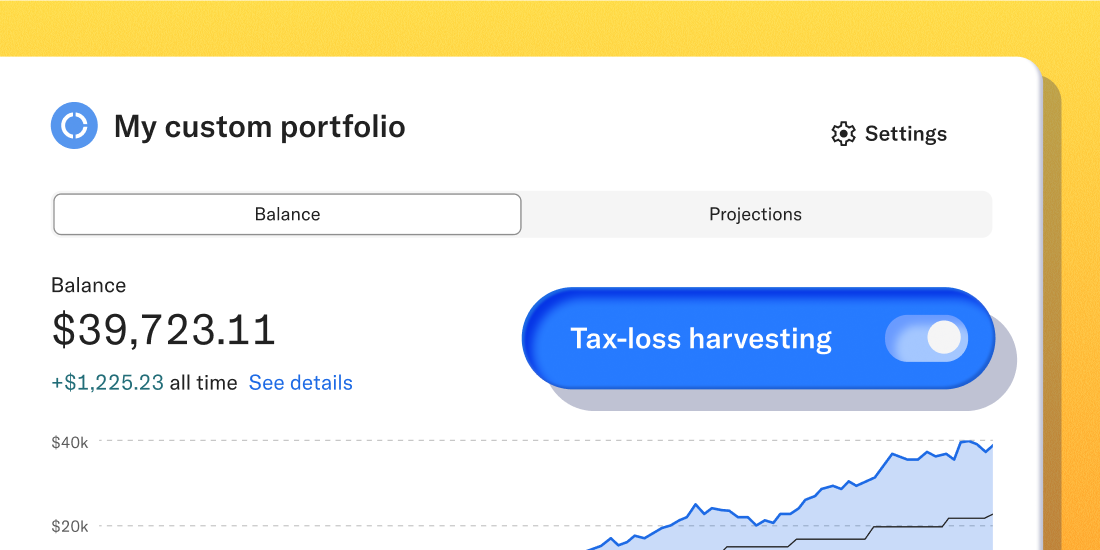
Betterment has also announced plans to roll out advanced forecasting capabilities, including forward-looking financial projections and historical backtesting tools. These features are designed to give investors empirical insight into how their custom asset mixes might have performed across various historical market cycles, thereby fostering more deliberate, data-driven decision-making. By consolidating these research tools within the active portfolio-building environment, the platform seeks to minimize the cognitive friction associated with managing complex investment strategies.
Transitioning and Onboarding Existing Assets
For investors currently utilizing other financial institutions, migrating existing holdings into an automated, customized ecosystem has historically been a cumbersome logistical hurdle. Betterment has sought to streamline this transition by deploying dedicated transfer specialists to assist users in consolidating their assets.
Investors holding eligible ETFs or individual stocks with outside providers can coordinate with Betterment transfer teams to bring those assets into their new Custom Portfolios. This consolidation not only centralizes oversight but also allows the transferred assets to immediately benefit from Betterment’s automated rebalancing and tax-optimization infrastructure. Furthermore, existing Betterment clients can transition their current portfolio strategies to a Custom Portfolio format with a few clicks, provided the underlying account type (such as taxable brokerage accounts or Individual Retirement Accounts) supports the feature.
Industry Implications and Future Roadmap: Direct Indexing on the Horizon
The launch of Custom Portfolios reflects a broader, industry-wide race toward hyper-personalization in retail wealth management. As software engineering and financial technology mature, the traditional barriers between mass-market robo-advisors and bespoke private wealth management are steadily eroding. Financial institutions are recognizing that modern investors expect the cost-efficiency of digital platforms combined with the flexibility traditionally reserved for high-net-worth private banking clients.
Looking ahead, Betterment has indicated that Custom Portfolios are merely a stepping stone toward even more advanced personalization features. The company’s immediate product roadmap includes the introduction of direct indexing—a technique that allows investors to directly own the individual stocks comprising a major market index, rather than holding a fund that tracks it.
Direct indexing promises to push the boundaries of both customization and tax efficiency even further. By holding hundreds of individual equities rather than a single fund, algorithms can execute tax-loss harvesting at the individual stock level, capturing tax alpha from market volatility within specific sectors or even individual companies while closely mirroring the performance of a broad benchmark index.
As these capabilities become standard features of digital wealth management platforms, the role of the retail investor is fundamentally changing. No longer constrained by the binary choice between passive conformity and administrative chaos, investors are increasingly empowered to act as the architects of their own financial destinies—steering their portfolios with precision, backed by continuous algorithmic optimization, and supported by real-time data analytics. Betterment’s latest rollout signals that the future of wealth management belongs to platforms that can successfully deliver absolute customization without compromising operational simplicity.
