
The landscape of sustainable development, community wealth-building, and international climate diplomacy is undergoing a profound transformation, highlighted by groundbreaking local real estate acquisitions in the United States and the sudden breakdown of multilateral environmental negotiations abroad. In Philadelphia, a pioneering community land trust has completed one of the largest neighborhood-owned commercial real estate transactions in modern U.S. history, securing a massive former textile mill to safeguard long-term affordability and prevent gentrification-driven displacement. Simultaneously, the circular economy is attracting sophisticated institutional capital as regional waste management operators consolidate to build the vital infrastructure required for systemic resource recovery. However, these localized victories in sustainable infrastructure contrast sharply with the international arena, where the COP31 global climate summit concluded in disarray after delegates failed to reach a consensus on fossil fuel phase-outs, leaving international climate policy at a critical crossroads.
Philadelphia Neighborhood Trust Scales Community Ownership With Landmark J-Centrel Acquisition
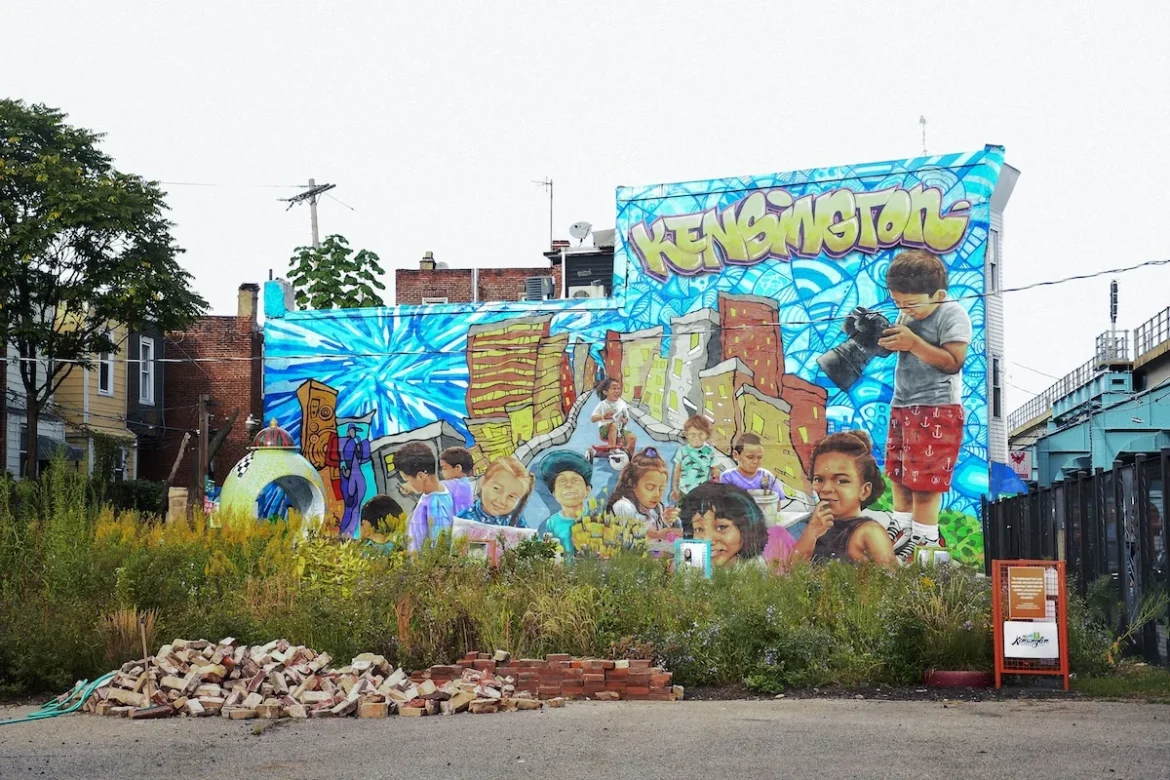
In urban centers across the United States, neighborhood gentrification has long threatened the cultural fabric and economic stability of legacy residents and small business owners. Urban revitalization efforts frequently result in the displacement of historically marginalized communities as outside speculative capital pours into undervalued real estate corridors. However, alternative economic models are emerging to challenge this paradigm, none more ambitiously than the Kensington Corridor Trust in Philadelphia.
The trust recently completed a monumental $19.6 million acquisition of J-Centrel, a sprawling 157,000-square-foot mixed-use industrial and residential building located in the city’s Kensington neighborhood. This strategic purchase serves as the capstone asset for the trust, anchoring nearly three dozen properties spanning a crucial four-block commercial corridor. Operating as a perpetual purpose trust, the organization is legally governed by the approximately 32,000 residents living within the neighborhood’s 19134 zip code. By acquiring these properties, the trust permanently removes them from the volatile speculative real estate market, shielding them from predatory development and ensuring that future economic benefits directly serve the local population.
Adriana Abizadeh-Barbour, who has steered the trust as its executive director since 2020, emphasized the broader national implications of the transaction during recent industry discussions. Community ownership is no longer an isolated niche experiment, she noted, proving instead that neighborhood-led entities can successfully scale and compete directly against traditional private equity and commercial developers in the open market. Neighborhoods like Kensington have historically been treated as commodities available for external exploitation, but the trust’s strategy represents a direct counter-offensive: buying back the block to keep wealth and control anchored locally.
Unlike traditional revitalization initiatives driven by outside municipal planners or private developers seeking maximum financial returns, the Kensington model places absolute decision-making power in the hands of legacy residents and longstanding local merchants. This structural shift ensures that neighborhood revival fosters economic resilience without forcing out the very people who sustained the community through decades of industrial decline.
Financing the Circular Economy Through Infrastructure Consolidation
While community land trusts are redefining urban governance, the broader sustainable finance community is increasingly turning its attention toward the circular economy. Transitioning away from a linear, take-make-waste economic model requires significant capital investments, robust logistical networks, and sophisticated operational frameworks. At a recent symposium organized by the European impact finance advisory firm FASE, industry leaders analyzed the immense scale of financial opportunity and the structural complexities inherent in circular financing.
Christina Moehrle, a strategic advisor to FASE and the European Catalytic Impact Investing Fund, observed that investing in circularity demands a holistic reimagining of human industrial systems. It requires navigating complex supply chains and deploying patient, specialized forms of capital that align with long-term planetary boundaries. Although these intricate investments may not align with the immediate risk-return profiles traditionally favored by all institutional investors, they remain paramount for ensuring ecological survival on a planet characterized by finite resources.
Reflecting this push toward industrial maturation, market consolidation is accelerating within the circular economy sector. Agri-Cycle, a prominent regional recycling and organic waste management enterprise based in Maine, announced a sweeping series of strategic acquisitions designed to build the necessary backbone for nationwide food waste recovery. Agri-Cycle operates an extensive logistics fleet dedicated to harvesting organic waste streams from supermarkets, restaurants, craft breweries, universities, school districts, and industrial food processors, subsequently diverting these materials to specialized facilities that transform refuse into nutrient-rich compost, renewable energy, and animal feed.
To expand its operational footprint and enhance logistical efficiency, Agri-Cycle completed the integration of several targeted regional entities:
- Against the Grain: A Boston-based enterprise that acts as a vital bridge between local beverage breweries, distilleries, and regional agricultural producers, repurposing spent brewing grains as high-protein livestock feed.
- ReMix Organics: A Rhode Island-based innovator specializing in the diversion of commercial food waste into high-grade compost and renewable energy generation.
- Food Recycling Solutions: An Arkansas-headquartered commercial collection and composting provider that expands Agri-Cycle’s geographic reach into the American South.
Dan Bell, a senior executive at Agri-Cycle, noted that these acquisitions are fundamentally about constructing the missing physical infrastructure required to recover food waste at an industrial scale, turning environmental liabilities into tangible economic assets.
Global Climate Negotiations Collapse at COP31 Amid Fossil Fuel Impasse
While grassroots urban initiatives and private-sector circularity investments continue to make measurable strides, international climate governance faces an unprecedented crisis of confidence. The COP31 global climate summit, hosted in Türkiye, dissolved into disarray and reached a chaotic conclusion following a complete breakdown in negotiations over the future of fossil fuels.
The abrupt collapse of the talks leaves coordinated international climate action effectively adrift as the global community prepares to transition host responsibilities to Addis Ababa, Ethiopia, for the upcoming year. This diplomatic failure occurs against a backdrop of escalating environmental crises, wherein greenhouse gas-driven climate instability continues to wreak havoc on weather patterns, agricultural yields, agricultural livelihoods, and macroeconomic stability worldwide.
As negotiations spilled past their scheduled conclusion into Sunday, the final draft text faced fierce resistance and ultimate rejection from the European Union, alongside climate-vulnerable nations such as Panama and the Marshall Islands. Delegations criticized the proposed text as fatally watered down, arguing that it failed to meet the existential urgency of the climate crisis. Furthermore, the collapsed text omitted vital commitments to significantly scale up climate adaptation financing for developing nations that historically bear the disproportionate brunt of environmental destruction despite contributing minimally to global emissions.
The spectacular failure of COP31 has reignited fierce global debates regarding the structural viability of the United Nations climate summit process itself. Requiring more than 190 sovereign parties to achieve absolute consensus on complex energy transitions has become increasingly untenable, prompting widespread calls among policy experts, diplomats, and environmental advocates for systemic institutional reform to prevent future paralysis.
Executive Transitions and Talent Movements Across the Impact Sector
As the impact investing and sustainable finance ecosystem navigates these complex domestic and international developments, several key institutional leadership changes reflect the sector’s ongoing professionalization and growth:
- Maycomb Capital has elevated Shelby Kohn to the position of Partner, recognizing her contributions to the firm’s innovative community-focused financing strategies.
- The Cleveland Foundation announced a planned financial leadership transition, appointing Anthony Gattuso to serve as its new Chief Financial Officer and Chief Investment Officer. He will succeed Rosanne Potter, who is scheduled to step down from her long-standing role next year.
- The Environmental Defense Fund strengthened its sustainable finance division by recruiting Beatriz Da Cunha as Head of Sustainable Finance. Da Cunha transitions to the environmental advocacy organization following a tenure at Barclays.
- OpenAI expanded its internal sustainability operations by welcoming Nate Sweet as its Clean Energy Lead. Sweet previously managed renewable energy initiatives at Primergy.
- Just Economics of Western North Carolina promoted Emma Hutches to the role of Executive Director to lead the organization’s regional economic justice programs.
Concurrently, numerous prominent impact organizations are actively expanding their operational capacity through strategic recruitment drives. IDB Invest initiated a global search for a Chief Executive Officer based in Washington, D.C.; Sagana Capital opened a search for a dedicated Climate Tech Investment Director; the Global Impact Investing Network (GIIN) is recruiting an Events Director in New York; and the Foundation for Food and Agriculture Research initiated a search for a Chief Finance and Operations Officer to oversee its expanding research portfolios.
Implications for the Future of Sustainable Finance and Urban Policy
The dual realities shaping the sustainable development landscape point toward a decentralized, pragmatic approach to global problem-solving. On one hand, community-led models like the Kensington Corridor Trust demonstrate that local stakeholders can successfully reclaim urban real estate and insulate their neighborhoods from speculative displacement. Similarly, private capital consolidation in circular infrastructure proves that market-based solutions can effectively scale resource recovery and waste reduction.
Conversely, the systemic deadlock observed at COP31 underscores the profound limitations of top-down multilateralism when sovereign geopolitical interests clash over fossil fuel dependency. As international frameworks struggle to achieve consensus, the burden of driving meaningful environmental and social progress increasingly falls upon regional policy actors, impact investors, grassroots coalitions, and innovative municipal leaders. Whether through buying back city blocks to preserve community equity or deploying patient capital into circular supply chains, the vanguard of the impact economy continues to forge resilient pathways independent of international diplomatic stagnation.
