
The $6 billion Walton Family Foundation, historically recognized as one of the preeminent philanthropic grant funders of global environmental initiatives, is significantly expanding its operational toolkit. By introducing a new $25 million Water and Nature Fund, the philanthropic organization is moving beyond traditional grantmaking to incorporate repayable loans, financial guarantees, and targeted impact investments into its conservation strategy. Supported by capital commitments from individual members of the Walton family—the heirs to the Walmart retail empire—this newly established revolving fund is specifically engineered to support innovative, early-stage financial vehicles. Its core mission is to help build and scale a viable marketplace for nature-based solutions aimed at preserving and restoring critical ecosystems, including rivers, oceans, wetlands, and the human communities that depend directly upon them.
The foundation is intentionally positioning the fund to absorb high levels of financial risk, targeting high-potential investments that are routinely bypassed by mainstream commercial investors due to perceived uncertainties or unproven revenue models. By stepping into this high-risk market segment, the foundation hopes to bridge the persistent gap between ecological preservation and commercial viability.
Bridging Nature and Market Value
For decades, the economic value generated by healthy natural ecosystems has been recognized by scientists and environmental economists alike, yet it has remained largely unquantified within traditional financial markets. Forests actively protect municipal water supplies, natural wetlands drastically reduce regional flood risks, improved agricultural land management practices reliably enhance downstream water quality, and thriving coastal ecosystems underpin the economic livelihoods of entire coastal regions. Despite these monumental economic and societal benefits, translating these ecological functions into investable, revenue-generating transactions has presented a persistent structural challenge for environmental finance.
Morgan Snyder, who leads investment initiatives for the foundation, articulated this fundamental disconnect in an interview with ImpactAlpha. Snyder pointed out that while the systemic advantages of natural infrastructure are immense, they do not inherently translate into straightforward financial transactions that appeal to standard capital markets. The overarching challenge, according to Snyder, is figuring out how to successfully connect these foundational ecological assets with actual buyers and payers of environmental outcomes. Potential revenue sources include major corporate entities, the banking and financial sectors, municipal water and power utilities, public regulatory agencies, and other beneficiaries of ecological stability.
Geographic Scope and Strategic Focus
The newly unveiled Water and Nature Fund has established a dual-track geographic strategy, dividing its operational focus between domestic priorities within the United States and targeted international ecosystems.
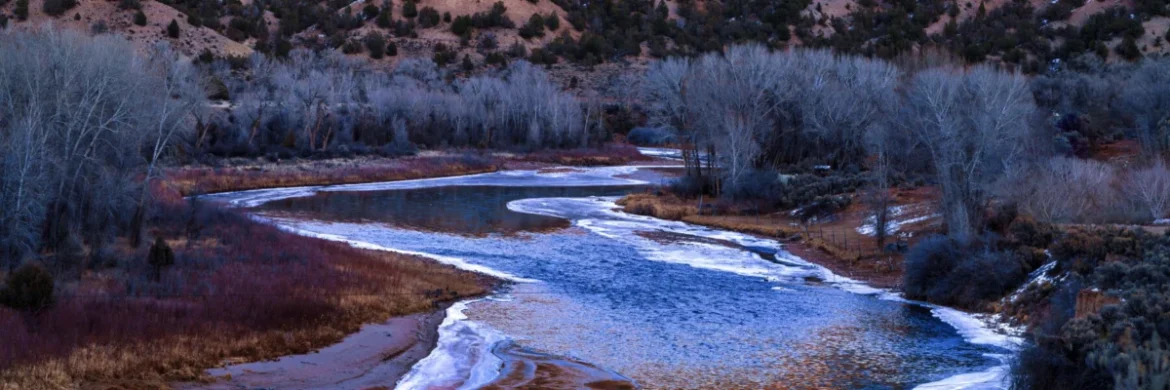
Domestically, the fund will concentrate its capital deployment heavily on forests, wetlands, and sustainable agriculture. Within the United States, water resilience and conservation projects centered on the heavily stressed Colorado River basin remain a paramount priority for the foundation, given the acute climate pressures and growing municipal and agricultural demands facing the region.
Internationally, the portfolio will expand to incorporate vulnerable coastal ecosystems and fisheries, with a primary geographic focus on target regions including Indonesia, Mexico, and Peru. Snyder has expressed particular enthusiasm for emerging financial models centered on "blue" carbon credits generated through large-scale mangrove restoration projects, as well as integrated economic models such as sustainable shrimp farming, which balance commercial aquaculture yields with long-term ecological health.
The Evolution of Philanthropic Toolkits
The establishment of the Water and Nature Fund represents a major evolution in the operational strategy of the Walton Family Foundation, which deployed $106 million strictly in environmental grantmaking in 2024 alone. This new impact investing arm is a foundational pillar of the organization’s broader five-year strategic plan, which officially commenced this year.
Before securing formal board approval and family backing for the $25 million vehicle, the foundation executed several smaller program-related investments (PRIs). Snyder described these initial transactions as "training wheels" designed to test the operational mechanics of deploying repayable capital, evaluating risk parameters, and structuring non-grant financial instruments. Once the program parameters were finalized and approved by the board, two members of the Walton family stepped forward to provide the initial $25 million capitalization.
Designed as a revolving financial vehicle, the fund will systematically reinvest any financial returns generated by its portfolio investments. Furthermore, the founding family members have left the door open to injecting additional capital into the fund over time, depending on its performance and market demand. The fund plans to deploy its capital through loans and financial guarantees ranging in size from $1 million to $5 million per project, fully anticipating slower repayment schedules and significantly lower rates of return than what standard commercial investors would typically tolerate.
First Deployments and the Mechanics of Resilience
The inaugural deployment of capital from the Water and Nature Fund is slated to target Blue Forest’s Western Landscapes Restoration Facility. This initiative operates as a pooled investment fund designed to finance "forest resilience bonds" and other specialized financial vehicles. These instruments are specifically crafted to fund essential forest management and thinning practices across the western United States and Canada—critical preventative work that cash-strapped public land management agencies can no longer afford through traditional government appropriations alone.
The facility is currently working toward an ambitious $50 million total fundraise, with organizers anticipating a formal first close by the end of the calendar year. Zach Knight of Blue Forest detailed the precarious economic reality governing public lands during a discussion with ImpactAlpha, describing it as a destructive vicious cycle. According to Knight, federal and state agencies are trapped in a reality where catastrophic wildfires demand an increasingly massive share of available budgets, leaving progressively fewer financial resources available for proactive land management and fire prevention.
This fiscal bottleneck is precisely why innovative private financing models have become indispensable to modern conservation. By effectively pulling forward the long-term financial benefits realized by downstream water utilities, major corporate beneficiaries, and public entities that stand to gain from reduced wildfire risks, organizations like Blue Forest can make substantial capital available on day one. This immediate liquidity allows for proactive ecological restoration projects to proceed at a scale that would otherwise be completely unattainable through public sector funding alone.
Official Perspectives and Long-Term Market Implications
The launch of the Water and Nature Fund arrives at a critical juncture for global climate finance, as governments and international bodies grapple with a massive funding gap in meeting biodiversity and carbon reduction targets. Philanthropic capital, while substantial, is ultimately finite; therefore, leveraging private markets is widely viewed by financial analysts as the only viable pathway to achieving lasting, systemic change at scale.
In an official public post on the foundation’s website, Morgan Snyder elaborated on the strategic philosophy driving the new fund, emphasizing the catalytic role that philanthropic risk tolerance can play in transforming broader financial markets.
"We believe that by making investments that are focused on impact over financial returns, we can demonstrate the viability of nature-based solutions," Snyder wrote. "Successful projects will attract and build connections with more traditional investors, unlock additional funding over time, and increase the impact and reach of critical strategies to address climate change."
By functioning as a catalytic first-loss or patient capital provider, the Walton Family Foundation hopes to de-risk pioneering environmental financial structures sufficiently to attract institutional capital—such as pension funds, insurance companies, and commercial banks—into the conservation sector. If successful, the $25 million Water and Nature Fund could serve as a replicable blueprint for how private philanthropy can successfully mobilize billions of dollars in commercial capital to address the intertwined crises of climate change, water scarcity, and ecosystem degradation on a global scale.
