
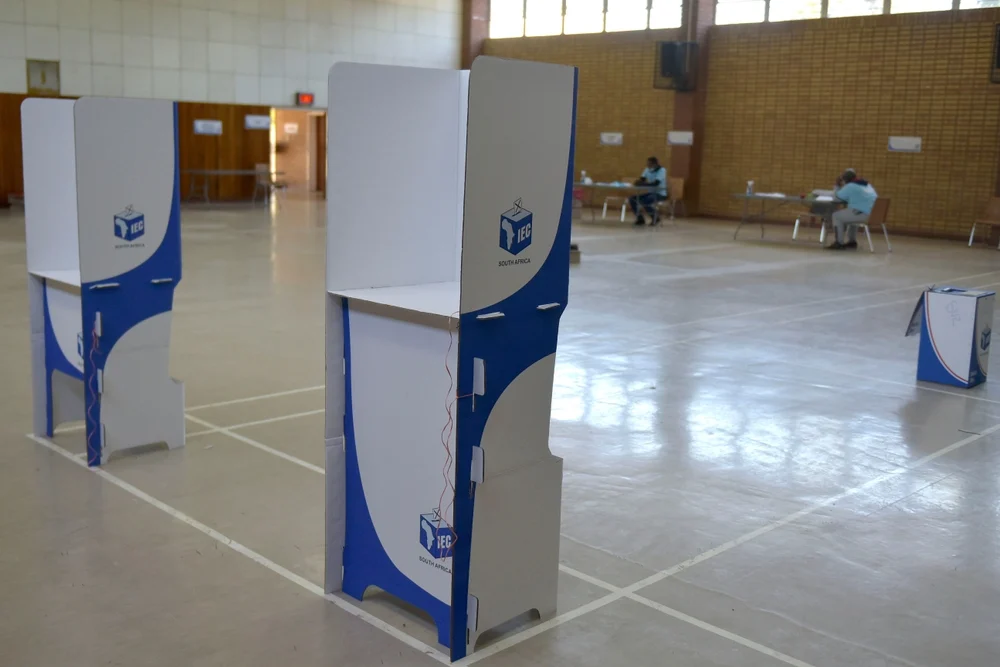
Water taps ran dry across Johannesburg, Pretoria, and surrounding municipalities within South Africa’s economic powerhouse, Gauteng province, leaving millions of residents without a reliable municipal supply just as voters headed to the polls for crucial local elections. This immediate crisis of basic service delivery has intensified a broader political reckoning. For the African National Congress (ANC)—the historic liberation movement of Nelson Mandela that has dominated South African democracy for more than three decades—the convergence of failing water infrastructure and chronic energy blackouts has translated into historic electoral losses.
As urban centers grapple with crumbling utilities, municipal mismanagement, and the crippling effects of systemic underinvestment, the crisis has become a central battleground for political challengers and private financiers alike. With public coffers strained and municipal borrowing capacities heavily constrained, a burgeoning movement is underway to mobilize billions in private capital, institutional pension funds, and blended finance structures to rescue Africa’s critical infrastructure before basic services collapse entirely.
The Political and Social Fallout of Gauteng’s Water Crisis
The sight of dry taps on election day underscored a reality that residents of South Africa’s urban core have faced with increasing frequency. While South Africa boasts one of the continent’s most sophisticated economies, its municipal water networks are suffering from acute decay. Helen Zille, a prominent and often controversial politician from the Democratic Alliance and former mayor of Cape Town, made municipal infrastructure collapse—specifically the water crisis—a cornerstone of her political campaigning in Johannesburg.
Unlike Cape Town, which famously faced an existential threat during its "Day Zero" drought in 2018 when authorities nearly ran out of water, the crisis in Gauteng is not merely a product of shifting weather patterns or natural water scarcity. Instead, analysts, civil society groups, and municipal engineers attribute the outages primarily to poor governance, delayed maintenance, and decades of underinvestment in municipal engineering.
The friction between cash-strapped municipalities and overburdened residents has boiled over into the legal system. Community advocacy groups in Johannesburg recently launched legal challenges against the city administration over a controversial 65% rate hike on water services. The city implemented the steep tariff increase to generate revenue for urgent infrastructure repairs, but residents argue the hikes are punitive and unaffordable during a period of sluggish economic growth and high unemployment.
Underlying the surface tension is a staggering operational inefficiency. Johannesburg’s aging water distribution network loses approximately 25% of its potable water through leaks, pipe bursts, and illegal connections before it ever reaches a residential tap. In other major South African municipalities, estimated water losses are even worse, bleeding up to one-third of their total treated supplies back into the ground. These astronomical non-revenue water figures have exacerbated shortages, inflated municipal debt, and severely compromised the financial viability of local authorities.
Mobilizing Private Capital for South African Water Infrastructure
Recognizing that municipal governments alone can no longer shoulder the financial burden of rehabilitating and expanding water networks, the South African government and institutional investors are forging new partnerships. Private financial institutions, including asset managers such as Ninety One and Climate Fund Managers, are increasingly stepping into the breach, deploying specialized capital to finance South Africa’s massive water infrastructure deficit.
Government policy documents reflect this strategic pivot. In the National Water Action Plan, released earlier this year by the South African presidency, officials formally acknowledged the integration of private sector backing for water security projects. The plan outlines commitments totaling approximately 130 billion rands—nearly $8 billion—dedicated to rehabilitating water treatment plants, sealing distribution leaks, and constructing new bulk water infrastructure through public-private partnerships and blended finance mechanisms.
Economists and development finance experts view this shift as a vital step toward stabilizing South Africa’s municipal creditworthiness. However, mobilizing private capital into municipal assets requires robust regulatory frameworks, transparent procurement processes, and tariff structures that reassure investors of reliable revenue streams. Without these structural reforms, private developers remain hesitant to commit long-term capital to local government projects plagued by administrative instability.
A Broader Continental Push: Unlocking Pension Fund Assets for African Infrastructure
The struggle to finance water and sanitation in South Africa mirrors a continent-wide challenge: bridging Africa’s multi-billion-dollar infrastructure gap. Across West, East, and North Africa, governments are attempting to unlock domestic institutional savings—most notably multi-billion-dollar pension funds—to fund essential energy, transport, and digital networks.
In a landmark agreement, UK-based development finance facilitator FSD Africa signed a pact with the Pension Industry Leadership Council to establish a $750-million fund aimed at financing energy, transport, and digital infrastructure projects across Nigeria. The initiative has already generated significant domestic buy-in, with nearly 20 Nigerian pension funds expressing formal interest in participating.
This latest development builds on a series of catalytic financial interventions across the region. Last year, FSD Africa Investments—the investment arm of the UK agency—provided seed capital to launch the Climate and Transition Infrastructure Fund, managed by Nigeria-based ARM-Harith Infrastructure Investments. Designed as a blended finance vehicle accommodating both hard and local currencies, the fund aims to de-risk investments for regional infrastructure developers.
Similarly, the Africa Finance Corporation (AFC), a premier development finance institution on the continent, launched a dedicated Nigeria-based vehicle through its Infrastructure Climate-Resilient Fund. The initiative is specifically structured to mobilize capital from domestic Nigerian institutional lenders, reducing reliance on volatile foreign currency debt and insulating projects from macroeconomic shocks.
The Sleeping Giant: Mobilizing Africa’s Institutional Wealth
Despite these promising initiatives, a massive structural paradox continues to constrain Africa’s infrastructure development: the vast majority of domestic institutional capital remains locked out of productive alternative assets.
According to financial sector data, African pension funds collectively manage approximately $600 billion in assets. Yet, on average, only about 10% of these funds are allocated to alternative investments such as infrastructure, private equity, and real estate. Regulatory caps, traditional asset-allocation mandates, and a lack of investment-grade project pipelines have historically kept institutional trustees tethered to low-yielding government bonds and cash instruments.
Financial analysts argue that unlocking even a fraction more of this $600 billion pool could fundamentally transform the continent’s economic landscape. By channeling domestic savings into essential services—from fixing leaking water pipes in Johannesburg to building resilient energy grids in Lagos—African nations can foster local job creation, stimulate long-term gross domestic product growth, and insulate themselves from the vagaries of international capital markets.
Implications and the Path Forward
The intersecting crises of dry taps in Gauteng and political backlash at the ballot box serve as a stark warning for emerging market democracies: economic growth and political stability are inextricably linked to the reliable delivery of basic public services.
As South Africa navigates its political transition and local governments reform their balance sheets, the success of blended finance models in the water sector will be closely watched across the developing world. If private capital, institutional pension funds, and municipal authorities can successfully collaborate to plug leaking pipes and modernize water treatment facilities, it will establish a vital blueprint for urban resilience. Conversely, failure to address the infrastructural decay threatens to deepen social unrest, erode democratic trust, and impede the economic potential of the continent’s most vital metropolitan regions.
