
The recent conclusion of the United Nations Climate Change Conference, COP31, held in Antalya, Türkiye, left many observers and environmental advocates deeply frustrated. Widely characterized in global media reports as a bureaucratic disappointment that failed to secure binding, ambitious multilateral agreements among world powers, the summit underscored the persistent friction of international climate diplomacy. Yet, far removed from the tense negotiations, procedural delays, and political posturing of the global stage, private market investors and institutional capital allocators are operating under an entirely different set of foundational assumptions.
For the world’s leading climate investors, the complex and frequently volatile shifting of geopolitical winds and inconsistent public policy signals are increasingly viewed as background noise. Instead, market participants are adhering strictly to the inexorable economic logic of the global energy transition.
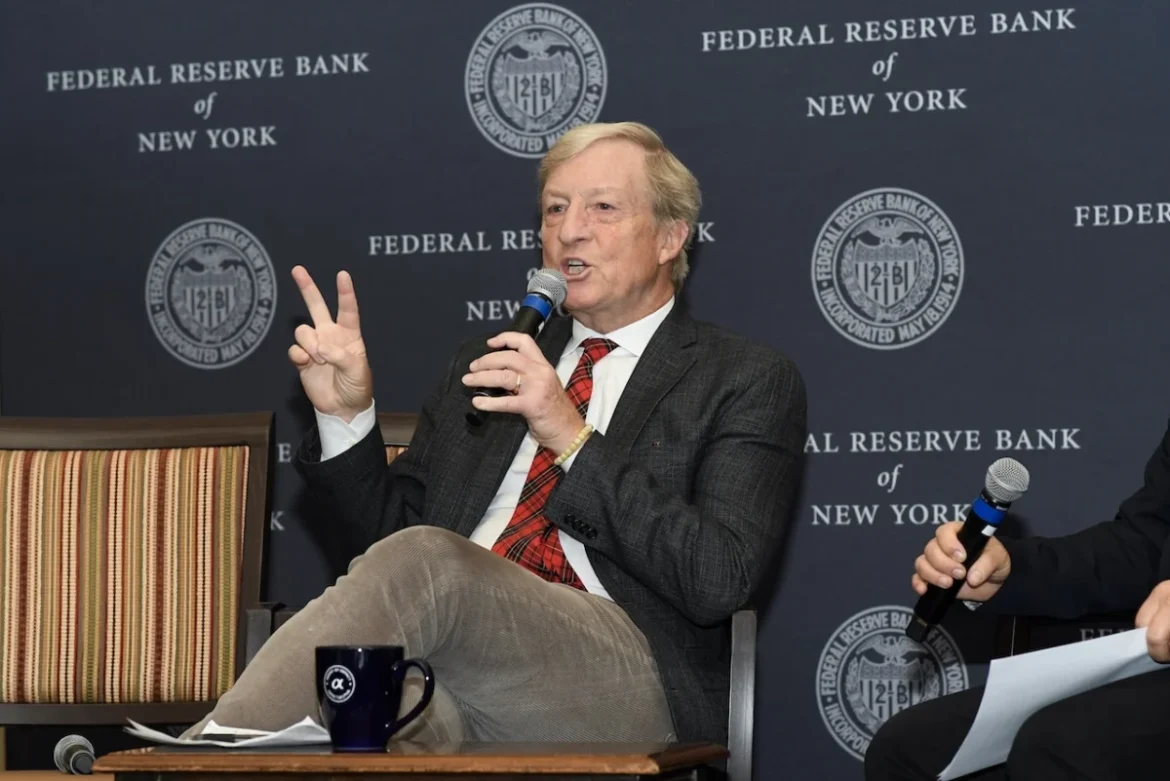
This decoupling of private investment momentum from public sector policy stagnation took center stage during the recent "Allocating for Impact" event, hosted by ImpactAlpha at the Federal Reserve Bank of New York. Gathering more than 100 limited partners, pension fund executives, and institutional asset allocators, the conference provided a vital platform to evaluate how capital markets are navigating the intersection of fiduciary duty, risk management, and long-term sustainability.
The Capital Markets Reality: Economics Outweigh Politics
Addressing the audience at the New York Fed, Tom Steyer, co-executive chairman and founder of Galvanize Climate Solutions and author of the book Cheaper, Faster, Better: How We’ll Win the Climate War, offered a blunt assessment of the disconnect between political stagnation and market realities.
"In energy, at a time when the policies have, by and large, gotten worse around the world, our business has grown," Steyer told attendees.
Steyer, who returned to leadership at Galvanize following an unsuccessful gubernatorial run in California, emphasized that the ongoing global shift away from fossil fuels and toward renewable energy generation is no longer driven primarily by moral imperatives or government mandates. Rather, it is being propelled by raw, unvarnished market capitalism. The fundamental driver of this historic transformation is the dramatic and sustained reduction in the costs of foundational clean technologies, including utility-scale solar photovoltaics, onshore and offshore wind turbines, and advanced energy storage battery systems.
According to Steyer, virtually every historical prediction regarding the cost trajectory of clean energy technology has proven overly conservative. For two consecutive decades, actual global deployments of solar infrastructure have consistently outpaced even the most optimistic, best-case forecasting scenarios published by traditional energy authorities such as the International Energy Agency (IEA).
"Nearly every prediction about the cost of clean energy was wrong and underestimated how quickly costs would fall," Steyer noted. "This is a business-driven, capitalism-driven change in the world. I want a level playing field for clean energy and fossil fuel energy, because I believe clean energy will come out on top, and its advantage will only grow."
Institutional Fiduciaries Double Down on Net-Zero Goals
While political debates over subsidies, carbon pricing, and environmental regulations continue to paralyze legislative bodies, long-term institutional investors bound by stringent fiduciary obligations are steadily accelerating their exposure to climate solutions. Pension funds, which manage trillions of dollars on behalf of public servants, educators, and retirees, are uniquely positioned to evaluate risk over multi-decade horizons. For these mega-funds, climate change is not merely an ethical consideration; it represents a systemic financial risk that directly threatens portfolio stability.
Among the institutional leaders spearheading this movement are some of the largest public pension funds in the United States, including the New York State Common Retirement Fund, the New York City retirement systems, and the California Public Employees’ Retirement System (CalPERS).
The New York State Common Retirement Fund achieved a significant milestone in early 2024 by successfully fulfilling its initial $20 billion climate investment target ahead of schedule. Demonstrating unwavering confidence in the asset class, the fund promptly doubled its ambition, establishing a new target of $40 billion in climate-related investments by 2035. Andrew Siwo, who leads Sustainable Investments and Climate Solutions at the state fund, noted that the institution has already committed more than $26 billion across a diversified portfolio spanning public equity, private equity, private credit, and fixed-income asset classes.
Similarly, the office of the New York City Comptroller oversees approximately $330 billion across five distinct municipal pension funds. The city’s comprehensive net-zero action plan incorporates a binding commitment to direct $37.8 billion—roughly 14% of its total assets under management—into verified climate solutions by 2035.
This momentum was further reinforced when New York City Comptroller Mark Levine announced a strategic expansion of private market climate allocations. The initiative earmarked $5 billion in fresh capital for private market climate opportunities tailored for the New York City Teachers’ Retirement System, the Employees’ Retirement System, and the Board of Education Retirement System. Shortly after the announcement, the city pension system executed its inaugural private-market climate allocation under Levine’s leadership, committing $116 million to the Sandbrook Climate Infrastructure Fund II.
On the West Coast, CalPERS—the nation’s largest public pension fund, managing approximately $630 billion in assets—reported a substantial expansion of its climate-focused portfolio. CalPERS disclosed that its climate solutions investments had surged to $71 billion, representing an $11 billion increase over the preceding year.
Announcing the milestone, Peter Cashion, managing investment director for sustainability at CalPERS, emphasized the direct link between portfolio resilience and physical climate realities. "Since the physical climate risk is likely to grow across our portfolio, our targets include investments that make assets, communities, and supply chains more resilient to a changing world," Cashion stated.
Decarbonizing Hard-to-Abate Sectors
The economic viability of clean technology is no longer confined to traditional power generation; it is rapidly permeating sectors long considered exceptionally difficult to decarbonize, such as heavy-duty freight transport and commercial aviation.
In the global transportation market, China has emerged as a bellwether for the rapid adoption of electric mobility in heavy industry. Nearly two-thirds of all new long-haul commercial trucks sold in China are now fully electric. While the United States lags significantly behind this pace—with electric trucks comprising less than 1% of new sales domestically—the commercial imperative for fleet electrification is building across global markets.
Similarly, the aerospace sector is beginning to explore electrification, with experimental and commercial electric aircraft already conducting successful test flights on short-haul commuter routes. Globally, renewable sources now account for as much as 95% of all new electricity generating capacity added to grids, fundamentally altering the economics of global energy infrastructure.
Despite these technological triumphs, infrastructural bottlenecks continue to pose significant challenges. Steyer voiced strong support for permitting reform currently under consideration in the United States Congress, arguing that outdated regulatory frameworks severely impede the construction of vital clean energy infrastructure, such as interstate high-voltage transmission lines.
Furthermore, Steyer advocated for a regulatory framework that holds polluters directly accountable for the socioeconomic and environmental damage they generate. "If businesses pollute, they should pay for it," Steyer said. "Taxpayers shouldn’t have to cover the costs of the pollution that makes them sick and drives damages their communities are already paying to prevent and repair. The companies who cause those costs should pay for them. That’s what I call a level playing field."
Beyond Energy: Applying Market-Driven Disruption to Social Challenges
While the energy transition has successfully leveraged technological cost reductions to drive rapid market adoption, addressing chronic systemic challenges—such as affordable housing shortages and escalating healthcare costs—remains a more complex undertaking. However, Steyer argued that the core economic ethos of developing cheaper, faster, and better solutions can still be successfully applied to broader societal needs.
In the housing sector, for example, factory-built modular construction units offer a dramatically lower-cost alternative to traditional on-site building methods, presenting a viable pathway to alleviate chronic housing deficits. Yet, these innovations frequently encounter fierce resistance from entrenched political and economic interests.
"Is there a technological way to do this differently? Yes. Can we drive down costs dramatically? Yes. Does that fly in the face of powerful interests? Absolutely," Steyer observed. Addressing the healthcare sector, he added, "In healthcare, we have to change our system to change inflation. But powerful organizations and institutions like it exactly the way it is. Investment can help solve huge problems when it backs products that are undeniably great."
Implications for Long-Term Asset Allocation
As financial markets absorb the lessons of recent climate summits and macroeconomic volatility, private equity and institutional investors are increasingly viewing the current market environment as an opportune entry point. With asset valuations stabilizing and lower market multiples prevailing across several sectors, clean tech and climate infrastructure companies frequently present more attractive risk-adjusted entry points than they did at the beginning of the decade.
While public policy frameworks will undoubtedly influence the speed and geographic distribution of the global transition, market participants remain confident that the foundational economic momentum is irreversible.
"I can’t tell you how the market is going to value things, but I can look forward and say, ‘In the context of this very volatile and complicated world, we are betting on a transition that we believe is going to go on for decades,’" Steyer concluded. "I sleep well about where the world is going and, I promise you, it’s going to change more than people expect."
