
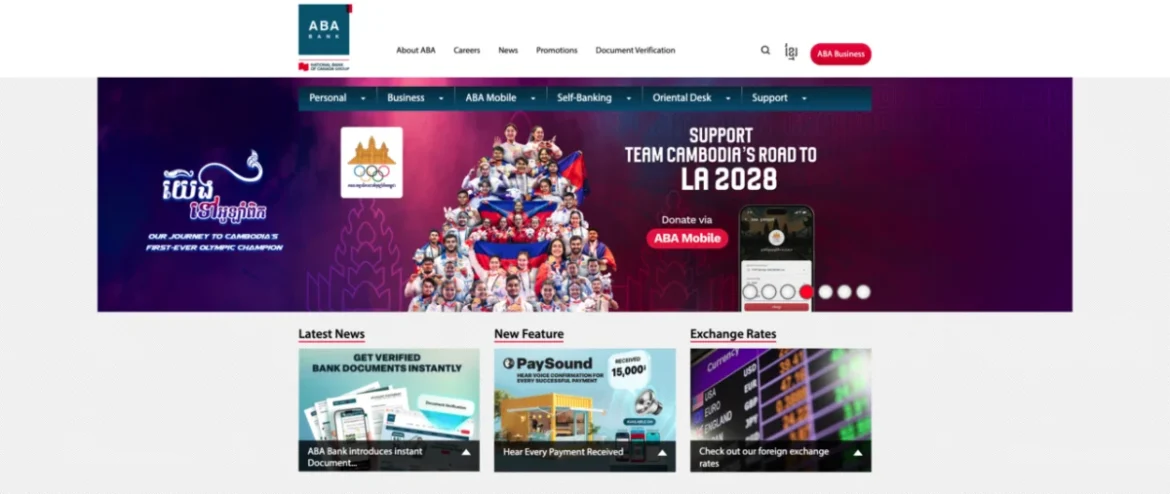
Cambodia’s financial technology and banking landscape is experiencing a period of profound evolution, defined by international regulatory cooperation, cross-border payment integration, and global recognition for top-tier domestic institutions. Recent developments highlight how the Southeast Asian nation is concurrently fortifying its cybersecurity infrastructure against international criminal syndicates and expanding its digital interoperability framework to facilitate seamless trade and tourism.
This comprehensive review examines the historic Memorandum of Understanding (MoU) signed between the United Kingdom and Cambodia to combat transnational cyber fraud, the launch of India’s Unified Payments Interface (UPI) via Cambodia’s national KHQR system through ACLEDA Bank, and the prestigious global ranking achieved by ABA Bank in Forbes’ World’s Top Performing Banks.
United Kingdom and Cambodia Forge Historic Alliance to Eradicate Transnational Scam Networks
In a decisive move to address the escalating threat of cyber-enabled financial crime, the governments of the United Kingdom and Cambodia have formalized a bilateral partnership. The two nations signed a landmark Memorandum of Understanding designed to dismantle transnational networks of illegal scam centers that have plagued the Southeast Asian region and victimized citizens globally.
The cooperative framework establishes protocols for enhanced data sharing, joint intelligence operations, and coordinated law enforcement actions against criminal syndicates. Crucially, the agreement explicitly addresses the sinister humanitarian crisis intertwined with these financial operations: human trafficking. Many individuals forced to labor in scam compounds are themselves victims of trafficking, subjected to extreme psychological coercion and physical threats to execute mass online fraud schemes. The MoU commits both governments to providing targeted support and protection for rescued victims.
The urgency of this agreement is underscored by empirical data regarding modern fraud distribution. According to UK officials, more than two-thirds of all fraud impacting British citizens originates overseas, necessitating aggressive international frameworks that transcend geographic boundaries.
"Fraudsters don’t respect international borders," stated UK Minister for Fraud, Lord Hanson. "Over two-thirds of fraud affecting the UK originates overseas so agreements like this are vital to reducing the threat to the public here at home. I’m pleased to have reached this agreement with Cambodia which will strengthen our work to dismantle scam centers and stop these criminals profiting from misery. We will pursue fraudsters wherever they operate from."
As part of the capacity-building initiatives outlined in the agreement, the UK government will deliver specialized training to Cambodian law enforcement agencies. This instruction will focus on advanced cybercrime investigations, digital forensics methodologies, and complex investigative procedures. Furthermore, the collaboration will be integrated into the broader architecture of the Global Fraud Taskforce—an international initiative jointly developed by the UK and INTERPOL. This integration will streamline suspect identification, provide tactical backing for field raids, and systematically target the illicit financial flows that sustain these criminal enterprises.
Cross-Border Financial Integration: UPI Acceptance Goes Live in Cambodia via KHQR

While regulatory bodies unite to suppress illicit financial networks, Cambodia’s legitimate digital economy continues to expand through sophisticated technological partnerships. In a major milestone for bilateral commerce, NPCI International Payments Limited (NIPL)—the international arm of the National Payments Corporation of India—has partnered with ACLEDA Bank to launch Unified Payments Interface (UPI) acceptance across Cambodia.
The integration is executed through Cambodia’s national standardized QR code system, KHQR. Currently deployed in Phase 1, the initiative empowers Indian travelers to utilize their home UPI-powered mobile applications to scan KHQR codes at over 4.5 million merchant locations throughout Cambodia. This capability extends across high-traffic economic sectors, including tourist attractions, retail establishments, hospitality venues, and dining establishments, ensuring secure, frictionless transactions without the immediate need for physical currency exchange.
The strategic roadmap anticipates a reciprocal Phase 2 implementation, which will enable Cambodian travelers visiting India to utilize their domestic banking applications at millions of UPI-enabled merchant terminals across the South Asian subcontinent. This establishes a fully bilateral, interoperable payment corridor designed to foster regional tourism and commercial trade.
"ACLEDA Bank is proud to launch Phase 1 of our cross-border interoperability initiative, enabling Indian travellers to execute secure digital transactions via UPI-enabled applications across our extensive KHQR merchant network," noted In Channy, President and Group Managing Director of ACLEDA Bank. "This partnership represents a significant achievement in our digital transformation roadmap."
The infrastructure underpinning this development is rooted in Cambodia’s proactive national payment strategy. Officially launched in July 2022 by the National Bank of Cambodia, KHQR positioned the country at the vanguard of Southeast Asian digital payment standardization. KHQR operates in tandem with Bakong, Cambodia’s pioneering national payment and clearing system unveiled in October 2020. By the close of 2024, the ecosystem had successfully onboarded approximately 4.5 million merchant accounts, cementing a pervasive digital infrastructure.
The operational advantages of this integration extend far beyond consumer convenience. By establishing a direct digital bridge between the payment gateways of Cambodia and India, the initiative effectively eliminates transactional friction and mitigates foreign exchange volatility for transient populations.
"By integrating the payment gateways of Cambodia and India, we are removing transactional friction and foreign exchange volatility for travellers," In Channy elaborated. "This synergy empowers local merchants by providing direct access to a high-velocity digital market, optimizing liquidity management, and enhancing operational throughput via secure, real-time settlement protocols. Ultimately, this collaboration drives financial inclusion and strengthens the bilateral economic corridor through robust, scalable technology."
Institutional Evolution of ACLEDA Bank
The architect of this major payment integration, ACLEDA Bank, holds a foundational position within the Cambodian financial ecosystem. Recognized as Cambodia’s leading bank for trade finance by Global Finance in 2025, ACLEDA boasts an asset valuation exceeding $10 billion, maintaining a dominant market presence across both urban centers and underserved rural communities.
The institution’s trajectory offers a compelling case study in institutional development. ACLEDA was founded in 1993 originating as a non-governmental organization (NGO) designed to deliver vital microfinance services to a post-conflict economy. Through strategic institutional maturation, it transitioned into a specialized bank in the year 2000 before achieving full commercial banking status in 2003. Today, it stands as one of the "Big Four" commercial banking pillars supporting the national economy.
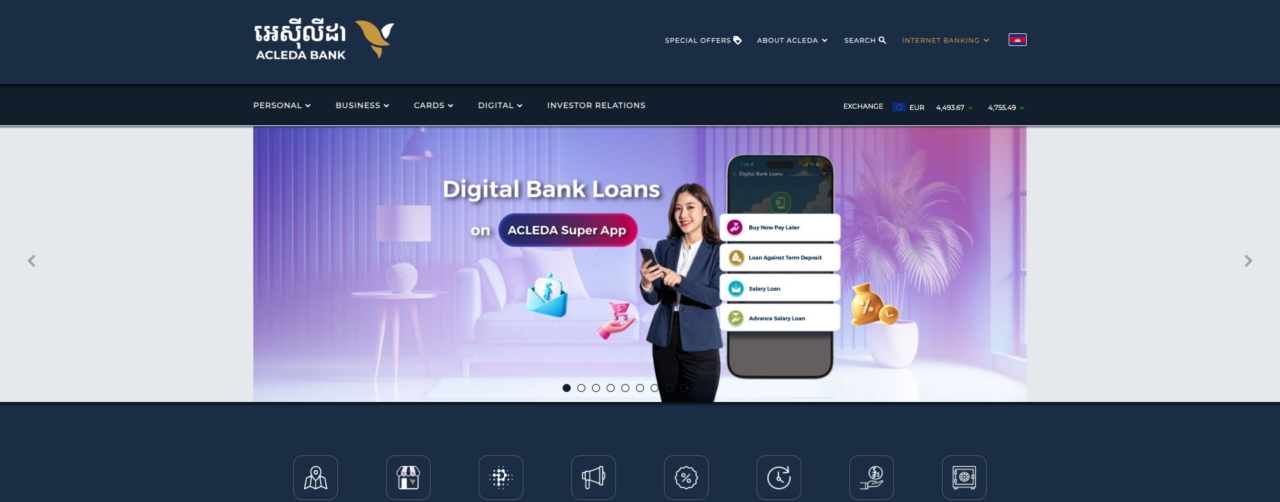
ABA Bank Claims Top National Honors in Forbes World’s Top Performing Banks 2026
Complementing ACLEDA Bank’s regional advancements, fellow industry leader ABA Bank has achieved prominent international acclaim, earning top recognition in the financial media landscape.
Forbes has designated ABA Bank as the number one banking institution in Cambodia within its prestigious World’s Top Performing Banks 2026 ranking. On a global scale, the institution secured the 31st position worldwide within the Lower Mid-Size Banks category, marking a watershed moment for the Cambodian banking sector’s international reputation.
Established in 1996 as the Advanced Bank of Asia Limited, ABA Bank initially catered to a highly selective portfolio of corporate clients. Over three decades, the institution evolved into the largest commercial bank in Cambodia, spearheading the nation’s digital banking revolution. Currently managing total assets in excess of $16 billion, ABA Bank serves a massive retail base exceeding five million mobile banking customers. Its physical and digital operational footprint includes 106 brick-and-mortar branches, 45 dedicated self-service banking locations, and a network of more than 2,000 automated self-service machines.
Reflecting on the global recognition, ABA Bank Chief Executive Officer Askhat Azhikhanov emphasized the collective nature of the achievement.
"This achievement reflects the strength of our business and the consistency of our performance, but it also represents something broader," said Azhikhanov. "It is the result of the trust of millions of customers, the dedication of our people, and our continued focus on building a strong, resilient, and forward-looking bank. We are proud to see ABA’s performance recognized on a global stage, and we remain committed to raising the bar even further."
Broader Implications for the Cambodian Fintech Sector
The concurrent convergence of rigorous international anti-fraud enforcement, advanced cross-border payment integration, and global financial recognition signals a maturing financial ecosystem in Cambodia.
By partnering with the United Kingdom and INTERPOL, Cambodian authorities are aggressively shielding their national infrastructure from association with illicit transnational syndicates, thereby protecting foreign direct investment and bolstering institutional credibility. Simultaneously, initiatives such as the NIPL-ACLEDA UPI integration demonstrate that Cambodian financial institutions are capable of deploying world-class, interoperable payment rails that align with global fintech standards.
As institutions like ACLEDA Bank and ABA Bank continue to scale their digital capabilities and capture international accolades, Cambodia is rapidly shedding its historical economic constraints. The nation is solidifying its status as an innovative, secure, and technologically progressive hub within the broader Asia-Pacific digital economy.
