
As global financiers, policymakers, and energy executives converge on Toronto for Mark Carney’s high-profile Canada Investment Summit, the federal government’s newly minted investment prospectus is drawing intense scrutiny. Among the portfolio of mega-projects showcased to international capital is one of the most audacious and capital-intensive proposals in recent Canadian history: the Kino Aski LNG project.
Carrying an estimated price tag of US$23 billion, the venture proposes a massive industrial corridor designed to transport Western Canadian natural gas roughly 1,000 kilometres across the province of Ontario. The destination is Baie-Comeau, Quebec, where proponents intend to construct three floating liquefaction facilities. Once operational, these terminals would process and export up to 15 million tonnes of liquefied natural gas annually to international markets.
Yet, despite its prominent placement in federal promotional materials aimed at attracting foreign direct investment, the project is colliding with a wall of complex geopolitical, environmental, and regulatory hurdles. Promoted primarily on two distinct selling points—its status as a First Nations-led initiative and its promise of ultra-low-emission production—Kino Aski is drawing sharp warnings from energy economists, climate scientists, and policy experts who argue that federal promotion risks masking deep-seated vulnerabilities.
Anatomy of a Mega-Project: The Logistics and Financial Footprint
The logistical ambition of Kino Aski LNG cannot be overstated. By attempting to bridge Western Canadian gas fields with a maritime export terminal in Eastern Canada, the project seeks to establish a trans-national energy highway reminiscent of past pipelines that faced fierce regional opposition. The engineering undertaking requires not only the construction of a cross-Ontario pipeline spanning roughly a millennium of kilometres, but also the deployment of cutting-edge floating liquefaction infrastructure in the marine environment of Baie-Comeau.
To achieve its green credentials, the proponent consortium—led by Kino Aski Inc., with the Atikamekw Nation Council holding a 50.1% majority stake and Norwegian shipping firm Marinvest alongside other partners holding the remainder—has outlined a massive clean-power procurement strategy. The blueprint calls for the construction of 1,700 megawatts of dedicated wind power generation, supplemented by an additional 550 megawatts drawn directly from the provincial utility, Hydro-Québec.
Proponents argue that utilizing this wind and hydroelectric power to run the liquefaction process rather than conventional gas-fired turbines will drastically curb the facility’s carbon footprint. However, energy analysts point out that this heavy reliance on Quebec’s electrical grid introduces significant infrastructure and operational risks, particularly as the province faces rising domestic electricity demand driven by transportation electrification and industrial decarbonization initiatives.
The Shadow of GNL Québec: A Historical Chronology
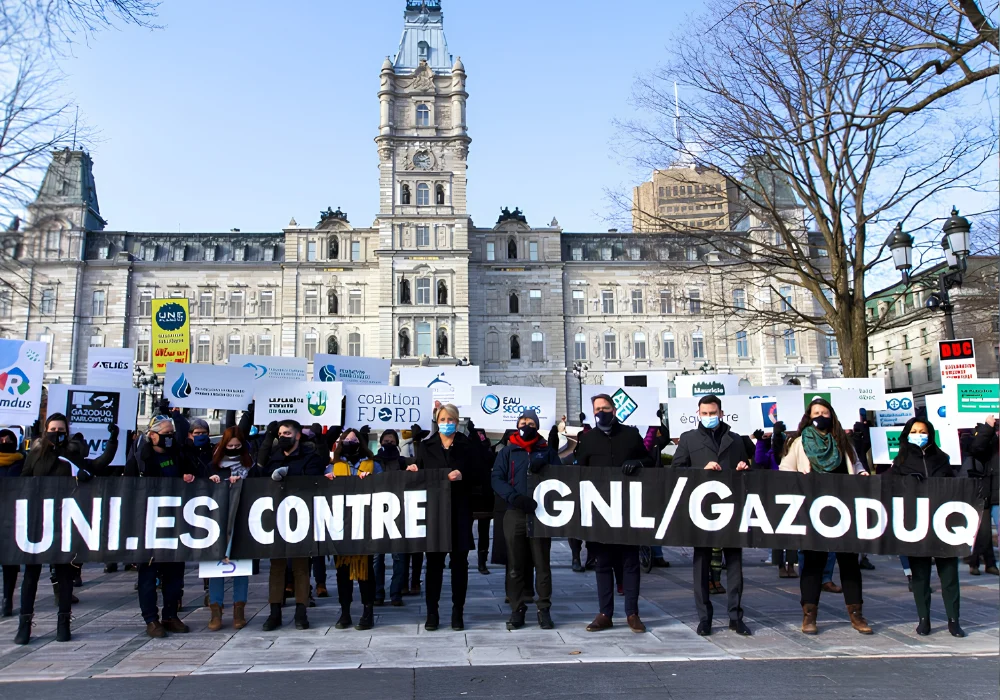
To understand the current skepticism surrounding Kino Aski, observers must look back at the turbulent history of energy export proposals in Eastern Canada. The project is widely viewed by critics as a conceptual revival of the defunct GNL Québec–Énergie Saguenay proposal—a multi-billion-dollar export terminal project that dominated provincial headlines for years before collapsing.
The Chronology of Eastern LNG Proposals:
- 2018–2019: GNL Québec gains momentum, proposing a pipeline and terminal to export Western Canadian gas via the Saguenay Fjord, triggering intense public debate across the province.
- 2021: Following extensive environmental reviews and widespread grassroots mobilization, the federal and provincial authorities officially reject the GNL Québec project, citing insurmountable concerns over life-cycle greenhouse gas emissions and a lack of social acceptability.
- 2026: The Kino Aski LNG project emerges as a reworked iteration of the concept, shifting the terminal location to Baie-Comeau and emphasizing First Nations equity ownership and localized wind electrification to bypass past regulatory roadblocks.
- Present: As the project enters the "pre-application" phase and seeks early-stage development financing at the Canada Investment Summit, a coalition of scientists and economists warns that the core environmental and territorial contradictions of its predecessor remain unaddressed.
The Fallacy of Overlapping Consent: Ownership Versus Territorial Rights
At the heart of Kino Aski’s marketing strategy is its historic governance model. With the Atikamekw Nation Council maintaining a controlling 50.1% interest, the project represents a significant step forward in Indigenous economic self-determination. Proponents emphasize that Indigenous Peoples possess the fundamental right to initiate, own, and reap the financial rewards of major resource developments.
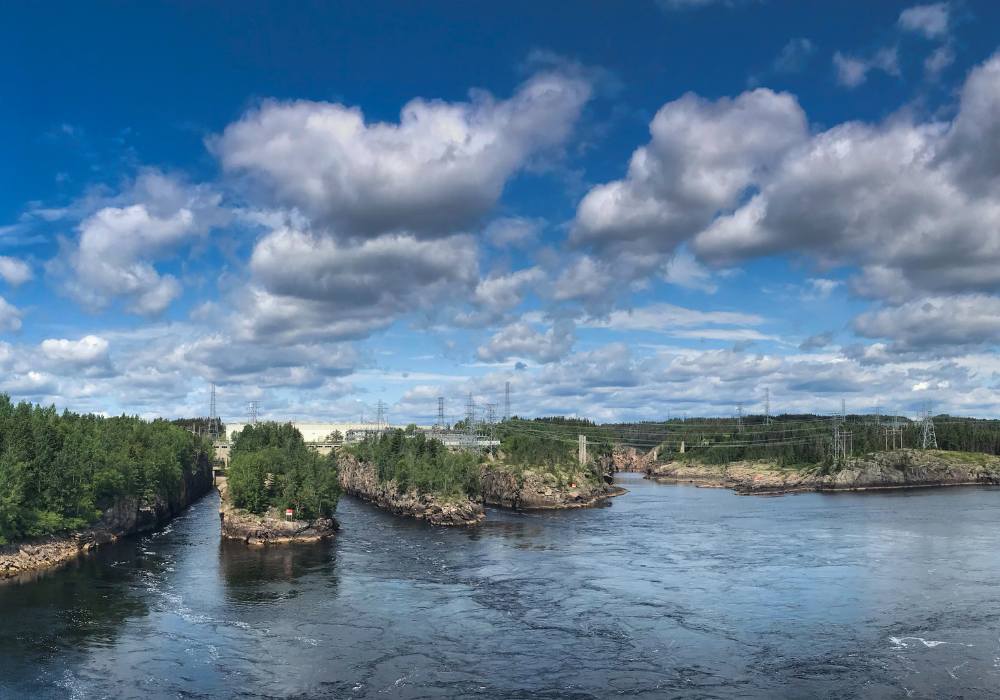
However, legal and public policy experts caution against conflating corporate equity ownership with universal consent. While the Atikamekw leadership has backed the initiative, the proposed pipeline corridor and industrial footprint traverse the traditional territories of multiple distinct Indigenous Nations.
Under established principles of Indigenous rights and jurisprudence, one nation’s agreement to participate in a commercial enterprise does not extinguish another nation’s sovereign right to object to infrastructure crossing its lands. Critics point out that bypassing or minimizing the distinct consultation rights of these intersecting nations creates severe permitting, legal, and operational vulnerabilities. In the realm of major infrastructure, unresolved territorial disputes translate directly into project delays, and delays rapidly compound into fatal financing risks.
Furthermore, the political landscape in Quebec adds another layer of profound uncertainty. The project is being proposed during a provincial election cycle where the incumbent government has not authorized the venture. Whichever political coalition emerges victorious from the ballot box will inherit the monumental task of addressing the territorial, economic, and environmental fallout of an industrial project of this magnitude. Entering a pre-application phase without explicit provincial authorization or comprehensive inter-nation agreements leaves international investors exposed to immense regulatory volatility.
Scrutinizing the Climate Claims: Emissions and Energy Dependencies
Beyond territorial governance, Kino Aski’s environmental positioning is facing rigorous scientific pushback. More than 30 academic researchers have publicly warned that the project remains fundamentally incompatible with global climate science targets.
The core of the scientific critique lies in the accounting of life-cycle emissions. For the original GNL Québec proposal, experts estimated that full-cycle emissions—accounting for extraction, processing, pipeline transport, liquefaction, ocean shipping, and ultimate combustion abroad—would range between 50 and 83 megatonnes of carbon dioxide equivalent annually. Kino Aski has yet to release empirical data demonstrating that its revamped operational model would perform substantially better.
While the integration of 1,700 megawatts of new wind capacity and 550 megawatts of Hydro-Québec electricity represents a significant electrification effort, researchers note that it does not render the production process zero-carbon. Natural gas arriving at the Baie-Comeau terminal will inevitably require upstream treatment and carbon dioxide removal to meet strict international LNG specifications. If the extracted carbon dioxide is vented into the atmosphere rather than captured, transported, and permanently stored, these emissions will persist regardless of how much renewable electricity powers the liquefaction compressors.
To date, Kino Aski has not disclosed detailed data regarding feed-gas composition, upstream treatment specifications, or concrete carbon-dioxide-management protocols. Without this data, independent environmental assessments and carbon audits remain impossible, leaving financiers to rely entirely on unverified corporate assertions.
Additionally, the project’s reliance on Quebec’s clean grid introduces complex resource-allocation dilemmas. Kino Aski’s plan to have its wind generation "balanced by the clean grid" means the project is structurally dependent on the flexibility and storage capacity of Hydro-Québec’s massive hydroelectric reservoirs. This electricity is a finite public asset with competing, high-priority uses across the province, including the decarbonization of residential heating, public transit systems, and domestic manufacturing industries. Diverting hundreds of megawatts of firm clean power to service an export-oriented fossil fuel facility is expected to spark intense domestic pushback from local industries and ratepayers.
Implications for Global Investors at the Summit
For the international investors browsing the federal prospectus in Toronto, the presence of Kino Aski LNG serves as a crucial test of due diligence. Federal investment summits are designed to generate economic momentum and showcase national ambition, but government backing does not equate to regulatory approval, social license, or financial bankability.
The convergence of multiple unresolved risk factors—untested life-cycle emissions metrics, complex electricity grid dependencies, overlapping Indigenous territorial disputes, and an undecided provincial electorate—creates a high-stakes environment for prospective capital providers. As financial analysts frequently observe, early-stage equity participation in projects lacking foundational social and regulatory consensus carries an asymmetric risk profile.
Ultimately, the debate over Kino Aski LNG crystallizes the broader tensions facing modern Canadian energy policy: balancing the legitimate aspirations for Indigenous economic self-determination with the rigorous demands of scientific accountability, ecological protection, and multi-jurisdictional consent. Until proponents provide transparent, verifiable data addressing these fundamental vulnerabilities, the path from a federal prospectus to a functional, bankable reality remains fraught with peril.
