

For compliance officers, legal teams, and CTOs, the traditional audit process is frequently synonymous with administrative fatigue. The cycle of gathering evidence, chasing department heads for documentation, and manually verifying system controls often consumes months of internal labor. Beyond the sheer time investment, these manual processes introduce the persistent, high-stakes risk of human error—a single oversight can jeopardize an entire security certification, potentially stalling enterprise sales cycles or triggering regulatory penalties. In an era where digital trust is a primary currency for business, the shift from manual spreadsheets to automated, AI-driven compliance platforms has become a strategic necessity rather than a luxury.
Vanta has emerged as a leader in this transition, evolving from its origins as a focused SOC 2 automation tool into an expansive Agentic Trust Platform. By integrating continuous monitoring across over 400 systems—including cloud infrastructure, identity providers, and HR software—the platform seeks to replace episodic, reactive compliance with a state of constant audit readiness.
The Institutional Shift: From Manual Spreadsheets to Continuous Monitoring
Historically, compliance was treated as a periodic event. Organizations would scramble to collect screenshots and generate reports only when a major audit was imminent or when a prospective enterprise client demanded proof of security. This "point-in-time" approach is increasingly untenable. Modern regulatory landscapes, defined by frameworks like GDPR, HIPAA, ISO 27001, and the rising demand for AI-specific governance (such as ISO 42001), require a dynamic, verifiable posture.
The economic implications of this shift are significant. Data from recent industry reports suggest that companies failing to demonstrate security maturity can face sales cycles extended by months, or worse, the total loss of enterprise deals. When organizations rely on manual documentation, the potential for incomplete evidence or misunderstood framework requirements is high. By automating the evidence-gathering process, platforms like Vanta remove the ambiguity of self-reporting, providing a continuous stream of data that is inherently more reliable for both internal stakeholders and third-party auditors.
Chronology of an Expanding Ecosystem
Vanta’s trajectory reflects the broader maturation of the RegTech (Regulatory Technology) sector. Founded to solve the specific pain point of SOC 2 compliance, the company quickly identified that its core technology—integrating with existing tech stacks to pull evidence—was applicable to a wider array of security and privacy obligations.
Over the last 24 months, the company has aggressively expanded its feature set:
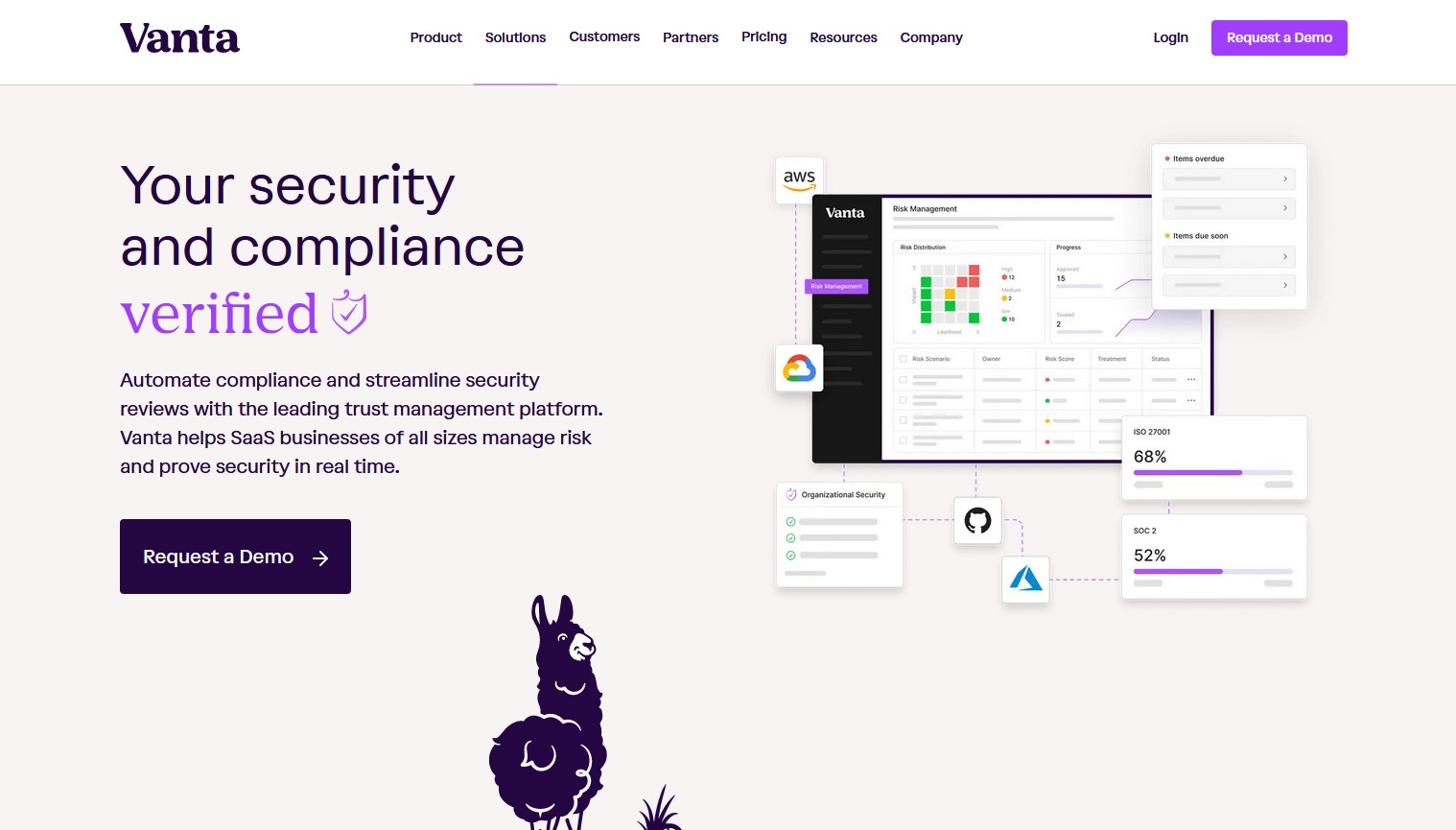
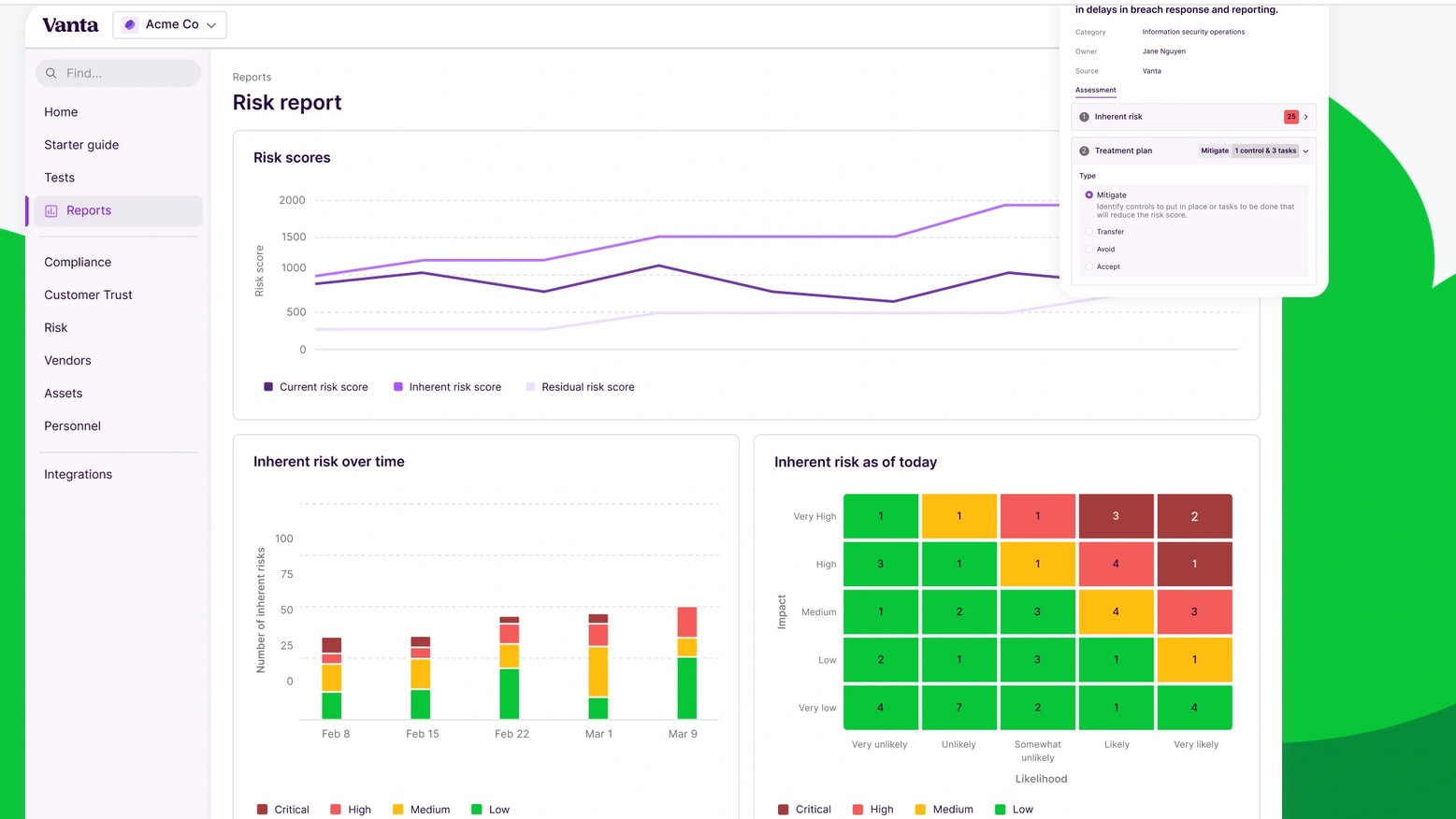
- Early 2024: Introduction of sophisticated Risk Management tools, allowing organizations to visualize their risk posture through a centralized dashboard.
- Late 2024: Launch of the Agentic Trust Platform, incorporating AI-driven workflows that go beyond mere monitoring to actively drafting security documentation and responding to vendor questionnaires.
- March 2026: Integration of comprehensive privacy automation, incorporating ROPAs (Records of Processing Activities) and Data Protection Impact Assessments (DPIAs) directly into the security workflow.
- Early 2026: Implementation of automated vendor offboarding protocols to close security gaps during the vendor lifecycle.
This rapid expansion indicates a broader market trend: the consolidation of security, privacy, and compliance into a single, unified "trust" department.
Core Features and Technical Capabilities
Vanta’s current architecture is built on several key pillars designed to reduce the "compliance tax" on engineering and operations teams.
AI Agent 2.0 and Efficiency Metrics
The most prominent addition to the platform is its AI Agent 2.0. By leveraging verified data from the user’s environment, the agent handles the heavy lifting of questionnaire responses. Internal data from Vanta suggests that users of these agentic features realize a 129% increase in team productivity. Perhaps more critical for business operations, the company reports an 81% reduction in the time required to complete security reviews. This allows sales and IT teams to bypass the traditional bottleneck of security questionnaires, which are often repetitive and manually intensive.
The Risk Graph and Strategic Oversight
For organizations operating in complex environments, identifying a single vulnerability is insufficient. The Vanta Risk Graph provides a spatial representation of how various risks interconnect across an organization. If a cloud configuration error in AWS creates a ripple effect impacting vendor management, the platform identifies this relationship. This allows CISO-level decision-makers to prioritize remediation based on actual impact rather than a static, linear to-do list.
Multi-Entity Management and Global Scaling
The "Organizations Center" addresses the needs of enterprise-level firms that manage multiple business units, subsidiaries, or geographical footprints. Instead of maintaining disparate, siloed compliance programs, leadership can now utilize a single dashboard to oversee the global security posture, while local teams maintain the flexibility to manage their specific operational requirements.
Customer Commitments and Trust Transparency
Enterprise contracts often include specific security obligations—such as notification windows for breaches or specific protocols for data processing. "Customer Commitments" allows firms to track these contractual promises against their actual security controls. By centralizing these obligations, Vanta helps prevent accidental breaches of contract, while the public-facing "Trust Center" provides a transparent, real-time look at an organization’s compliance status, often reducing the need for back-and-forth communication during the sales process.
Analytical Perspective: Implications for the Market
The adoption of such platforms has measurable implications for the industry. First, it forces a professionalization of compliance. When tools provide daily alerts and automated gap detection, the "excuse" of technical ignorance becomes invalid. Organizations are now held to a standard of "continuous compliance," where a system is either secure and verified or it is not.
Second, the cost-benefit analysis of these tools is evolving. While the entry-level packages provide basic SOC 2 assistance, the true value—and the most sophisticated features—are locked behind higher-tier plans. For smaller startups, this represents a significant budgetary consideration. However, when weighed against the cost of an external audit firm’s hourly rate for remedial work, or the opportunity cost of losing an enterprise deal, the return on investment (ROI) often tilts heavily in favor of the automation platform.
Limitations and Considerations
Despite its advancements, Vanta is not a "set it and forget it" solution. Organizations must still possess a baseline of security maturity. The platform can highlight gaps, but it cannot fix structural organizational apathy. Furthermore, the reliance on AI for drafting security responses requires a human-in-the-loop approach to ensure accuracy. While the AI Agent 2.0 is highly efficient, it remains a tool for augmentation rather than a total replacement for security expertise.
For organizations without an existing compliance team, the learning curve can be steep. Initial setup requires a disciplined approach to integrating existing systems. Companies that lack clean data or well-defined internal access controls may find that Vanta exposes more "messiness" than they are prepared to address in the short term.
Strategic Conclusion
Vanta has effectively transitioned from a niche tool for SOC 2 to a comprehensive operating system for digital trust. By synthesizing risk management, privacy compliance, and continuous audit readiness into a single interface, it provides a viable path for companies to scale their security posture alongside their growth.
For organizations currently struggling with the inefficiencies of manual compliance, the decision to migrate to a platform like Vanta is essentially a decision to shift resources from administrative "busy work" to actual security engineering. While the platform requires a commitment of time and budget, the ability to turn compliance from a reactive bottleneck into a competitive sales advantage is a compelling proposition for the modern enterprise. As the regulatory environment continues to tighten, the value of a centralized, AI-supported, and continuous compliance infrastructure will only grow, cementing its role as a mandatory component of the modern tech stack.
