
While insurance carriers continue to debate the pace and scale of artificial intelligence transformation across their operations, industry stakeholders warn that policyholder trust is steadily eroding with every delayed, fragmented, and disconnected claims experience. In response to this pressing operational challenge, Reuters Events has officially released the timed agenda for Connected Claims USA 2026, scheduled to take place on November 3 and 4 in Orlando, Florida. The comprehensive schedule is the culmination of more than 100 hours of direct consultations and qualitative research conducted with leading claims executives from across the insurance landscape, aiming to address the core friction points plaguing modern policyholder interactions.
Background and Context of the Event
The insurance claims sector has historically operated as the back-office engine of carrier operations, often characterized by legacy IT infrastructure, siloed data systems, and manual workflows. However, in recent years, shifting consumer expectations—driven by seamless digital experiences in retail, banking, and travel—have transformed the claims process into the ultimate differentiator for insurance brands. Policyholders no longer judge carriers solely on the competitiveness of their premiums; rather, their long-term loyalty is forged or broken at the moment of loss.
Recognizing this paradigm shift, Connected Claims USA has evolved into the premier annual gathering for senior insurance executives, claims directors, risk managers, and technology innovators. The 2026 installment in Orlando is designed to move the industry past theoretical discussions surrounding digital transformation and into actionable implementation. By focusing exclusively on the claims ecosystem, the event carves out a dedicated space where operations are not treated as an afterthought, but as the central pillar of customer retention and brand equity.
Developing the Timed Agenda: A Research-Driven Approach
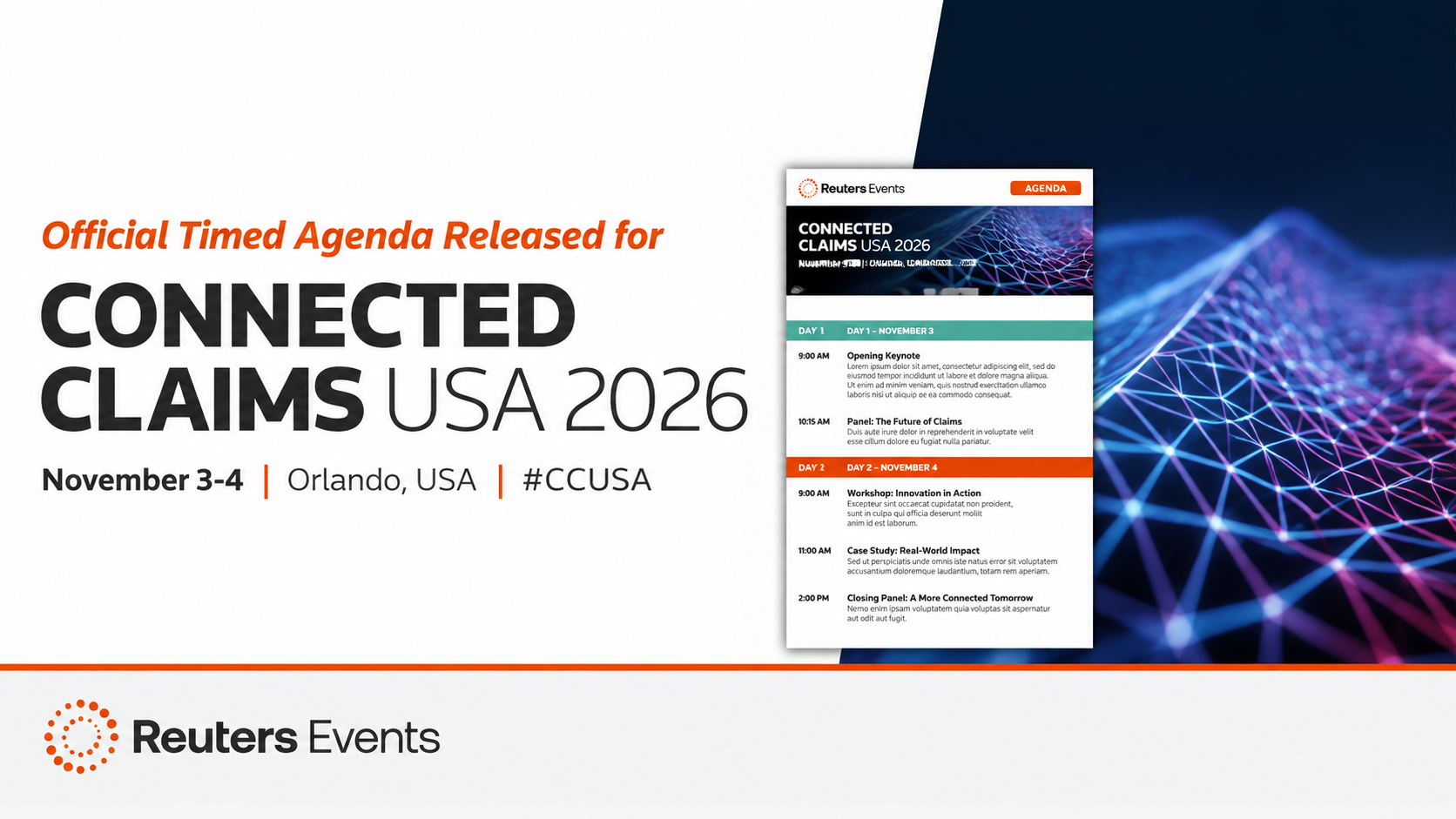
To ensure the relevance of every keynote, panel, and workshop at Connected Claims USA 2026, the organizing team at Reuters Events undertook an extensive research initiative. Over the course of three months, producers conducted more than 100 in-depth interviews with Chief Claims Officers, Heads of Customer Experience, and VP-level technology leaders from tier-one and regional insurance carriers alike.
The resulting agenda addresses the most acute pain points identified by these leaders. These include the friction of legacy system integration, the ethical and operational boundaries of generative AI deployment, escalating fraud detection complexities, and the rising demand for real-time payout capabilities. Every session—ranging from broad, macro-level main stage keynote panels to intimate, highly focused roundtable discussions—has been engineered to provide attendees with practical blueprints for operational modernization.
Key Themes and Must-Attend Sessions
The officially released timed agenda highlights several critical tracks that reflect the current state of maturity within the insurance technology landscape. Central to the discourse is the strategic integration of automation without sacrificing empathy. While generative automation and machine learning models are increasingly capable of handling low-complexity FNOL (First Notice of Loss) intakes, industry leaders emphasize that human oversight remains irreplaceable during catastrophic events or high-stress liability disputes.
Other highlighted sessions delve into the mechanics of data orchestration. Carriers are increasingly burdened by unstructured data trapped in legacy repositories, ranging from adjusters’ handwritten notes to complex medical imagery. The 2026 agenda features dedicated deep-dives into advanced data fabric architectures that allow carriers to unify disparate data streams, thereby accelerating decision-making cycles and minimizing administrative bottlenecks. Furthermore, specialized workshops will explore workforce transformation, addressing the impending talent gap as seasoned claims professionals reach retirement age and digital-native recruits enter the workforce.
Profile of Attendees and Industry Participation

Connected Claims USA 2026 is projected to draw upwards of 800 senior professionals, establishing itself as one of the largest specialized gatherings of its kind. The delegation comprises a diverse mix of stakeholders, ensuring robust cross-pollination of ideas and strategies. Attendees will include executive leadership from national and international insurance carriers, property and casualty (P&C) specialists, specialty line underwriters, legal experts, insurtech founders, and enterprise software vendors.
The presence of diverse market participants allows for a holistic examination of the claims value chain. Carriers gain direct access to cutting-edge technology providers demonstrating real-world applications of computer vision for damage assessment, predictive analytics for litigation management, and blockchain initiatives for fraud mitigation. Meanwhile, tech vendors and consultants gain invaluable feedback from frontline practitioners regarding the practical constraints of enterprise deployment.
Broader Impact and Strategic Implications for the Insurance Sector
The timing of Connected Claims USA 2026 aligns with a critical juncture for the global insurance industry. Macroeconomic pressures, including persistent inflation, climate-driven catastrophe frequency, and supply chain disruptions for automotive and home repairs, have placed immense strain on loss adjustment expenses (LAE) and combined ratios. In this environment, operational efficiency is no longer a competitive advantage—it is a baseline requirement for financial survival.
Industry analysts note that carriers that fail to modernize their claims infrastructure risk facing catastrophic churn rates. Modern policyholders demand transparency, speed, and empathetic communication when disaster strikes. When a claims process drags on due to internal silos or antiquated communication channels, customer sentiment plummets, often resulting in permanent defection to more agile competitors or digital-first disruptors.
Moreover, the regulatory landscape surrounding claims handling is becoming increasingly stringent. State insurance commissioners and international regulatory bodies are closely scrutinizing carrier response times, fairness in automated decision-making, and transparency in claim denials. Discussions at the Orlando conference will directly address these compliance hurdles, providing executives with strategies to balance speed-to-settlement with rigorous adherence to evolving regulatory frameworks.

Looking Ahead to Orlando
As the insurance industry counts down to November 3, anticipation within the professional community continues to build. The release of the timed agenda provides a clear roadmap for what promises to be a transformative two days of dialogue, networking, and strategic planning. For members of the broader insurtech and claims management community, such as the Insurtech Express network, the event offers a vital forum to forge partnerships that will define the next decade of insurance operations.
Ultimately, Connected Claims USA 2026 seeks to redefine the narrative surrounding claims technology. By shifting the industry’s focus from mere cost-cutting to value creation, the event aims to empower carriers to restore policyholder trust, modernize their operational backbones, and build a resilient claims infrastructure capable of weathering the uncertainties of the future.