
The sudden onset of a personal financial crisis—whether through abrupt job displacement, severe vehicular damage, or unexpected medical emergencies—often triggers an immediate dual shock for households. Beyond the psychological trauma of the event itself, individuals are frequently forced to confront the chilling reality of immediate monetary insolvency. Recent comprehensive data released by financial services firm Bankrate illuminates a stark economic vulnerability plaguing a substantial majority of the American populace: only three in ten citizens maintain sufficient liquid savings to independently absorb a major financial shock without external borrowing.
This widespread lack of reserve funds transforms routine life disruptions into compounding crises, frequently compelling consumers to rely on high-interest debt instruments such as credit cards, personal loans, or premature retirement account withdrawals. Consequently, financial experts increasingly emphasize that establishing and maintaining a robust emergency fund is not merely an auxiliary savings goal, but a foundational pillar of modern financial health. By acting as a fiscal shock absorber, a dedicated emergency reserve prevents individuals from backtracking on long-term wealth-building objectives while simultaneously mitigating the acute anxiety associated with unforeseen expenditures. Navigating the process of building, sizing, and housing an emergency fund requires a methodical, three-step framework tailored to individual risk tolerance and macroeconomic realities.
Deconstructing the Anatomy of a Financial Emergency
To understand the urgency of reserve planning, one must examine the broader socioeconomic landscape that has evolved over recent decades. Economic volatility, characterized by fluctuating labor markets, persistent inflation, and tightening credit conditions, has left households increasingly susceptible to income interruptions. Historically, traditional safety nets—such as corporate pensions, robust union protections, and expansive social welfare programs—provided a cushioned buffer for workers experiencing sudden hardship. In the contemporary economy, however, the burden of financial resilience has shifted almost entirely to the individual.
Chronologically, the modern focus on emergency preparedness gained unprecedented traction during the 2008 global financial crisis and the subsequent economic shocks of the COVID-19 pandemic. These macro-level disruptions exposed systemic vulnerabilities, revealing that millions of middle-class and lower-income families lived paycheck to paycheck, utterly devoid of liquidity. Financial regulators and consumer advocacy groups subsequently intensified educational initiatives, urging consumers to prioritize liquid savings over speculative investments. Despite these campaigns, recent Bankrate metrics demonstrate that the needle has moved sluggishly, with systemic wage stagnation and the rising cost of living continually eroding households’ abilities to accumulate surplus capital.
When sudden hardships strike, the timeline of financial distress typically unfolds in distinct phases. In the immediate aftermath—hours zero through forty-eight—the focus remains on triage, whether that involves medical treatment or vehicle repairs. Between day three and week two, billing statements arrive, and the stark reality of out-of-pocket costs materializes. For those lacking cash reserves, this window marks the dangerous pivot toward high-interest credit lines. Over the ensuing months, the compounding interest on these emergency debts can paralyze a household budget, turning a temporary crisis into a multi-year financial burden.
Step One: Calculating Monthly Living Expenses and Establishing Baselines
The foundational prerequisite for building an adequate emergency fund is determining the precise monthly cost of basic survival. Coming up with this specific monetary figure is frequently complicated by the sheer volume of modern recurring expenditures. Households typically manage dozens of regular bills that fall into several broad budgetary buckets, including housing (mortgage or rent, property taxes, and insurance), utilities (electricity, water, internet, and gas), debt service (minimum loan and credit card payments), and essential nourishment (groceries and household supplies).
Recognizing that manual calculation can present an intimidating barrier to entry, modern financial technology platforms have introduced automated estimation tools. For instance, digital wealth management services such as Betterment utilize algorithms that analyze an applicant’s financial profile—evaluating connected bank accounts, historical spending patterns, and recurring debit transactions—to automatically project monthly living expenses.
While these technological shortcuts streamline the initial phase, consumers retain the autonomy to adjust these baseline figures manually. Financial analysts stress that precision is secondary to momentum; allowing complex mathematical calculations to delay the initiation of a savings habit remains one of the most common pitfalls in personal finance. Whether derived through software automation or traditional spreadsheet accounting, establishing a reliable baseline figure is the critical first step toward fiscal security.
Step Two: Determining the Ideal Duration and Savings Horizon
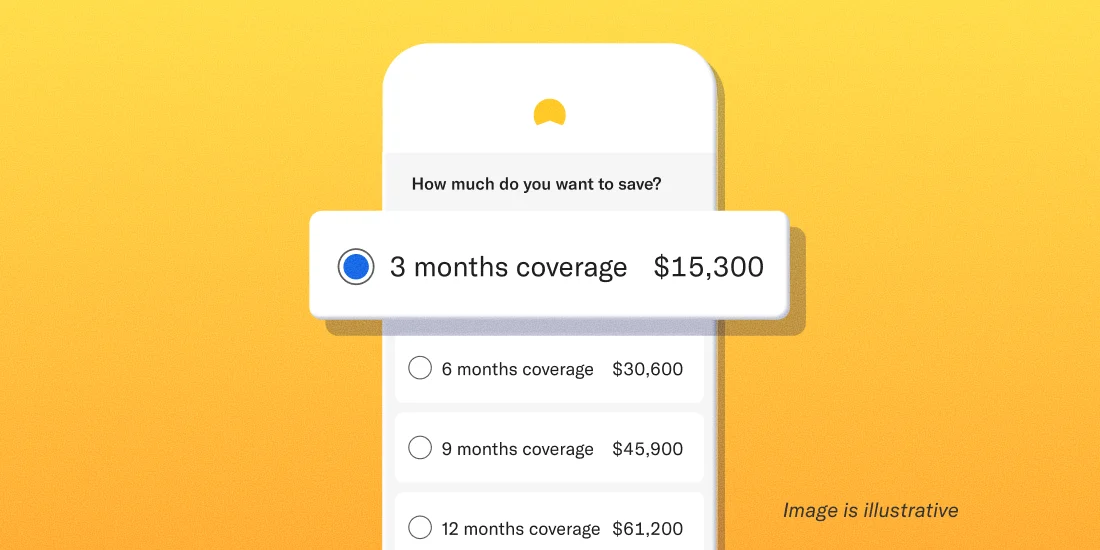
Once a monthly expense baseline is established, account holders must determine how many months of coverage their specific lifestyle and risk profile demand. Financial advisory consensus traditionally recommends maintaining a minimum of three months’ worth of essential living expenses. However, this benchmark serves merely as a floor rather than a universal ceiling.
Several distinct life circumstances and professional variables warrant expanding an emergency fund to six, nine, or even twelve months of coverage. Individuals employed in highly volatile industries—such as technology, cyclical manufacturing, or commission-based sales—frequently face extended job searches during economic downturns, making larger reserves prudent. Similarly, sole proprietors, freelancers, and contract workers lack access to unemployment insurance and employer-sponsored benefits, necessitating a thicker financial cushion. Other risk factors include supporting dependents with specialized medical needs, owning older residential property prone to costly structural repairs, or operating a single-income household.
Consumer sentiment surveys reflect a nuanced understanding of these risks among the broader public. According to Bankrate’s findings, nearly one-third of surveyed individuals believe that an ideal emergency fund should span six months or more of living expenses. This divergence between the three-month minimum and the six-month preference underscores the psychological component of financial planning: the correct amount is ultimately the sum that allows an individual to achieve peace of mind and sleep soundly at night.
To bridge the gap between current balances and targeted goals, financial institutions often implement structured projection models. By analyzing initial deposits, scheduled recurring contributions, and expected asset returns, platforms can project a realistic timeline—frequently mapped across a four-year horizon—to achieve full funding. This timeframe is widely regarded as realistic for accumulating three to six months of expenses through steady, automated deductions. Once this milestone is achieved, savers can successfully pivot their capital toward other wealth-building priorities, such as retirement accounts, real estate acquisition, or higher education funding.
Step Three: Selecting the Optimal Vehicle for Liquidity and Growth
Deciding how much to save is only half the equation; savers must also determine where to store their emergency reserves. Because these funds must be accessible on short notice without the risk of catastrophic capital loss, traditional stock market investing is generally discouraged for the entirety of an emergency corpus. Instead, financial advisors recommend two primary vehicles: high-yield cash accounts or conservative, bond-heavy investment portfolios.
The first option—low-risk, high-yield cash accounts, including high-yield savings accounts and cash management products—offers maximum safety and immediate liquidity. These accounts often provide competitive interest rates that outpace traditional brick-and-mortar savings products, ensuring that stored capital retains a degree of purchasing power against inflation. Furthermore, deposits held in qualifying partner institutions are typically backed by Federal Deposit Insurance Corporation (FDIC) or National Credit Union Administration (NCUA) insurance, shielding savers against institutional insolvency.
The second option involves conservative, short-duration bond portfolios or income-focused investment accounts. While these vehicles introduce a marginal degree of market risk, they historically offer the potential for higher yields than standard cash deposits. However, this approach introduces price volatility; if an emergency strikes during an economic downturn when bond prices temporarily dip, the account holder might realize a loss upon liquidation.
Ultimately, the choice between cash and bonds hinges entirely on individual risk tolerance. For consumers who experience acute anxiety at the sight of negative portfolio balances—even temporary fluctuations—a pure high-yield cash account represents the optimal psychological choice. Conversely, individuals comfortable with moderate volatility in exchange for potential yield enhancement may opt for a balanced approach, splitting their emergency reserves between liquid cash and conservative fixed-income securities. Financial planners emphasize that there is no single correct methodology; hybrid strategies that blend both asset classes offer a customized middle ground for diverse consumer profiles.
Broader Economic Implications and the Dynamic Nature of Savings
Emergency funds are not static financial monuments; rather, they are dynamic assets that ebb and flow across the changing seasons of an individual’s life. Macroeconomic shifts, such as inflationary surges or rising interest rate environments, directly impact the purchasing power of stored capital and the yields generated by high-yield accounts. Consequently, financial experts recommend conducting periodic reviews of one’s emergency fund strategy.
Life milestones inevitably alter baseline expenditure requirements. The purchase of real estate, the arrival of a child, career advancements resulting in higher salaries, or the assumption of new debt obligations all necessitate a recalibration of monthly expense tallies. Financial analysts advise auditing emergency savings at least once annually, or immediately following any major lifestyle transition.
The broader macroeconomic implications of widespread emergency savings—or the lack thereof—extend far beyond individual household stability. On a systemic level, a population equipped with robust liquid reserves acts as a stabilizing force during economic contractions. When consumers possess independent buffers, panic-driven liquidations of long-term investments and sudden contractions in consumer spending are mitigated, blunting the severity of recessions. Conversely, a populace dependent on high-interest revolving debt is acutely sensitive to credit tightening, amplifying systemic financial risk during downturns.
As financial institutions continue to innovate through automated savings tools, integrated cash management platforms, and personalized algorithmic projections, the logistical barriers to emergency preparedness are steadily diminishing. However, the psychological and behavioral commitment required to prioritize liquidity over immediate consumption remains an individual responsibility. By systematically tallying expenses, defining a personalized risk horizon, and strategically housing funds in secure, accessible vehicles, households can transform vulnerability into resilience, ensuring that unexpected life events remain manageable hurdles rather than catastrophic financial failures.
