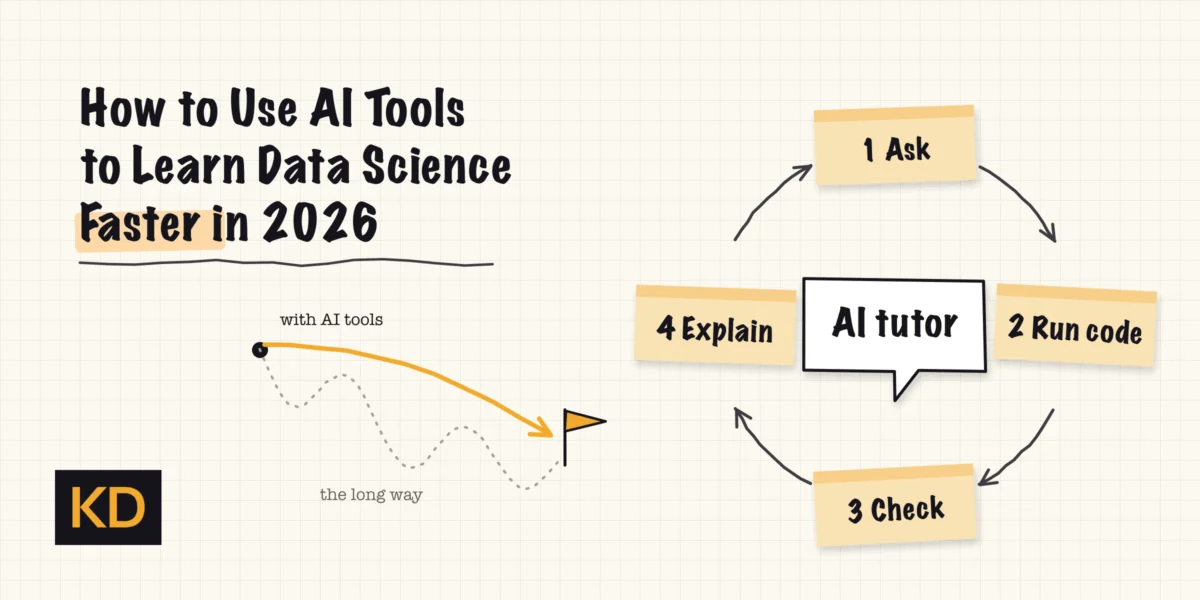
The landscape of data science education has undergone a paradigm shift as we enter 2026, transitioning from traditional, static curriculum models to dynamic, AI-augmented learning environments. As the barrier to entry for technical proficiency lowers, the primary challenge for aspiring data scientists has evolved from a lack of resources to a crisis of methodology. Where once a student might spend hours debugging a single script or scouring fragmented documentation, modern learners now utilize context-aware AI assistants to receive real-time, personalized instruction. However, this accessibility introduces a significant pedagogical risk: the tendency for learners to offload critical thinking to large language models (LLMs), potentially compromising the foundational understanding required for professional-grade work.
The Evolution of Technical Education: A Brief Timeline
The acceleration of data science learning is part of a broader trajectory in computer science education. In 2022, the public release of generative AI tools marked the beginning of a "co-pilot" era. By 2024, the integration of these tools into integrated development environments (IDEs) like VS Code and Jupyter became ubiquitous. As of early 2026, the industry has shifted toward "agentic" workflows, where AI does not merely suggest lines of code but orchestrates entire project lifecycles.
Data from the 2025 State of AI in Education report indicates that students utilizing AI-integrated learning platforms report a 35% reduction in "time-to-competency" for foundational Python tasks compared to peers using traditional, text-based documentation. Despite these gains, hiring managers have noted a growing disparity: candidates who treat AI as an oracle often fail during white-board coding interviews, while those who use AI as an interactive tutor demonstrate higher levels of architectural understanding.
Establishing Foundational Literacy Before Automation
The fundamental principle governing modern data science pedagogy is the necessity of "grounding." Before an individual can effectively leverage a transformer-based model, they must possess a working knowledge of statistical inference, linear algebra, and data structures. Without this context, the output generated by AI models is frequently misinterpreted or blindly accepted.
Educational experts advise that students should master libraries such as pandas and NumPy through manual implementation before transitioning to AI-assisted coding. The rationale is clear: when a student understands the mechanics of a "groupby" operation or the underlying logic of a confusion matrix, they can act as a critical editor of AI output. Conversely, relying on automated solutions during the initial learning phase creates a dependency that masks knowledge gaps until they are exposed in high-stakes professional environments. Platforms like DataCamp and Dataquest have adapted to this by implementing "AI-native" tutors that intentionally withhold the final answer, instead providing Socratic guidance to force the user to synthesize the underlying theory.
AI Assistants as Interactive Mentors
The transition from passive search engines to conversational AI represents a significant advancement in self-directed study. Tools such as ChatGPT, Claude, and specialized coding assistants function effectively as on-demand tutors, but their efficacy is entirely dependent on the quality of the user’s prompt engineering.
Industry best practices for self-study now emphasize three specific methodologies:
- Iterative Concept Deep-Dives: Instead of requesting a summary, learners are encouraged to ask the assistant for visual analogies, edge-case analysis, and minimal reproducible examples for complex topics like gradient descent or Bayesian inference.
- Professional-Grade Code Review: Rather than asking if a script "works," learners are taught to submit their code for a critique modeled on senior-level engineering standards. This requires the AI to focus on computational efficiency, variable naming conventions, and modularity.
- Strategic Milestone Planning: Learners use AI to generate tailored curriculum paths based on specific career goals, such as specializing in machine learning operations (MLOps) or natural language processing (NLP).
Bridging the Gap: Coding Assistants in Practice
The implementation of AI coding assistants, such as GitHub Copilot and Cursor, has changed the nature of professional development. Research from major software repositories indicates that developers utilizing AI tools complete tasks approximately 40% faster. For the student, this velocity allows for the rapid iteration of portfolio projects—a critical component of employability.
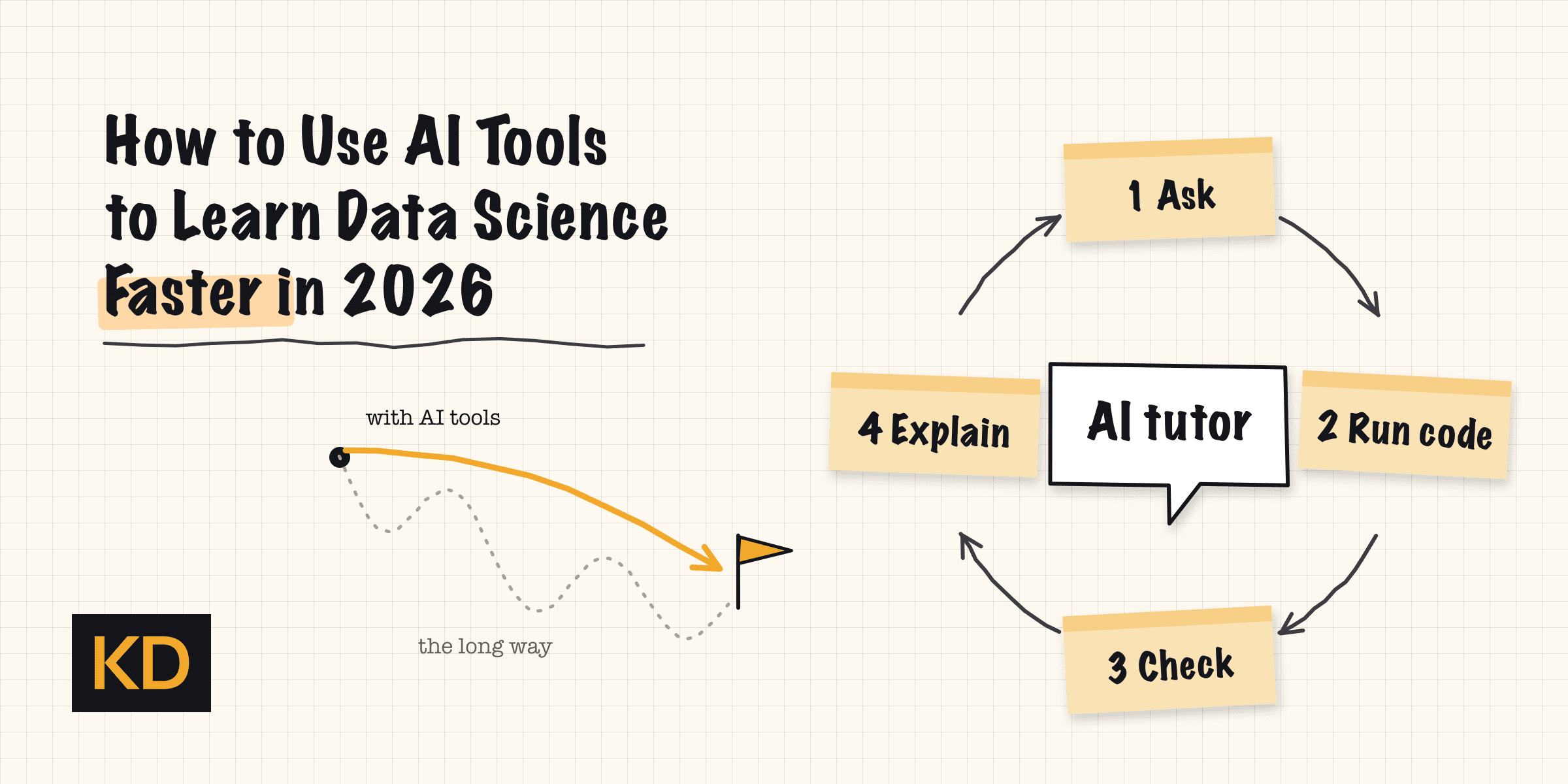
However, the risk of passive consumption remains high. To mitigate this, educators recommend a "three-step workflow":
- Step One: The student writes a manual implementation of the desired function.
- Step Two: The student asks the AI for an optimized or alternative implementation.
- Step Three: The student performs a comparative analysis, explicitly identifying why the AI’s version may be more performant or idiomatic.
This practice transforms the AI from a code generator into a comparative learning resource, training the user’s eye to recognize high-quality, scalable architecture.
Project-Based Learning and System Orchestration
In 2026, the definition of a "data scientist" has expanded to include the role of an "AI orchestrator." The modern practitioner is less likely to build a model from scratch and more likely to integrate pre-trained models via APIs, build retrieval-augmented generation (RAG) systems, and maintain data pipelines using frameworks like LangChain or LlamaIndex.
Portfolio projects are now expected to reflect this reality. Employers are increasingly looking for candidates who can demonstrate the ability to scope a problem, select the appropriate framework, and troubleshoot integration issues. AI tools assist here by helping students brainstorm project architectures and providing systematic debugging pathways when model performance falters. Utilizing environments like Jupyter Notebook, which supports direct integration with AI extensions, allows students to maintain their focus on the data science workflow without context-switching between browsers and editors.
Implications for the Future Workforce
The broader implication of this technological shift is a re-evaluation of what constitutes a "skilled" data professional. As technical syntax becomes secondary to architectural logic, the premium on critical thinking and domain expertise is rising. Organizations are beginning to prioritize "AI-literate" candidates—individuals who understand the limitations of LLMs, such as hallucination and bias, and who can systematically validate AI-generated outcomes.
According to a 2025 survey of lead data scientists at Fortune 500 companies, the most valued skill in the coming decade will be "systemic validation." This involves verifying the integrity of data inputs, ensuring the fairness of algorithmic outputs, and understanding the cost-benefit analysis of deploying specific models. Consequently, the most successful students will be those who use AI to learn faster, but who never outsource the final verification of their work to the machine.
Final Guidance for the 2026 Learner
As the industry continues to evolve, the distinction between a "consumer" and a "master" of AI tools will be defined by intentionality. The goal of using these tools should not be to minimize effort, but to maximize the depth of engagement. By utilizing adaptive platforms for foundational concepts, employing AI as a Socratic tutor, and treating every AI suggestion as a subject for critical review, the learner can navigate the rapid developments of 2026 with confidence.
Ultimately, while AI tools are transformative, they remain a supplement to, not a replacement for, the rigorous analytical discipline that defines the data science profession. The successful practitioner of the future is an active, critical, and curious learner who uses technology to expand their capabilities rather than to limit their intellectual growth. Through consistent application of these structured methods, students can ensure their skills remain relevant and robust in an increasingly automated world.