
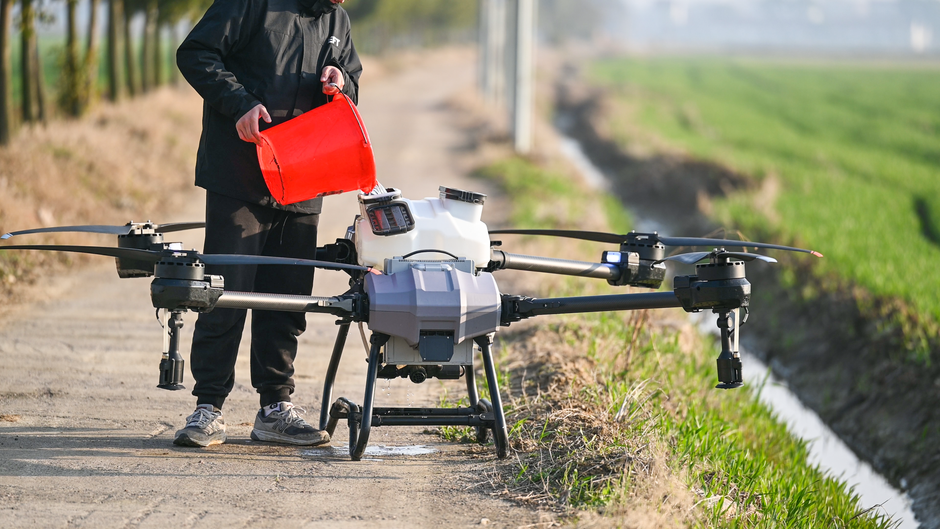
FarmSent: Revolutionizing Agriculture with Enhanced Smart Farming Solutions
FarmSent represents a significant advancement in smart farming technology, offering a comprehensive suite of integrated solutions designed to optimize agricultural operations, increase yields, and promote sustainability. The platform leverages a sophisticated combination of Internet of Things (IoT) sensors, data analytics, artificial intelligence (AI), and intuitive software to provide farmers with unprecedented control and insight into their crops and livestock. This article delves into the core functionalities, technological underpinnings, benefits, and future potential of FarmSent, highlighting its role in shaping the future of agriculture.
At its heart, FarmSent’s innovation lies in its hyper-granular data collection capabilities. The system deploys a diverse range of IoT sensors strategically placed throughout farms. These sensors monitor a multitude of environmental parameters critical to plant growth and animal welfare. For soil, this includes moisture levels at various depths, pH, nutrient content (e.g., NPK, potassium), and temperature. For the atmosphere, sensors track humidity, ambient temperature, CO2 levels, and light intensity. In controlled environments like greenhouses, sophisticated sensors can also monitor dissolved oxygen in hydroponic systems, leaf temperature, and even spectral analysis of plant health. For livestock operations, sensors can track individual animal health metrics such as body temperature, activity levels, rumination patterns, and location, offering early detection of disease or stress. The sheer volume and precision of data collected by FarmSent form the foundation for its intelligent decision-making processes.
The data gathered from these sensors is not merely collected; it is meticulously processed and analyzed using FarmSent’s powerful cloud-based platform. This platform employs advanced algorithms and machine learning models to identify patterns, predict trends, and detect anomalies. For instance, by analyzing soil moisture data in conjunction with weather forecasts, FarmSent can generate precise irrigation schedules, minimizing water waste and ensuring optimal hydration for crops. Similarly, nutrient sensors combined with growth stage models can inform precise fertilization strategies, applying the right nutrients at the right time, thereby reducing fertilizer runoff and its environmental impact. In livestock management, deviations in animal activity or body temperature can trigger early alerts, allowing farmers to intervene before a minor health issue becomes a major outbreak, saving both animal lives and economic losses.
Artificial intelligence plays a pivotal role in FarmSent’s decision-making engine. Machine learning algorithms are trained on vast datasets, encompassing historical farm data, agricultural research, and real-time sensor readings. This allows FarmSent to move beyond simple data reporting to proactive recommendations and automated actions. For example, AI can predict the optimal harvest window for specific crops based on growth models, weather predictions, and market demand. It can also identify potential pest or disease outbreaks before they are visually apparent, recommending targeted treatments. In livestock, AI can optimize feeding schedules based on individual animal needs, weight gain targets, and feed availability, leading to improved feed conversion ratios. The AI component of FarmSent continuously learns and adapts, improving its accuracy and effectiveness over time.
The user interface of FarmSent is designed for accessibility and ease of use, catering to farmers with varying levels of technological expertise. Through a web portal and dedicated mobile applications, farmers can visualize all collected data in an intuitive dashboard format. Interactive maps display sensor locations and real-time readings, allowing for quick identification of problem areas. Customizable alerts and notifications ensure that farmers are immediately informed of critical changes or recommended actions. FarmSent also offers reporting tools that generate comprehensive summaries of farm performance, resource utilization, and projected yields, aiding in strategic planning and financial management. The system’s integration capabilities further enhance its utility, allowing it to connect with existing farm equipment, such as automated irrigation systems, variable rate applicators, and robotic harvesters, enabling closed-loop control and automation of many farming tasks.
The benefits of implementing FarmSent are manifold, directly impacting a farm’s profitability, efficiency, and sustainability. Firstly, yield optimization is a primary advantage. By providing precise insights into crop needs and environmental conditions, FarmSent enables farmers to maximize their output per unit of land. This includes optimizing planting densities, irrigation, fertilization, and pest/disease management. Secondly, resource efficiency is significantly enhanced. Precise irrigation and fertilization reduce water and nutrient waste, leading to substantial cost savings and a reduced environmental footprint. Predictive maintenance alerts for equipment can also prevent costly breakdowns and downtime. Thirdly, improved quality of produce is achievable. Consistent and optimal growing conditions lead to more uniform, higher-quality crops, commanding better prices in the market. For livestock, consistent monitoring and timely intervention lead to healthier animals and higher quality products (e.g., milk, meat).
Furthermore, FarmSent contributes significantly to risk mitigation. Early detection of diseases, pests, or environmental stressors allows for proactive intervention, preventing widespread losses. Predictive analytics can also help farmers anticipate market fluctuations or adverse weather events, enabling them to make informed decisions to protect their investment. Labor optimization is another key benefit. Automation of tasks such as irrigation scheduling, data analysis, and even robotic interventions frees up valuable labor for more skilled or strategic activities. This is particularly crucial in regions facing labor shortages. Finally, and critically, sustainability is deeply embedded in FarmSent’s philosophy. By reducing water, fertilizer, and pesticide usage, and by minimizing waste, FarmSent empowers farmers to operate more environmentally consciously, contributing to long-term ecological health.
The technological backbone of FarmSent is built upon a robust and scalable infrastructure. The IoT sensors employ a variety of communication protocols, including LoRaWAN, NB-IoT, and Wi-Fi, ensuring reliable data transmission even in remote agricultural settings. Data security and privacy are paramount, with FarmSent employing industry-standard encryption and access control measures to protect sensitive farm data. The cloud platform is designed for scalability, capable of handling vast amounts of data from thousands of sensors across multiple farms, ensuring that the system can grow with the needs of its users. Edge computing capabilities are also integrated, allowing for local processing of critical data in real-time, reducing latency and enabling faster response times for time-sensitive operations.
Looking ahead, FarmSent is poised to further integrate emerging technologies to enhance its capabilities. The expansion of AI-powered predictive modeling will delve deeper into crop physiology, enabling hyper-personalized nutrient and water delivery down to the individual plant level. Integration with drone technology for aerial imaging and targeted spraying, as well as robotic solutions for automated harvesting and weeding, will become more seamless. The platform’s ability to share anonymized data for broader agricultural research will also contribute to collective knowledge building, accelerating innovation across the industry. Blockchain technology is also being explored to enhance traceability and transparency in the food supply chain, providing consumers with verifiable information about the origin and production methods of their food.
In conclusion, FarmSent is not simply a collection of smart devices; it is an intelligent, integrated ecosystem that empowers farmers with the data, insights, and automation necessary to thrive in the 21st century. By bridging the gap between cutting-edge technology and the fundamental needs of agriculture, FarmSent is setting a new standard for precision, efficiency, and sustainability, ensuring a more resilient and productive future for global food production. Its continuous evolution and adaptation to new technological frontiers solidify its position as a transformative force in smart farming.
