The election of Javier Milei to the presidency of Argentina in late 2023 signaled a seismic shift in the nation’s economic and environmental trajectory. Campaigning with a literal chainsaw to symbolize his intent to slash public spending and bureaucracy, the self-described anarcho-capitalist promised to unlock the country’s vast natural wealth by any means necessary. Since taking office, Milei’s administration has moved aggressively to dismantle long-standing regulatory barriers, focusing specifically on the mineral-rich Andes Mountains. At the heart of this strategy is the revitalized pursuit of copper, a critical mineral for the global energy transition, which has placed Argentina at the center of a high-stakes tug-of-war between economic desperation and environmental preservation.
The Strategic Pivot to Critical Minerals
Argentina finds itself at a historical crossroads. While neighboring Chile has leveraged the geological bounty of the Andes to become the world’s leading copper producer, Argentina’s mining sector has languished for decades. Stifled by chronic hyperinflation, fluctuating currency controls, and a complex web of provincial and federal regulations, the country’s copper exports effectively dropped to zero in 2018. Under Milei, the narrative has shifted toward a "mining-first" economy.
The global context for this shift is the accelerating transition toward renewable energy. Copper is the backbone of modern electrification; it is essential for the production of electric vehicle (EV) batteries, wind turbines, and solar power grids. The International Energy Agency (IEA) has projected that global copper demand could increase by 30% by 2040. With traditional suppliers like Chile and Peru facing declining ore grades and social unrest, Argentina’s untapped reserves—estimated to be among the largest in the world—have become an irresistible target for international capital.
A Chronology of Environmental Deregulation
The current "copper rush" is not merely the result of market forces but is the product of a deliberate legislative overhaul. To understand the current tension, one must look back at the legislative framework that Milei is now dismantling.
In 2010, Argentina enacted the National Glacier Protection Law (officially the Minimum Standards for the Preservation of Glaciers and the Periglacial Environmental Law). At the time, it was hailed as a global benchmark for environmental legislation. The law designated glaciers and periglacial zones—areas where frozen ground or seasonal ice provide critical water storage—as public assets. It strictly prohibited mining and oil exploration in these zones to protect the headwaters of rivers that sustain Argentina’s agricultural heartland.
The timeline of the recent reversal is rapid:
- December 2023: Javier Milei assumes the presidency and introduces the "Omnibus Law," a massive package of reforms aimed at deregulating the economy.
- April 2024: After intense debate, the Argentine Congress votes to reform the Glacier Protection Law. The reform shifts the authority to define and protect "hydrologically relevant" areas from federal scientific bodies to individual provincial governments.
- June 2024: The administration passes the Incentive Regime for Large Investments (RIGI), offering massive tax breaks, customs exemptions, and long-term legal certainty to mining projects exceeding $200 million.
- Late 2024: Major mining firms, including McEwen Copper and Glencore, accelerate feasibility studies and construction timelines for massive open-pit projects in the San Juan and Catamarca provinces.
The Los Azules Project and the Vision of Rob McEwen
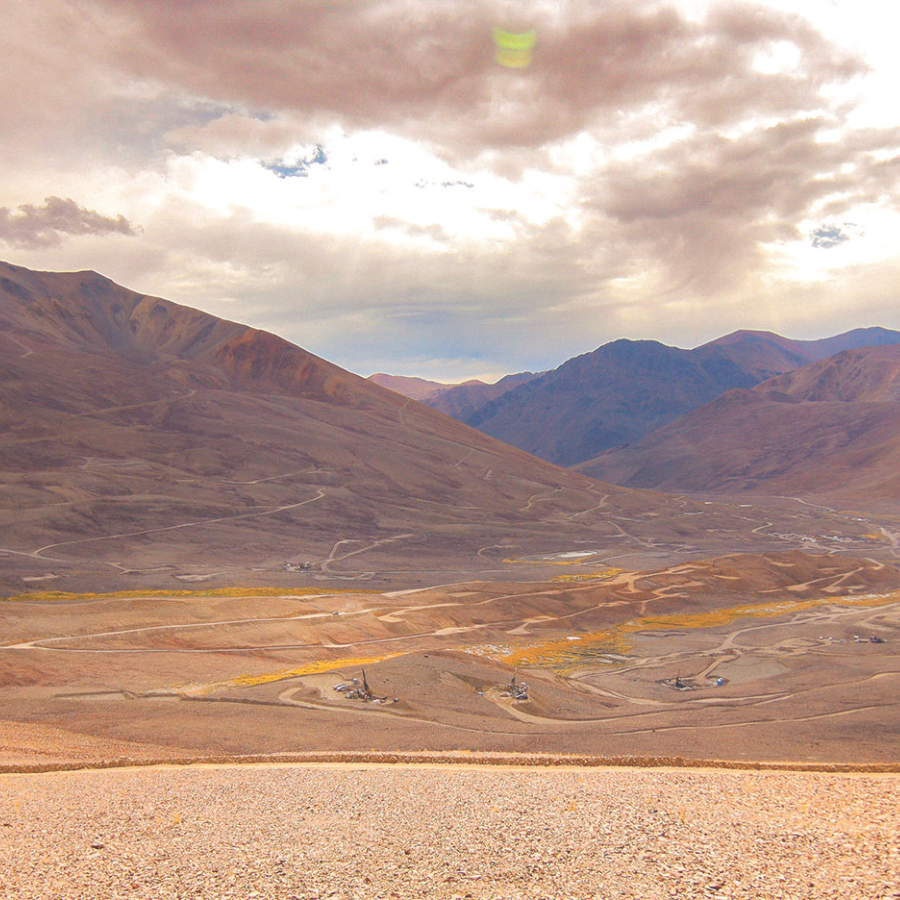
One of the primary beneficiaries of this new regulatory environment is McEwen Copper Inc., a subsidiary of McEwen Mining, led by Canadian mining magnate Rob McEwen. The company’s flagship project, Los Azules, is located in the San Juan province at an elevation of 3,500 meters. It is ranked as one of the world’s largest undeveloped copper deposits.
A feasibility study completed in late 2023 suggests that Los Azules could produce approximately 327 million pounds of copper cathode annually over a 27-year mine life. The project’s net present value (NPV) is estimated at $2.9 billion after taxes. However, McEwen is aware of the industry’s tarnished reputation in Argentina. He has marketed Los Azules as a "new breed" of mine, utilizing heap leaching technology—which consumes significantly less water than traditional milling—and aiming for carbon neutrality through the use of renewable energy.
To combat public skepticism, McEwen has proposed unconventional transparency measures, including futuristic architectural designs for worker housing and a potential hotel on-site to allow the public to observe operations. Despite these overtures, the project remains a target for environmentalists who argue that the mine’s infrastructure will inevitably encroach upon periglacial landforms, regardless of the company’s "green" branding.
Economic Imperatives vs. Water Security
The push for copper is fueled by Argentina’s dire economic statistics. With inflation hovering above 200% and nearly half the population living below the poverty line, the Milei administration argues that the country cannot afford to leave billions of dollars in minerals in the ground. Proponents of the mining boom point to the potential for copper to generate $5 billion to $10 billion in annual export revenue by the 2030s, providing the hard currency needed to stabilize the Argentine peso.
However, the scientific community warns of a different kind of bankruptcy. Juan Pablo Milana, a professor of geological science at the Universidad Nacional de San Juan, has been a vocal critic of the deregulation. He argues that the new law creates a "crisis of representation," where provincial governments, eager for mining royalties, may overlook the long-term destruction of water reserves. In a country currently suffering from a multi-year drought that has devastated its soy and corn exports, the protection of Andean water sources is seen by many as a matter of national security.
Supporting Data: The Stakes of the Copper Boom
The scale of the proposed mining expansion is reflected in the following industry data:
- Registered Projects: There are currently 76 copper mining projects in various stages of development across Argentina.
- Investment Potential: The Mining Chamber of Argentina (CAEM) estimates that if the top five projects (Los Azules, Taca Taca, Mara, Pachón, and Josemaría) reach production, they could attract over $20 billion in direct foreign investment.
- Production Targets: Industry analysts project that Argentina could produce 793,000 tons of copper annually by 2030, vaulting it into the top ten global producers.
- Water Usage: Traditional copper mining requires roughly 50 to 100 liters of water to process one kilogram of copper. In the arid San Juan province, this represents a significant portion of available snowmelt.
Official Responses and Social Backlash
The reaction to Milei’s reforms has been polarized. Provincial governors in the "Mining Triangle" (San Juan, Salta, and Catamarca) have largely welcomed the changes, viewing them as a path to regional development and job creation. San Juan Governor Marcelo Orrego has emphasized that mining can be done "responsibly" and is essential for the province’s future.
Conversely, civil society has mobilized in opposition. In April 2024, a coalition of organizations including Greenpeace, the Argentine Association of Environmental Lawyers, and the Environment and Natural Resources Foundation (FARN) filed a collective lawsuit declaring the reform of the Glacier Protection Law unconstitutional. They gathered nearly one million signatures in a national petition.
The shadow of past failures also looms large. The Toronto-based Barrick Gold Corp. remains a cautionary tale for many Argentinians. Between 2015 and 2017, the Veladero gold mine in San Juan suffered multiple cyanide solution spills, leading to massive fines and a temporary suspension of operations. This history of environmental mismanagement has created a deep-seated distrust of foreign mining entities, regardless of their claims of modern, sustainable practices.
Broader Implications and the Global South Perspective
The situation in Argentina highlights a growing tension in the global "Green New Deal." While the Global North seeks to decarbonize its economies through EVs and renewable energy, the "sacrifice zones" for the necessary minerals are often located in the Global South. Leandro Gómez of FARN argues that the current model of the energy transition is fundamentally extractive and fails to account for the rights of local communities or the fragility of local ecosystems.
If the Milei administration’s gamble pays off, Argentina could become a pivotal player in the global supply chain, breaking China’s current dominance over critical mineral processing. However, if the critics are correct, the short-term economic gain could lead to a permanent ecological "bust," leaving the country with depleted water tables and destroyed glaciers.
As construction at Los Azules is slated to begin in 2025, the world will be watching to see if Argentina can truly balance the "chainsaw" of deregulation with the "scalpel" of environmental stewardship. For now, the Andes remain a battleground where the future of the planet’s climate and the survival of a nation’s water supply are inextricably linked.