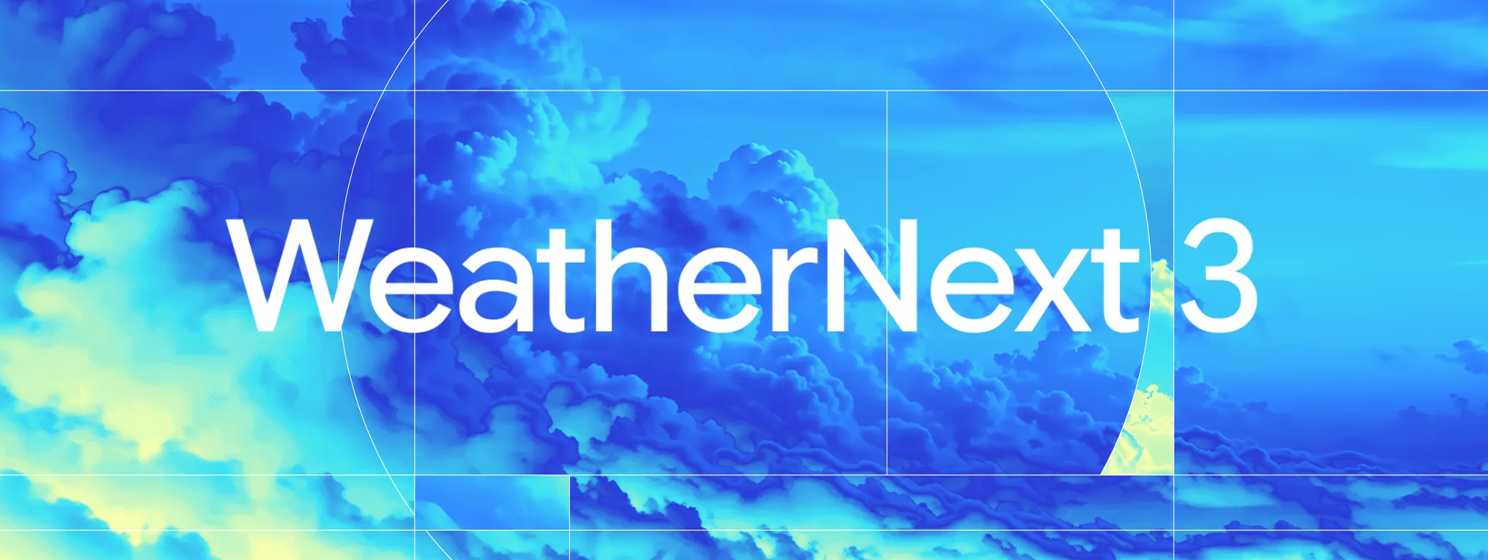
This milestone in computational meteorology marks a departure from traditional Numerical Weather Prediction (NWP) models, which have historically dominated the field. By shifting from physics-based fluid dynamics simulations—which require massive supercomputing clusters and hours of processing time—to a sophisticated machine-learning architecture, Google has effectively collapsed the latency between data ingestion and actionable forecast delivery.
The Evolution of Meteorological Computation
For decades, weather forecasting has relied on the Navier-Stokes equations, a set of complex mathematical formulas that describe the motion of fluid substances. While these equations provide the bedrock for understanding atmospheric physics, they are notoriously difficult to solve at high resolutions. Conventional models, such as the European Centre for Medium-Range Weather Forecasts (ECMWF) system or the Global Forecast System (GFS), often divide the atmosphere into a grid. Reducing the size of these grid cells—increasing resolution—exponentially increases the computational power required.
WeatherNext 3 represents a paradigm shift. By leveraging deep neural networks trained on decades of historical satellite imagery and ground-based sensor telemetry, the model treats weather forecasting as a high-dimensional pattern recognition problem. By directly ingesting live geostationary satellite mosaics and real-world ground station data, WeatherNext 3 eliminates the reliance on the slow, compute-heavy numerical approximations that have previously served as the bottleneck for rapid, localized forecasting.
Technical Architecture and Resolution Breakthroughs
The most immediate advancement offered by WeatherNext 3 is its spatial resolution. While previous iterations of AI models, and even many contemporary operational systems, operated on grids ranging from 25 to 50 kilometers, WeatherNext 3 operates at an unprecedented 5-kilometer spatial resolution. This five-fold increase in sharpness is not merely a quantitative improvement; it is a qualitative leap in utility.
At a 5-kilometer resolution, the model can capture localized phenomena—such as micro-bursts, urban heat islands, and topographic influences—that were previously "smoothed over" by coarser models. This is particularly critical for regions with complex geography, such as coastal areas or mountain ranges, where weather patterns can shift drastically within a few miles. Furthermore, the model’s ability to generate fresh forecasts every hour ensures that the data presented to users is consistently reflective of the most recent atmospheric conditions.
A Chronology of AI in Atmospheric Science
The path to WeatherNext 3 was paved by several years of intense research and development within Google’s AI divisions:
- 2020-2021: Google DeepMind begins experimenting with "Nowcasting," using machine learning to predict precipitation patterns over a 0–6 hour horizon. These models focused on radar data but struggled with long-range accuracy.
- 2022: The introduction of Graph Neural Networks (GNNs) allowed researchers to represent the Earth as a sphere rather than a flat plane, significantly improving global consistency.
- 2023: DeepMind unveiled earlier versions of its weather models, proving that AI could match or exceed the accuracy of traditional NWP systems in terms of temperature and wind speed prediction.
- 2024: The refinement of data ingestion pipelines, allowing for the integration of real-time geostationary satellite feeds, set the stage for the deployment of WeatherNext 3.
Data Accuracy and Performance Metrics
One of the primary challenges in weather forecasting is the "decay" of accuracy over time. Traditional models often suffer from a loss of precision as the forecast horizon extends beyond 24 hours. WeatherNext 3 addresses this through a proprietary attention-based mechanism that prioritizes historical context alongside real-time inputs.
Internal benchmarks indicate that when planning a day or more ahead, users will encounter up to 50% more accurate precipitation forecasts. This is a significant margin in a field where even a 5% increase in accuracy is considered a substantial breakthrough. These improvements are most pronounced in historically underserved regions, such as parts of the Global South and remote oceanic areas, where sparse ground-based weather stations previously left significant "blind spots" in global climate data. By filling these gaps with satellite-derived insights, WeatherNext 3 provides a more equitable and reliable baseline for global weather intelligence.
Integration into the Google Ecosystem
The rollout of WeatherNext 3 is not an isolated experiment; it is a systemic upgrade across Google’s core consumer and enterprise products. As of today, the model powers weather experiences within:
- Google Search: Providing users with near-instant access to hyper-local precipitation and temperature trends.
- Gemini App: Integrating weather intelligence into the AI conversational interface, allowing for more complex queries such as, "Will it be safe to drive to the mountains this afternoon?"
- Google Maps and Google Maps Platform: Enabling developers to bake highly accurate weather overlays into logistics and delivery applications.
- Google Earth Engine: Providing climate scientists with a massive repository of high-resolution, AI-processed weather data for longitudinal studies on climate change and land-use patterns.
Implications for Industry and Public Safety
The democratization of high-resolution weather data has profound implications for several sectors. In the logistics and shipping industry, a 50% improvement in precipitation accuracy can mean the difference between timely deliveries and significant supply chain disruptions. For agriculture, precise, hour-by-hour updates on localized moisture levels allow farmers to optimize irrigation and protect crops from sudden, localized weather events.
From a public safety perspective, the potential for better disaster preparedness is immense. Early detection of severe storm cells—which can now be tracked with greater precision—allows municipal governments and emergency services to issue more timely and geographically targeted warnings. This effectively reduces the "false alarm" rate that often plagues broader regional forecasting systems.
Expert Perspectives and Theoretical Analysis
While the transition to AI-driven meteorology is broadly welcomed, it is not without its critics and skeptics. Meteorologists have long argued that AI models are "black boxes"—meaning they can provide an accurate result without explaining the physical reasoning behind it. Unlike traditional physics-based models, which allow scientists to trace how a storm formed based on pressure gradients and thermodynamics, AI models arrive at a result through complex weightings in a neural network.
However, researchers at Google DeepMind argue that the sheer performance gap between WeatherNext 3 and its predecessors necessitates a new approach. The argument is that the utility of an accurate forecast outweighs the need for full interpretability, particularly in time-sensitive scenarios. To address concerns regarding transparency, Google has committed to making parts of their research and methodology available for peer review, ensuring that the atmospheric science community can audit the data integrity of the model.
The Future of Climate Modeling
The introduction of WeatherNext 3 suggests that the future of weather forecasting lies in a hybrid approach. While AI is currently proving superior in rapid, high-resolution short-to-medium-term forecasting, traditional NWP models still hold value for long-term climate modeling and understanding deep-seated planetary changes over decades.
Looking forward, the integration of WeatherNext 3 into the Google Earth Engine is perhaps the most consequential development for climate science. By providing a 5-kilometer grid of real-time weather data, Google is essentially creating a "digital twin" of the Earth’s atmosphere. This resource will be invaluable for climate researchers who are attempting to model the impacts of global warming on extreme weather frequency.
As the model continues to ingest more data, its accuracy is expected to improve further through self-supervised learning. The system is designed to "learn" from its own mistakes by comparing its 24-hour predictions against the actual conditions that eventually manifested, effectively closing the loop on a self-correcting feedback mechanism.
Conclusion
WeatherNext 3 represents the maturation of AI in the physical sciences. By transforming raw, disparate data points into a coherent, high-resolution global weather map, Google has redefined what is possible in real-time meteorology. Whether the application is as simple as a user deciding whether to carry an umbrella or as complex as a government agency coordinating disaster response, the availability of such high-fidelity data marks a significant step forward in our collective ability to understand and navigate the complexities of our changing planet. The move toward higher resolution, higher frequency, and higher accuracy is not merely an upgrade to an app; it is an evolution in how humanity interacts with the atmosphere that sustains it.