
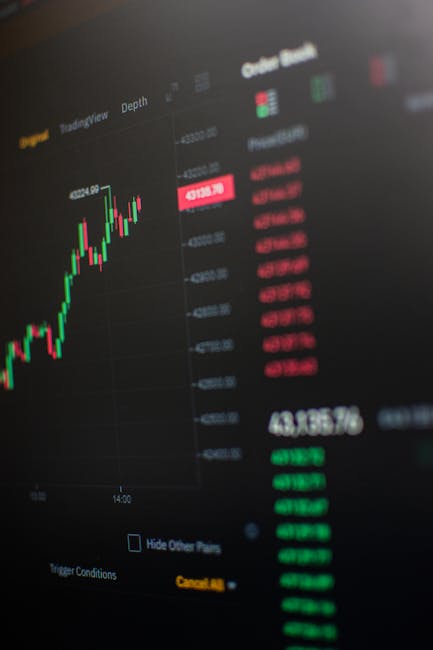
Donald Trump’s Trading Volume Conquers All: A Deep Dive into Market Dominance
The sheer volume of trading activity surrounding Donald Trump, encompassing his business ventures, political endorsements, and even his controversial pronouncements, has become a force to be reckoned with in various financial markets. This phenomenon transcends traditional investment principles, driven by a potent blend of celebrity, political polarization, and a fervent base of supporters and detractors who translate their sentiments into tangible trading actions. Understanding this "Trump Effect" on trading volume requires dissecting its origins, its manifestations across different asset classes, and the underlying psychological and economic drivers that fuel this unique market dynamic. The sheer scale of this trading phenomenon, often dubbed "Trump Trading," is not merely a statistical anomaly; it represents a significant shift in how public figures and political events can directly influence market behavior, creating both unique opportunities and considerable risks for investors.
The genesis of Trump’s trading volume impact can be traced back to his pre-presidency career as a real estate mogul and reality television personality. His flamboyant lifestyle and outspoken nature generated considerable public interest, which often translated into stock price movements of companies associated with him, whether directly or indirectly. This early exposure to market fluctuations set the stage for his even more profound influence once he entered the political arena. The 2016 presidential election and his subsequent presidency amplified this effect exponentially. His policy announcements, executive orders, trade disputes, and even his often-controversial tweets became immediate catalysts for significant trading volume. Investors, both retail and institutional, scrambled to react to perceived opportunities and threats arising from his actions and rhetoric. This created a constant state of market volatility, with trading desks across the globe keenly watching his every move. The anticipation of his pronouncements, particularly through social media, led to pre-emptive trading, further inflating volume as traders sought to front-run anticipated market shifts.
One of the most prominent manifestations of the Trump Effect has been observed in the stock market. Companies with direct ties to Trump, such as those bearing his name or involved in industries he frequently discussed (e.g., construction, manufacturing, energy), experienced dramatic swings in trading volume and share prices. For instance, during his presidency, companies in sectors targeted by his trade policies, or those benefiting from his deregulation efforts, saw heightened trading activity. Conversely, companies facing potential headwinds from his protectionist stance often experienced increased short-selling and bearish sentiment, leading to substantial volume spikes in derivative markets as well. Beyond direct associations, the broader market also reacted to his policies. Infrastructure spending promises, tax cut proposals, and trade negotiations all triggered significant trading volume in relevant sectors like industrials, financials, and agriculture. The sheer uncertainty and potential for rapid policy changes emanating from the White House under Trump’s leadership fostered a climate where traders felt compelled to be actively engaged, leading to consistently elevated trading volumes as they sought to hedge their portfolios or capitalize on short-term opportunities.
The cryptocurrency market, known for its inherent volatility and susceptibility to speculation, has also been significantly impacted by Trump’s pronouncements. While Trump himself has expressed skepticism towards cryptocurrencies, his administration’s regulatory approach and the broader discourse surrounding digital assets indirectly influenced trading volumes. Moreover, individuals and groups who aligned themselves with Trump’s political ideology often extended that affiliation to their investment choices, including digital assets. This created niche communities within the crypto space that could be mobilized to trade specific coins or tokens based on perceived endorsements or rejections. The rapid dissemination of information and sentiment in the crypto world, often amplified by social media, meant that even tangential references to Trump or his policies could ignite significant trading activity. Furthermore, the meme stock phenomenon, which gained prominence during the later stages of his presidency and beyond, saw a confluence of political sentiment and retail trading, with some of these highly speculative ventures exhibiting trading volumes that dwarfed traditional blue-chip stocks, often fueled by a shared anti-establishment sentiment that was intrinsically linked to the broader Trump movement.
The foreign exchange (forex) market is another arena where Trump’s influence on trading volume has been undeniable. His "America First" trade policies, including the imposition of tariffs and renegotiation of trade agreements, directly impacted currency valuations. For example, the US dollar’s strength or weakness often became a proxy for the perceived success or failure of his trade initiatives. This led to increased trading volume in currency pairs involving the US dollar against major global currencies like the Euro, Yen, and Pound Sterling, as traders sought to position themselves ahead of or in reaction to his trade pronouncements and their potential economic consequences. The volatility introduced by his trade disputes created opportunities for forex traders to profit from short-term currency fluctuations. Central bank responses to his policies, such as adjustments to interest rates or quantitative easing measures, also contributed to this heightened trading activity. The uncertainty surrounding international trade relationships under his administration necessitated constant vigilance and active trading in the forex markets.
The commodity markets, particularly those related to energy and agriculture, were also significantly influenced by Trump’s policies and rhetoric, driving considerable trading volume. His focus on energy independence and deregulation in the oil and gas sector led to increased trading activity in crude oil futures and related derivatives. Conversely, his trade disputes with countries like China had a direct impact on agricultural commodities such as soybeans and pork, leading to price volatility and increased trading volumes as farmers, processors, and speculators reacted to the changing trade landscape. The speculation surrounding potential retaliatory tariffs or trade agreements created a constant buzz of activity in these markets. The geopolitical implications of his foreign policy decisions also indirectly influenced commodity prices, such as gold, which often acts as a safe-haven asset during times of global uncertainty.
The underlying drivers of this "Trump Trading" phenomenon are multifaceted and deeply rooted in human psychology and market mechanics. Firstly, political polarization plays a crucial role. Trump’s presidency and his continued public presence have deeply divided the electorate. This division extends to investment decisions, with supporters often flocking to assets associated with his interests, while detractors may actively short or divest from them. This binary sentiment creates a predictable, albeit often irrational, trading impulse. Secondly, celebrity endorsement and brand loyalty are potent forces. Trump’s brand is incredibly powerful, and his loyal followers are often eager to align their financial portfolios with his ventures or perceived interests, creating a dedicated base of buyers. Conversely, his critics may also mobilize their trading activity, not necessarily out of financial rationale, but as a form of protest or to express their opposition.
Thirdly, information asymmetry and the speed of news dissemination are amplified in the digital age. Trump’s use of social media, particularly Twitter, allowed him to communicate directly and instantaneously with millions. This created an environment where market-moving information could be released with little to no warning, forcing traders to react at breakneck speed. The ensuing "buy the rumor, sell the news" dynamic, or vice versa, fueled immense trading volumes as participants attempted to capitalize on the initial reaction before the market fully digested the information. The speculative nature of many of these pronouncements, often lacking detailed policy specifics, further encouraged rapid, volume-driven trading as the market tried to price in uncertain outcomes.
Fourthly, retail investor participation has surged, particularly during the Trump era. Online trading platforms have made it easier than ever for individuals to participate in financial markets. Many of these new investors are drawn to the excitement and perceived accessibility of trading stocks and other assets that are in the news, and Trump’s constant presence in the media made him a focal point for this surge in retail interest. This phenomenon was particularly evident during the rise of meme stocks, where coordinated efforts by retail investors, often fueled by online communities and a shared disdain for institutional investors, led to unprecedented trading volumes in specific companies, often with direct or indirect links to the political climate.
Fifthly, algorithmic trading and high-frequency trading (HFT) systems are designed to exploit small price discrepancies and react to market events with incredible speed. Trump-related news, given its propensity for suddenness and volatility, presents fertile ground for these algorithms. HFT firms are programmed to detect patterns and execute trades in fractions of a second, and the rapid fluctuations in trading volume and price caused by Trump’s pronouncements would have been highly attractive to these sophisticated trading operations. This can further exacerbate volume spikes as algorithms amplify the initial market reaction.
The implications of "Trump Trading" for investors are significant. For those who can accurately predict or react swiftly to Trump-related market-moving events, there can be substantial opportunities for profit. However, this environment also carries immense risk. The unpredictability of his pronouncements and the high volatility associated with them can lead to rapid and substantial losses. Investors who engage in "Trump Trading" must possess a high tolerance for risk, robust risk management strategies, and a deep understanding of the psychological and political factors influencing market behavior. Diversification becomes even more critical in such a dynamic environment to mitigate the impact of any single event.
Furthermore, the long-term impact of this phenomenon on market structure and efficiency is a subject of ongoing debate. Some argue that it highlights the increasing influence of public figures and social media on financial markets, potentially leading to less rational price discovery. Others contend that it simply reflects the market’s adaptive nature, efficiently incorporating new information, however unconventional its source. The increased trading volume itself can also have implications for market liquidity and transaction costs, especially for institutional investors trying to execute large orders without significant price slippage. The sheer scale of trading can sometimes overwhelm traditional market infrastructure, leading to temporary disruptions or increased volatility.
In conclusion, Donald Trump’s trading volume represents a profound and complex market force. It’s a testament to the interconnectedness of politics, celebrity, and finance in the modern era. Driven by a confluence of political polarization, brand loyalty, rapid information dissemination, and increased retail investor participation, this phenomenon has demonstrably impacted trading volumes across stocks, cryptocurrencies, forex, and commodities. While offering potential opportunities for astute traders, it also presents considerable risks. Understanding the psychological and economic underpinnings of "Trump Trading" is crucial for navigating the financial markets of today and anticipating the evolving relationship between public figures and market dynamics. The legacy of this era of heightened trading activity will likely be studied for years to come as a unique case study in how political personalities can directly and significantly influence global financial markets, reshaping trading strategies and introducing new dimensions of volatility. The sheer volume is not just a statistic; it’s a signal of a fundamental shift in market behavior.
