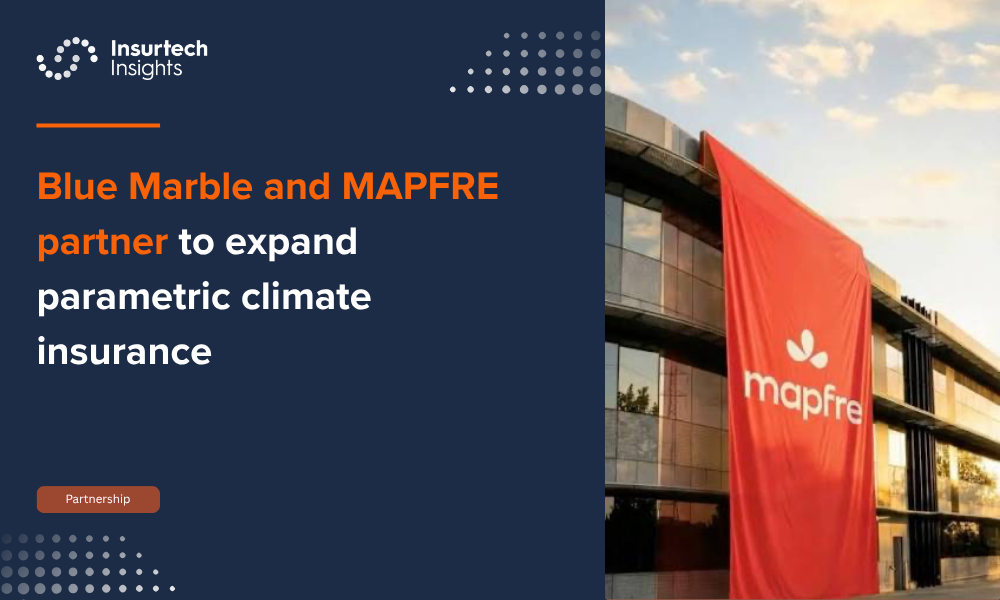
The strategic collaboration between Blue Marble Microinsurance and MAPFRE marks a significant milestone in the global effort to provide financial security to populations most vulnerable to the escalating risks of climate change. By combining Blue Marble’s sophisticated risk modeling and product design capabilities with MAPFRE’s extensive distribution network and deep-rooted local market expertise, the partnership seeks to deploy innovative parametric insurance solutions in regions where traditional insurance has historically failed to take root. This initiative is specifically designed to address the "protection gap"—the disparity between total economic losses and the portion covered by insurance—which remains a critical barrier to economic stability in emerging markets and underserved communities.
A Strategic Alliance for Climate Resilience
The partnership between Blue Marble and MAPFRE is built on a shared vision of leveraging technology to foster financial inclusion. Blue Marble, originally founded as a consortium of major global insurers, has established itself as a leader in the microinsurance space, focusing on creating socially impactful insurance products for the "next billion" customers. MAPFRE, a Spanish multinational insurance company with a dominant presence in Latin America and Europe, provides the institutional scale and local regulatory knowledge necessary to bring these products to a mass market.
The primary objective of this collaboration is the development and scaling of parametric insurance. Unlike traditional indemnity-based insurance, which requires a lengthy claims adjustment process to assess physical damage, parametric insurance operates on predefined triggers. These triggers are based on objective, third-party data such as satellite-monitored rainfall levels, wind speeds during a tropical cyclone, or seismic magnitude in the event of an earthquake. When these predefined thresholds are met, the policy is automatically triggered, and payouts are disbursed to policyholders almost immediately. This speed is crucial for smallholder farmers, micro-entrepreneurs, and low-income households who often lack the liquidity to survive the weeks or months it takes for traditional insurance claims to be processed.
Understanding the Mechanics of Parametric Insurance
The technical core of the Blue Marble and MAPFRE partnership lies in the integration of advanced data analytics into the insurance value chain. Blue Marble utilizes high-resolution satellite imagery and climate modeling to create "indices" that correlate with actual economic loss. For example, in an agricultural context, a "drought index" might be based on soil moisture levels or cumulative rainfall during a specific planting window. If the data shows that rainfall fell below a certain millimeter threshold, the insurance payout is triggered without the need for an individual to visit the farm to inspect crop failure.
This model significantly reduces the administrative costs associated with insurance, which is the primary reason traditional insurance is often too expensive for low-income segments. By removing the need for manual loss adjustment and reducing the potential for fraud, the Blue Marble-MAPFRE alliance can offer premiums that are affordable for small-scale businesses and vulnerable communities. Furthermore, the transparency of the parametric trigger builds trust among policyholders, as the payout is based on verifiable, objective data rather than a subjective assessment by an insurance company representative.
Addressing the Global Insurance Protection Gap
The urgency of this partnership is underscored by the widening global protection gap. According to industry data from Swiss Re and Munich Re, natural catastrophes in 2023 resulted in global economic losses exceeding $250 billion, yet less than 40% of those losses were covered by insurance. In emerging markets, the gap is even more pronounced; in many regions across Africa, Southeast Asia, and Latin America, insurance penetration remains below 3%, leaving the vast majority of the population exposed to financial ruin following a single extreme weather event.
Climate change is exacerbating these vulnerabilities. The frequency and intensity of droughts, floods, and hurricanes are increasing, disproportionately affecting those whose livelihoods depend on the natural environment. For instance, smallholder farmers produce approximately 30% of the world’s food but are among the least protected against climate volatility. The Blue Marble and MAPFRE initiative aims to provide these individuals with a financial safety net that allows them to reinvest in their operations even after a disaster, preventing a slide into systemic poverty.
Chronology of Microinsurance and Parametric Evolution
The evolution of the microinsurance sector provides essential context for the current partnership. The concept of microinsurance gained global attention in the early 2000s, primarily focusing on life and health products for low-income individuals. However, the complexity of managing property and casualty claims at such a small scale limited its growth.
- 2015: Blue Marble Microinsurance was launched by a consortium of eight global insurance entities, including Zurich, Marsh McLennan, and others, with the specific mission of creating a sustainable business model for microinsurance.
- 2016-2019: Blue Marble successfully piloted various programs, such as weather-index insurance for coffee farmers in Colombia and drought protection for maize farmers in Africa. During this period, the industry began to recognize that parametric structures were the most viable way to scale climate insurance.
- 2020-2022: The COVID-19 pandemic and a series of record-breaking climate events highlighted the need for rapid-response financial tools. Interest in parametric solutions moved from niche experimental pilots to mainstream corporate and sovereign risk management strategies.
- 2024: The partnership with MAPFRE represents a new phase of commercial scaling. By moving beyond small-scale pilots, the collaboration seeks to integrate parametric products into MAPFRE’s existing distribution channels, reaching millions of potential customers across its global footprint.
Technical Synergy and Localized Distribution
The success of the partnership depends on the synergy between Blue Marble’s "Insurtech" approach and MAPFRE’s "Open Innovation" strategy. Blue Marble acts as the architect, designing the risk models and managing the digital platforms that monitor the weather triggers. MAPFRE acts as the engine, providing the balance sheet capacity to underwrite the risks and the regulatory licenses to operate in diverse jurisdictions.
MAPFRE’s extensive network of agents and brokers in Latin America—a region particularly susceptible to El Niño and La Niña cycles—provides a critical "last-mile" link to the customer. While the product is high-tech in its design, its delivery requires local trust and education. MAPFRE’s presence allows for the physical outreach necessary to explain the benefits of parametric protection to communities that may have never purchased insurance before.
Official Responses and Industry Implications
While formal statements from the leadership of both organizations emphasize the social impact of the deal, industry analysts view the move as a savvy business strategy. For MAPFRE, the partnership allows it to diversify its portfolio and gain a foothold in the rapidly growing ESG (Environmental, Social, and Governance) investment space. By providing climate resilience tools, MAPFRE aligns its business goals with global sustainability targets, such as the United Nations Sustainable Development Goals (SDGs), specifically Goal 1 (No Poverty) and Goal 13 (Climate Action).
Blue Marble, on the other hand, gains the scale necessary to make its models commercially viable. In the world of microinsurance, high volume is essential to offset low individual premiums. The partnership with a giant like MAPFRE provides that volume.
Industry experts suggest that this collaboration could serve as a blueprint for other major insurers. As traditional indemnity markets become increasingly volatile due to climate change, the shift toward parametric models offers a more predictable and scalable way to manage environmental risk. The use of "big data" from satellites and IoT (Internet of Things) devices is becoming the new standard for underwriting in the 21st century.
Economic and Social Implications for Underserved Markets
The broader implications of expanding parametric insurance extend beyond the insurance industry. When a community is insured, its creditworthiness improves. Banks and microfinance institutions are more likely to lend to a farmer who has a parametric policy, as the insurance acts as a form of collateral against weather-related default. This creates a "virtuous cycle" of investment, where farmers can afford better seeds, fertilizers, and equipment, leading to higher yields and greater food security.
Furthermore, the rapid payout mechanism of parametric insurance has a stabilizing effect on local economies. In the aftermath of a hurricane or flood, the immediate injection of cash into a community allows for the rapid repair of infrastructure and the reopening of small businesses. This prevents the "economic scarring" that occurs when a disaster causes long-term displacement and unemployment.
Overcoming Challenges and Future Outlook
Despite the optimism surrounding the Blue Marble and MAPFRE partnership, challenges remain. One of the primary hurdles is "basis risk"—the possibility that the insurance trigger does not perfectly match the actual loss experienced on the ground. For example, a weather station might record sufficient rainfall, but a farmer’s specific microclimate might have suffered a localized drought. Reducing basis risk requires increasingly granular data and sophisticated modeling, which Blue Marble continues to refine.
There is also the challenge of regulatory frameworks. Many countries still have insurance laws designed for traditional indemnity products, and regulators may be unfamiliar with how to oversee parametric triggers. The collaboration between Blue Marble and MAPFRE will likely involve significant engagement with local regulators to ensure that these new products are both legal and protective of consumer rights.
Looking ahead, the partnership is expected to explore new frontiers in parametric protection. This could include "heat stress" insurance for urban workers, protection against coral reef degradation for coastal tourism businesses, or even insurance against "atmospheric rivers" that cause catastrophic flooding. As the world moves into an era of increased climatic uncertainty, the ability to quantify and transfer risk through data-driven solutions will be paramount.
The Blue Marble and MAPFRE alliance is more than a commercial agreement; it is a testament to the changing landscape of the insurance industry. It reflects a shift from a reactive model of "paying for damage" to a proactive model of "building resilience." By bridging the gap between advanced climate science and the financial needs of the world’s most vulnerable populations, this partnership sets a new standard for how the private sector can contribute to global climate adaptation. Through innovation, collaboration, and a commitment to underserved markets, Blue Marble and MAPFRE are working to ensure that when the next storm comes, the most vulnerable are not left to face the aftermath alone.