
The insurance distribution landscape is witnessing a significant technological shift with the official launch of American Growth Insurance (AGI), an Atlanta-based firm that has introduced a sophisticated, AI-enabled platform designed to modernize the operations of insurance brokerages. Backed by nearly $70 million in committed capital from Rockbridge Growth Equity and the prominent venture capital firm Atomic, AGI aims to address the widening performance gap between the industry’s largest players and independent agencies. The company’s entry into the market signals a new era where artificial intelligence is not merely an auxiliary tool but the core engine of agency growth and operational efficiency.
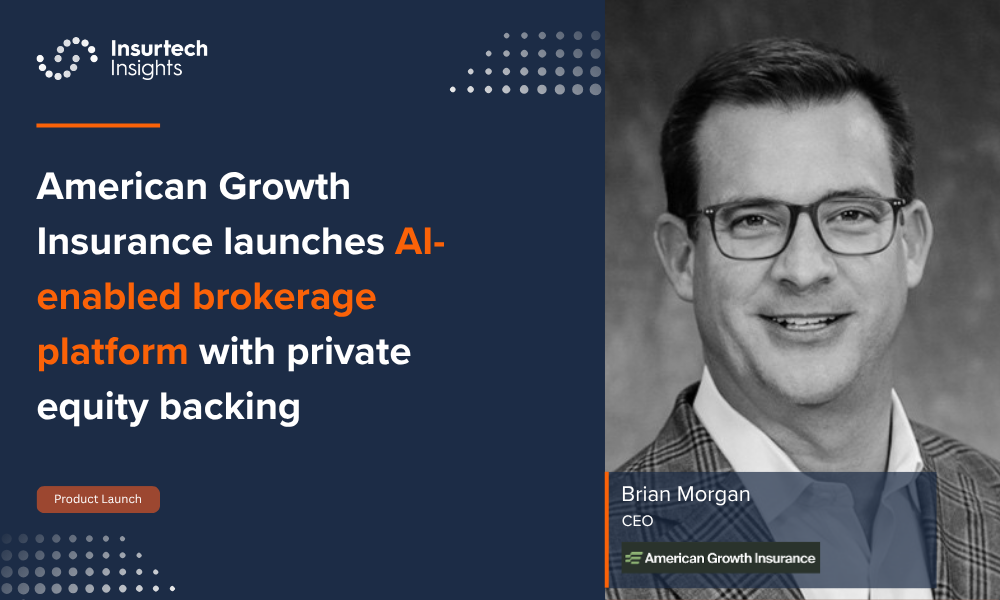
Led by Chief Executive Officer Brian Morgan, a seasoned industry veteran with over three decades of experience in building and scaling insurance brokerages, AGI enters the market with a clear mandate: to provide independent agencies with the technological arsenal necessary to compete in an increasingly consolidated environment. Morgan previously served as the Chief Revenue Officer at Keystone Agency Partners, where he played a pivotal role in the firm’s expansion. His transition to AGI underscores a broader industry trend where executive leadership is moving toward tech-centric models to solve traditional brokerage bottlenecks.
A Strategic Response to Market Consolidation
The launch of AGI comes at a time when the U.S. insurance brokerage market is characterized by extreme concentration. Research from MarshBerry, a leading consultancy for insurance agencies, highlights a stark disparity in the sector. According to their data, the 50 largest insurance brokerage firms currently command a staggering 96% of total U.S. brokerage revenue. In contrast, firms ranked between 50 and 100 account for a mere 4% of the market share.
This concentration of wealth and volume is mirrored in growth rates. The MarshBerry study found that firms in the 50-to-100 rank recorded an average five-year compound annual growth rate (CAGR) of 7.1%. While respectable in many industries, this figure is less than half the growth rate achieved by the top 50 firms during the same period. The disparity is largely attributed to the massive capital reserves of larger firms, which allow them to invest heavily in proprietary technology, data analytics, and aggressive M&A strategies. AGI’s platform is specifically engineered to bridge this divide, offering mid-sized and independent agencies the high-level operational capabilities typically reserved for the industry’s giants.
The AI-Powered Operating Model: Development and Results
The core of AGI’s value proposition is its proprietary AI-enabled operating model. Unlike "off-the-shelf" software solutions that often require significant manual customization, AGI’s platform was developed through an intensive, year-long collaborative process. The company’s leadership team worked in tandem with 10 pilot insurance agencies to build, test, and refine the technology in real-world environments.
This developmental phase focused on identifying the most time-consuming and low-value tasks within the brokerage workflow—such as manual data entry, policy comparisons, and routine client inquiries—and automating them through artificial intelligence. By integrating AI into the daily operations of these agencies, AGI sought to unlock latent productivity and allow brokers to focus on high-value advisory services and relationship building.
The results of the pilot program were substantial. Participating agencies reported average profit improvements of more than 50%. These gains were driven by a dual-pronged effect: a significant increase in top-line revenue through more efficient lead management and cross-selling, and a boost in bottom-line productivity as operational overhead was reduced. This data suggests that AI, when applied specifically to the nuances of insurance distribution, can yield returns that far exceed traditional management consulting or standard software implementations.
Investment Strategy and the Atomic Selection Process
The $70 million funding round that fueled AGI’s launch is the result of a deliberate and data-driven selection process by the venture capital firm Atomic. Known for its "studio" model of building companies from the ground up, Atomic conducted an exhaustive evaluation of approximately 1,000 different service industries to identify sectors most ripe for AI-driven transformation.
Michael Stenclik, Vice President at Atomic, noted that insurance distribution emerged as the premier candidate for this shift. The industry is characterized by high volumes of unstructured data, repetitive administrative tasks, and a fragmented market—all factors that make it ideal for AI intervention. Stenclik emphasized that the traditional insurance agency model, which has remained largely unchanged for decades, is perfectly suited to be reshaped through the application of modern technology.
Rockbridge Growth Equity joins Atomic in this venture, bringing deep expertise in financial services and middle-market growth. The partnership between a tech-focused venture firm and a growth-oriented equity firm provides AGI with both the technical pedigree and the financial "dry powder" needed to execute a large-scale acquisition strategy.
Future Roadmap: Acquisition and Integration
AGI is not merely a software provider; it is an active participant in the market. The company has announced an aggressive roadmap that includes completing several agency acquisitions before the end of 2026. By acquiring agencies and integrating them into its AI-powered ecosystem, AGI aims to create a network of highly efficient, tech-forward brokerages that can outperform traditional competitors.
This "buy-and-build" strategy is common in the insurance sector, but AGI’s differentiator is the integration of AI at the point of acquisition. Rather than simply aggregating agencies for the sake of scale, AGI intends to use its platform to immediately optimize the performance of its partner agencies. This approach addresses a common criticism of insurance roll-ups: that they often fail to achieve true operational synergy, resulting in a collection of loosely affiliated firms rather than a cohesive, efficient organization.
The Broader Context: Private Equity and the Insurance Sector
The launch of AGI occurs against a backdrop of intensifying scrutiny regarding the role of private equity (PE) in the insurance industry. The sector has long been a favorite for PE investors due to its stable, recurring revenue streams and the "float" generated by premiums. However, recent academic and regulatory discourse has raised questions about the long-term impact of this investment model.
Research from the University of Chicago Law School has highlighted concerns that the private equity model—which now controls more than $9 trillion in assets globally—can sometimes prioritize short-term financial returns over long-term stability and stakeholder interests. The researchers argued that while PE remains a vital source of capital, it can introduce financial risks if the external costs of aggressive profit-seeking are not properly recognized.
In the insurance world, critics often point to the potential for PE-backed firms to cut staffing levels or reduce customer service quality in pursuit of higher margins. AGI has addressed these concerns by positioning its platform as a tool for "sustainable growth." The company argues that its focus on AI is not about replacing human expertise but about augmenting it. By automating the "drudgery" of insurance work, AGI claims its platform allows brokers to provide better service and more comprehensive advice, thereby aligning the interests of the agency, the investor, and the policyholder.
Implications for the Independent Agent Channel
The emergence of AGI reflects a broader "arms race" in the insurtech space. As carriers continue to digitize their offerings, the pressure on the distribution channel to keep pace has never been higher. For the independent agent, the challenge is twofold: they must manage the increasing complexity of modern insurance products while meeting the digital-first expectations of today’s consumers.
AGI’s entry into the market suggests that the future of the independent agent channel may depend on its ability to adopt sophisticated technology at scale. If AGI can successfully replicate the 50% profit improvements seen in its pilot program across a wider portfolio of agencies, it could set a new benchmark for the industry.
Furthermore, the focus on Atlanta as a headquarters underscores the city’s growing status as a hub for both fintech and insurtech. By tapping into the regional talent pool and the established insurance infrastructure of the Southeast, AGI is well-positioned to lead this technological transition.
Conclusion and Market Outlook
As American Growth Insurance begins its acquisition phase, the industry will be watching closely to see if the promised AI-driven efficiencies translate into long-term market share gains. The combination of Brian Morgan’s leadership, the significant capital backing from Rockbridge and Atomic, and a proven technological model creates a formidable new entrant in the brokerage space.
While the debate over private equity’s influence on the sector will undoubtedly continue, AGI represents a specific subset of the "new guard"—firms that view technology not as an expense to be managed, but as the primary driver of value. For independent agencies currently struggling to maintain growth rates in the shadow of the industry’s "Big 50," AGI’s platform may represent a viable path forward in a rapidly evolving digital economy. The success of this venture will likely depend on how effectively the firm can balance its aggressive acquisition targets with the complex task of integrating AI into the traditional, relationship-based world of insurance brokerage.