
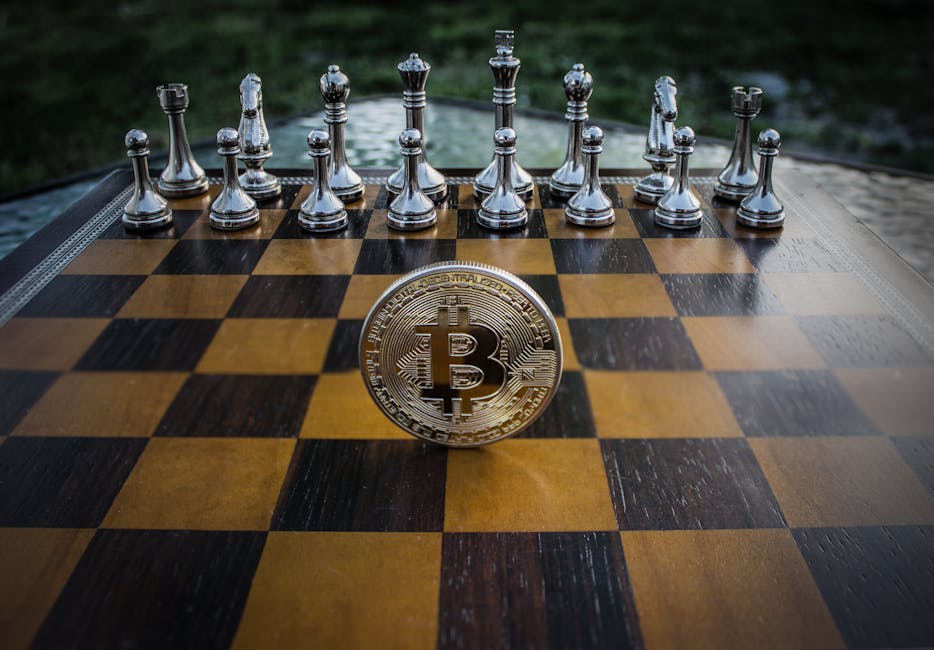
The Inevitable Ascendancy: Why Blockchain Games Are Now and Forever
The nascent integration of blockchain technology into the gaming industry represents a paradigm shift, not a fleeting trend. The inherent characteristics of blockchain – decentralization, transparency, immutability, and player ownership – directly address long-standing limitations and frustrations within traditional gaming models, paving the way for a fundamentally more equitable and engaging player experience. This is not simply about adding a monetary layer; it’s about redefining the relationship between players and the digital worlds they inhabit. The move away from centralized, opaque control by game developers towards a player-centric ecosystem is a natural evolution, driven by the desire for verifiable ownership of in-game assets, the ability to participate in the governance of game development, and the potential for genuine economic participation. The early iterations, while sometimes clunky, have laid the groundwork for sophisticated and sustainable blockchain gaming economies that will continue to attract and retain players seeking more than just ephemeral entertainment.
One of the most compelling drivers behind the rise of blockchain games is the concept of true digital ownership. In traditional gaming, players invest countless hours and often real money into acquiring virtual items, skins, weapons, and characters. Yet, these assets are ultimately owned and controlled by the game developer. If a game is shut down, servers are taken offline, or a player is banned, all that accumulated value and progress vanishes. Blockchain technology, through Non-Fungible Tokens (NFTs), fundamentally alters this. Each in-game asset can be represented as a unique NFT on a blockchain, granting the player verifiable ownership. This means players truly own their items, not just license them. They can trade, sell, or transfer these assets on secondary marketplaces, independent of the game developer’s platform. This creates a tangible value proposition for players, transforming their time and investment into something that has real-world economic worth and can persist beyond the lifespan of a single game. The scarcity and provenance of these NFTs are cryptographically secured, ensuring authenticity and preventing counterfeiting, which further enhances their desirability and value. This shift from a rented experience to a owned one is a powerful motivator for long-term engagement and investment within gaming ecosystems.
Beyond individual asset ownership, blockchain enables player-driven economies that are both dynamic and sustainable. In many blockchain games, players can earn in-game currency or valuable NFTs through gameplay, participation, or even by contributing to the game’s development or community. This creates a play-to-earn (P2E) model, where dedicated players can generate a genuine income stream. These earned assets can then be traded with other players, fueling a vibrant in-game economy. Unlike traditional games where all economic activity is dictated and controlled by the developer, blockchain-powered economies are more organic and resilient. Smart contracts automate transactions, ensuring fairness and transparency. Furthermore, the underlying blockchain can track the flow of assets, providing data that can inform game design and balance adjustments, leading to more player-satisfying economic loops. The ability to participate in this economic activity adds a layer of strategic depth and long-term incentive that is often missing in conventional gaming. Players are not just passively consuming content; they are active participants and stakeholders in the game’s prosperity. This economic empowerment is a significant differentiator, attracting a demographic of players who are looking for more than just entertainment.
Decentralization and community governance are also cornerstones of blockchain gaming’s appeal, offering a stark contrast to the top-down control prevalent in traditional game development. Many blockchain games are designed with decentralized autonomous organizations (DAOs) in mind. This allows players, who often hold governance tokens, to vote on important decisions, such as game updates, feature prioritization, and even the direction of the game’s lore or narrative. This fosters a sense of ownership and belonging, as players feel their voices are heard and their contributions are valued. Instead of being passive recipients of developer decisions, players become active co-creators of the game world. This collaborative approach can lead to more innovative and player-centric game design, as developers are incentivized to cater to the desires of their community to ensure the game’s continued success. The transparency of DAO proposals and voting processes on the blockchain further builds trust and accountability, creating a more robust and engaged player base. This shift in power dynamics is revolutionary, moving away from a developer-centric model to a truly community-driven one, where the players have a vested interest in the long-term health and evolution of the game.
The transparency and security inherent in blockchain technology are crucial for fostering trust and preventing malicious activities. Every transaction and asset transfer on a blockchain is publicly verifiable and immutable. This means that players can be confident that the rarity and authenticity of their in-game items are genuine, and that the game’s economy is not susceptible to arbitrary manipulation by developers. This level of transparency builds confidence and reduces the potential for scams or unfair practices. Furthermore, smart contracts, which govern many aspects of blockchain games, are auditable code, meaning their logic is transparent and predictable. This reduces the risk of exploits or hidden mechanics designed to disadvantage players. In an industry often plagued by concerns about pay-to-win mechanics and opaque monetization strategies, blockchain gaming offers a refreshing alternative built on verifiable integrity. The cryptographic security of the blockchain ensures that once an asset is owned by a player, it cannot be arbitrarily removed or altered without their consent, providing a level of security and peace of mind rarely found in the digital realm.
The evolution of blockchain gaming is intrinsically linked to interoperability. While still in its early stages, the vision is for NFTs and digital assets to be transferable across different games and metaverses. Imagine a sword earned in one RPG that can be used in a different combat game, or a character skin that can be displayed in various virtual social spaces. This creates a more expansive and interconnected digital universe, where players’ investments and achievements can transcend individual game titles. This vision of interoperability is a significant departure from the siloed nature of traditional gaming, where assets are confined to a single ecosystem. By breaking down these barriers, blockchain gaming has the potential to unlock new forms of gameplay and economic opportunities, creating a more fluid and dynamic digital landscape. While technical challenges remain in achieving seamless interoperability, the underlying technology of NFTs and decentralized identifiers provides a robust foundation for its eventual realization. This future holds the promise of a truly persistent and interconnected digital identity for players.
The evolution of game mechanics and genres is also being profoundly influenced by blockchain. We are seeing the emergence of new genres, such as "build-to-earn" where players are rewarded for creating content, or "stake-to-play" where holding certain tokens grants access to exclusive gameplay. Furthermore, existing genres are being reimagined with blockchain integration. For instance, strategy games can incorporate economic simulations with real-world value, and RPGs can offer players true ownership of their character progression and loot. The ability to create provably rare in-game items or to monetize player-created content through NFTs opens up entirely new avenues for game design and player engagement. This constant innovation and experimentation are pushing the boundaries of what is possible in interactive entertainment, attracting a diverse range of developers and players eager to explore these new frontiers. The very act of playing a game can now have tangible and enduring consequences beyond the confines of the game itself.
The accessibility and onboarding experience for blockchain gaming is rapidly improving. Early blockchain games often required a steep learning curve, involving complex wallet setups and gas fee management. However, as the technology matures and user interfaces become more streamlined, onboarding is becoming significantly easier. Companies are developing user-friendly wallets, abstracting away much of the underlying complexity. In-game tutorials are being designed to introduce players to blockchain concepts gradually and intuitively. This focus on user experience is crucial for mass adoption, ensuring that blockchain gaming is not just for early adopters but for everyone. As the friction to entry decreases, the potential player base expands exponentially, further solidifying the long-term viability of this burgeoning industry. The goal is to make interacting with blockchain as seamless as any other online gaming experience, thereby removing a significant barrier to widespread acceptance.
The potential for new monetization models beyond traditional in-game purchases and subscriptions is a significant factor in the growth of blockchain games. While play-to-earn is prominent, other models are emerging. Developers can earn revenue through transaction fees on NFT marketplaces, by selling initial NFT drops of in-game assets, or by incentivizing players to stake tokens for exclusive content or rewards. This diversification of revenue streams can lead to more sustainable business models for game developers, reducing their reliance on potentially predatory microtransactions. The ability to create value that is directly tied to player engagement and ownership offers a more symbiotic relationship between developers and their communities, fostering loyalty and shared prosperity. This also opens doors for independent developers and smaller studios to compete by creating innovative and engaging experiences without requiring massive upfront investment from publishers.
The environmental impact is a frequently raised concern regarding blockchain technology, particularly proof-of-work systems. However, the gaming industry is increasingly shifting towards more energy-efficient proof-of-stake (PoS) blockchains. Many of the leading blockchain games are built on or are migrating to PoS networks, which consume significantly less energy than their PoW predecessors. Furthermore, the development of layer-2 scaling solutions is further optimizing transaction efficiency and reducing energy consumption. As the technology matures and more sustainable solutions are adopted, the environmental footprint of blockchain gaming will continue to diminish, addressing a key concern and paving the way for broader acceptance. The focus is on building a future where digital innovation does not come at an unacceptable environmental cost.
In conclusion, the convergence of blockchain technology and gaming is not a passing fad but a fundamental evolution of the industry. The core principles of true digital ownership, player-driven economies, decentralized governance, enhanced security, and the promise of interoperability are too compelling to ignore. As the technology matures, user experience improves, and environmental concerns are addressed through sustainable solutions, blockchain gaming is poised to redefine interactive entertainment, offering players unprecedented control, value, and engagement within the digital worlds they love. The future of gaming is undeniably decentralized, and blockchain is the engine driving that transformation.
