
Tether’s Groundbreaking Neural Interface: Decoding Thought into Action
Tether’s revolutionary new technology represents a paradigm shift in human-computer interaction, moving beyond mere command inputs to direct neural translation of thought. This sophisticated system, developed through years of intensive research and development in neuroscience, artificial intelligence, and advanced sensor technology, promises to unlock unprecedented levels of control and communication for individuals with motor impairments, and eventually, for the general population. At its core, Tether’s innovation lies in its ability to non-invasively interpret complex neural signals from the brain and translate them into digital commands with remarkable accuracy and speed. This is not a simplistic BCI that reads broad brainwave patterns; Tether’s technology delves into the nuanced electrochemical activity associated with intentionality, motor planning, and even conceptualization.
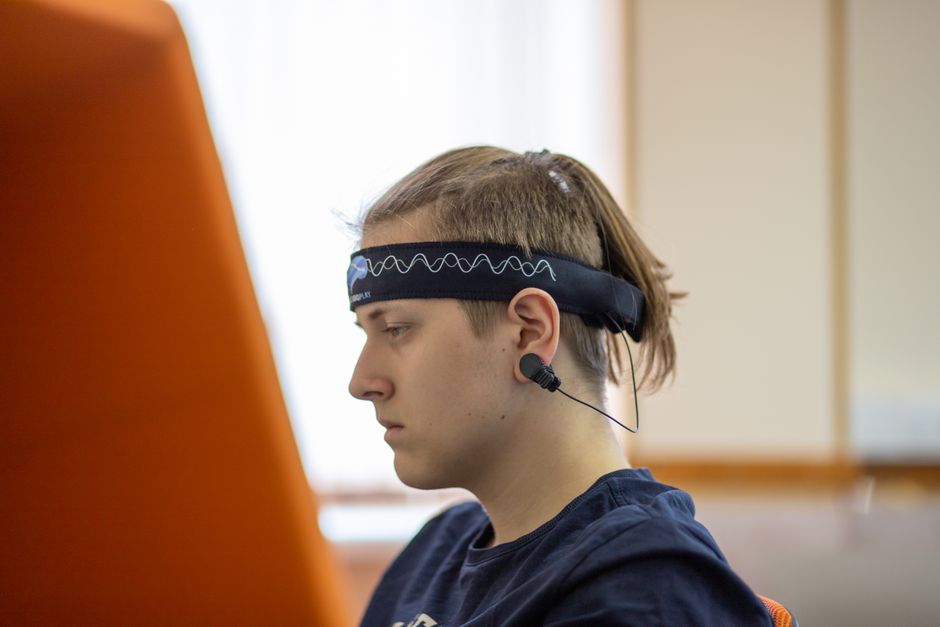
The fundamental challenge in brain-computer interface (BCI) development has always been the inherent complexity and subtlety of neural signals. The human brain, a network of billions of neurons firing in intricate patterns, generates a vast amount of data that is incredibly difficult to decipher. Previous attempts at direct neural translation have often relied on invasive surgical implants, which carry significant risks and limitations. Tether, however, has achieved a breakthrough in non-invasive sensing. Their proprietary sensor array, designed to be worn comfortably and unobtrusively, utilizes a combination of advanced electroencephalography (EEG) and magnetoencephalography (MEG) principles, augmented by novel methods to detect subtle changes in magnetic fields and electrical potentials generated by neuronal activity. This multi-modal sensing approach allows for a richer, more detailed capture of brain signals than traditional single-modality BCIs.
The "translation" process is powered by a sophisticated deep learning architecture. Tether’s AI algorithms are trained on massive datasets of synchronized neural activity and corresponding intended actions. This training involves subjects performing specific movements, imagining movements, or even holding particular thoughts while their brain activity is recorded. The AI learns to identify the unique neural signatures associated with each intention. For instance, imagining moving a cursor to the left, or the actual motor cortex activation preceding a leftward arm movement, will generate a specific pattern of signals that the AI learns to associate with the "move left" command. The depth and complexity of these neural patterns are far beyond what basic EEG can capture, allowing for a much more granular level of control.
Crucially, Tether’s technology is not about reading exact thoughts in a telepathic sense. Instead, it focuses on deciphering motor intentions and command signals. When an individual intends to perform an action – whether it’s moving a limb, typing a letter, or controlling a prosthetic device – their brain initiates a cascade of neural activity. Tether’s system captures this pre-motor and motor cortex activity, along with associated signals from other brain regions involved in planning and execution. The AI then cross-references these patterns against its learned models to generate the corresponding digital output. This distinction is vital for both ethical considerations and practical application, as it avoids the perception of mind-reading and focuses on empowering the user’s own agency.
The applications of Tether’s neural translation technology are vast and transformative, particularly for individuals with severe motor impairments. For those living with conditions such as amyotrophic lateral sclerosis (ALS), spinal cord injuries, or stroke-related paralysis, the ability to control a computer, communicate with loved ones, or operate assistive devices through thought alone would be life-changing. Imagine a person with ALS who can no longer speak or move their limbs being able to type emails, browse the internet, or even control a robotic arm to feed themselves, all with the power of their mind. Tether’s technology offers a pathway to regaining independence and significantly improving their quality of life.
Beyond assistive technologies, Tether’s neural translation system holds immense potential for enhancing human capabilities in various fields. In gaming, players could experience unparalleled immersion, controlling virtual avatars with their thoughts. In creative industries, artists and musicians could sculpt digital art or compose music in entirely new ways, their ideas flowing directly from their minds to the canvas or the digital soundscape. For surgeons, imagine the precision and efficiency gained by controlling surgical instruments with thought, reducing tremors and fatigue. The military could benefit from enhanced situational awareness and control of advanced drones or robotic systems.
The development process of Tether’s technology involved overcoming significant hurdles in signal processing and noise reduction. Brain signals are inherently noisy, contaminated by muscle artifacts, environmental interference, and spontaneous brain activity that is not related to the intended command. Tether has developed advanced signal filtering and artifact rejection algorithms, powered by machine learning, that can isolate the relevant neural signals with unprecedented clarity. This sophisticated signal processing pipeline is crucial for achieving the high accuracy and low latency that are essential for real-time control.
Furthermore, the user experience and adaptability of Tether’s system are key design considerations. The technology is designed to be user-friendly, with a relatively short calibration period. The AI learns and adapts to each individual’s unique neural patterns over time, becoming more accurate and responsive as it is used. This personalized adaptation is a critical factor in achieving seamless and intuitive control, as no two brains are exactly alike. The system is also designed to be robust, capable of functioning in various environments without significant degradation in performance.
The ethical implications of such a powerful technology are, of course, paramount. Tether is acutely aware of the societal impact and is actively engaging in discussions with ethicists, policymakers, and the public to ensure responsible development and deployment. This includes establishing clear guidelines for data privacy, security, and consent. The focus remains on empowering individuals and enhancing human capabilities, not on replacing or dominating them. The development team is committed to transparency and to building trust with users and the wider community.
The future roadmap for Tether’s neural translation technology includes several exciting avenues. Continued refinement of the AI algorithms will lead to even greater accuracy, speed, and the ability to translate more complex intentions. Research is ongoing to expand the repertoire of controllable actions and to develop even more sophisticated methods for capturing neural data non-invasively. The company is also exploring the potential for bidirectional communication, where digital information could be relayed back to the brain, offering a form of sensory augmentation. Imagine feeling the texture of a virtual object or receiving subtle haptic feedback directly from a device controlled by your thoughts.
In summary, Tether’s new tech translates brain activity into actionable digital commands through a sophisticated interplay of non-invasive neural sensing and advanced deep learning. This breakthrough overcomes decades-old challenges in brain-computer interface development, offering a powerful new paradigm for human-computer interaction. Its immediate impact will be profound for individuals with motor impairments, restoring independence and communication. Looking ahead, the potential applications span across numerous sectors, promising to redefine human capabilities and usher in a new era of seamlessly integrated technology. The focus on ethical development and user empowerment underscores Tether’s commitment to responsibly harnessing the power of the human mind.
