
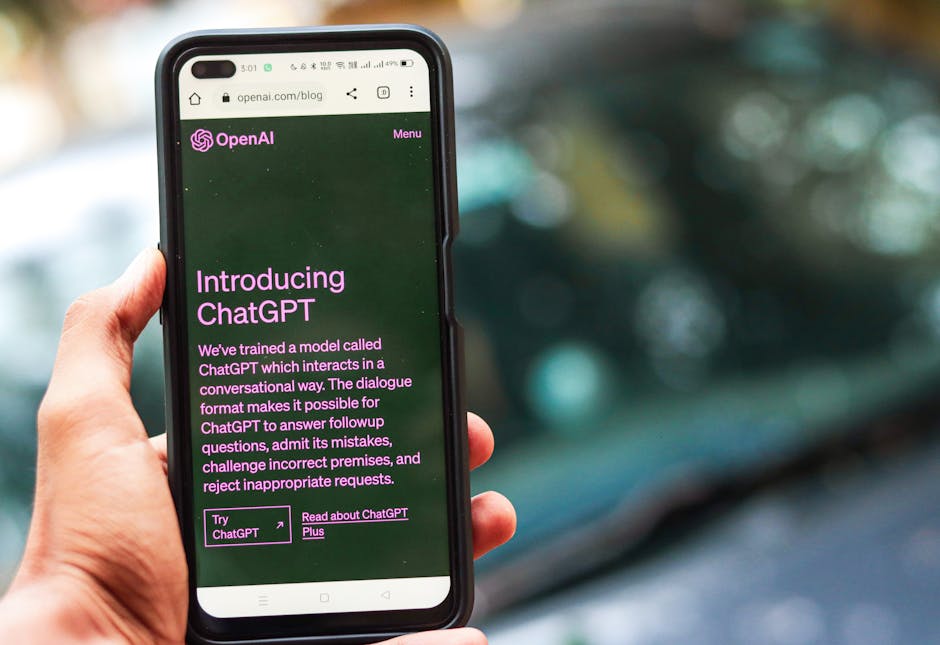
OpenAI GPT: The Pinnacle of AI Language Models
OpenAI’s Generative Pre-trained Transformer (GPT) series has consistently pushed the boundaries of artificial intelligence, establishing itself as the leading force in natural language processing. The evolution from GPT-1 to the current iterations, most notably GPT-4, represents a paradigm shift in machine learning, enabling unprecedented capabilities in understanding, generating, and interacting with human language. This article delves into the technical underpinnings, groundbreaking advancements, diverse applications, and the future trajectory of OpenAI’s GPT models, highlighting why they are widely regarded as the best models available today.
At its core, the GPT architecture is built upon the Transformer model, a neural network architecture introduced in 2017 that revolutionized sequence-to-sequence tasks. Unlike previous recurrent neural networks (RNNs) or convolutional neural networks (CNNs), the Transformer relies heavily on the self-attention mechanism. This mechanism allows the model to weigh the importance of different words in an input sequence, regardless of their position, enabling it to capture long-range dependencies and contextual nuances that were previously challenging. GPT’s "generative pre-trained" nature signifies its two-stage development process. First, it undergoes unsupervised pre-training on massive datasets of text and code, learning a general understanding of language, grammar, facts, reasoning, and common sense. This pre-training phase imbues the model with a vast knowledge base and the ability to perform a wide array of language tasks without explicit task-specific training. Subsequently, it can be fine-tuned for specific downstream tasks, such as translation, summarization, or question answering, with significantly less data and computational resources than training from scratch.
The progression of GPT models has been marked by exponential growth in scale and capability. GPT-1, released in 2018, demonstrated the effectiveness of the Transformer architecture for unsupervised language understanding. GPT-2, in 2019, showcased significantly improved generation quality and coherence, leading to concerns about its potential misuse due to its persuasive writing abilities. OpenAI initially withheld the full model due to these concerns, releasing it incrementally. GPT-3, launched in 2020, represented a quantum leap with its 175 billion parameters, making it one of the largest language models ever created. GPT-3’s few-shot and zero-shot learning capabilities were particularly remarkable, allowing it to perform tasks with only a handful of examples or even no examples at all, simply by understanding the task description. This dramatically reduced the need for extensive labeled datasets and specialized fine-tuning, democratizing access to powerful AI capabilities.
GPT-4, the latest flagship model from OpenAI, has further cemented its position at the forefront of AI. While OpenAI has not publicly disclosed the exact number of parameters for GPT-4, industry estimates and observed performance suggest a model of unprecedented scale and sophistication. Key advancements in GPT-4 include multimodal capabilities, allowing it to process and understand not only text but also images. This opens up a vast new realm of applications, enabling the model to describe images, answer questions about visual content, and even generate creative text formats based on visual prompts. GPT-4 also exhibits a significant improvement in reasoning abilities, factuality, and a reduction in harmful or biased outputs compared to its predecessors. Its performance on various professional and academic benchmarks, such as scoring in the 90th percentile on a simulated bar exam, underscores its advanced cognitive capabilities. The model’s improved "steerability" also allows users to guide its behavior and tone more effectively, making it a more versatile and controllable tool.
The underlying technical innovations driving GPT’s superiority are multifaceted. The Transformer’s self-attention mechanism, as mentioned, is foundational. However, OpenAI has made significant architectural refinements and training optimizations. For instance, the development of techniques like Retrieval-Augmented Generation (RAG) in conjunction with GPT models allows them to access and synthesize information from external knowledge bases, thereby improving their accuracy and ability to provide up-to-date information. The sheer scale of the training data, encompassing a vast and diverse corpus of text and code from the internet and various digital libraries, is crucial. This extensive exposure allows the model to learn intricate patterns, a wide range of writing styles, and a comprehensive understanding of factual information. Furthermore, advanced training methodologies, including reinforcement learning from human feedback (RLHF), play a critical role. RLHF fine-tunes the model by rewarding outputs that align with human preferences for helpfulness, honesty, and harmlessness, significantly enhancing the model’s safety and alignment with human values. The sophisticated infrastructure and computational resources required for training and deploying such massive models are also a testament to OpenAI’s pioneering efforts.
The applications of OpenAI’s GPT models are incredibly diverse and rapidly expanding across numerous industries. In content creation, GPT excels at generating articles, blog posts, marketing copy, creative writing, and scripts, significantly boosting productivity for writers and marketers. Its ability to translate languages with remarkable fluency has made it an invaluable tool for global communication. For developers, GPT acts as a powerful coding assistant, generating code snippets, debugging, explaining complex code, and even suggesting architectural patterns. Educational applications include personalized learning platforms, automated grading, and interactive tutoring systems. In customer service, GPT-powered chatbots provide instant, intelligent support, resolving queries efficiently and improving customer satisfaction. Research and development benefit from GPT’s ability to synthesize information, generate hypotheses, and assist in literature reviews. The healthcare sector is exploring GPT for medical documentation, diagnostic assistance, and drug discovery. Even in fields like law, GPT can assist with document analysis, contract review, and legal research. The multimodal capabilities of GPT-4 further unlock applications such as image captioning, visual question answering, and tools for individuals with visual impairments.
SEO optimization is inherent in the very nature of GPT models’ ability to understand and generate human language. By analyzing vast amounts of text, GPT models learn the nuances of search queries, keyword relevance, and content structure that are favored by search engines. When applied to SEO tasks, GPT can:
- Keyword Research and Optimization: GPT can analyze trending keywords, identify semantic relationships between terms, and suggest optimized meta descriptions, title tags, and content headings to improve search engine visibility.
- Content Generation: GPT can produce high-quality, keyword-rich articles, blog posts, and product descriptions that are naturally written and engaging, which search engines prioritize. Its ability to mimic human writing styles helps create content that resonates with users, leading to better engagement metrics like dwell time and lower bounce rates, signals that positively impact SEO.
- On-Page SEO Analysis: GPT can evaluate existing website content for SEO effectiveness, identifying areas for improvement in keyword density, readability, and internal linking.
- Technical SEO Insights: While not a direct crawling tool, GPT can interpret technical SEO reports and suggest actions, such as identifying potential issues with site speed or mobile-friendliness based on descriptive data.
- Competitor Analysis: GPT can process and summarize competitor content, helping businesses understand their SEO strategies and identify content gaps.
- Link Building Strategies: By analyzing successful backlink profiles and content patterns, GPT can suggest effective link-building opportunities.
The continuous development of GPT models is driven by a commitment to address limitations and expand capabilities. Future iterations are expected to feature even greater contextual understanding, enhanced common-sense reasoning, and improved factuality. The pursuit of more efficient architectures and training methods will also be crucial, aiming to reduce computational costs and environmental impact. Ethical considerations remain paramount, with ongoing research focused on mitigating bias, ensuring transparency, and developing robust safety mechanisms. The integration of GPT models with other AI technologies, such as computer vision, robotics, and specialized data analysis tools, promises to unlock even more profound and transformative applications. The pursuit of artificial general intelligence (AGI), while a long-term goal, is a guiding principle that informs the direction of GPT development, pushing the boundaries of what AI can achieve in simulating human cognitive abilities.
In conclusion, OpenAI’s GPT series, culminating in the advanced capabilities of GPT-4, represents the undisputed apex of AI language models. Its Transformer architecture, massive scale, sophisticated training methodologies, and multimodal advancements have unlocked unparalleled abilities in understanding, generating, and interacting with language. The diverse and ever-growing applications across industries, coupled with its inherent SEO advantages, solidify its position as the leading AI technology of our time, poised to shape the future of human-computer interaction and countless fields of endeavor. The continuous innovation and commitment to responsible development suggest that the reign of GPT as the best model in AI is likely to continue for the foreseeable future.
