
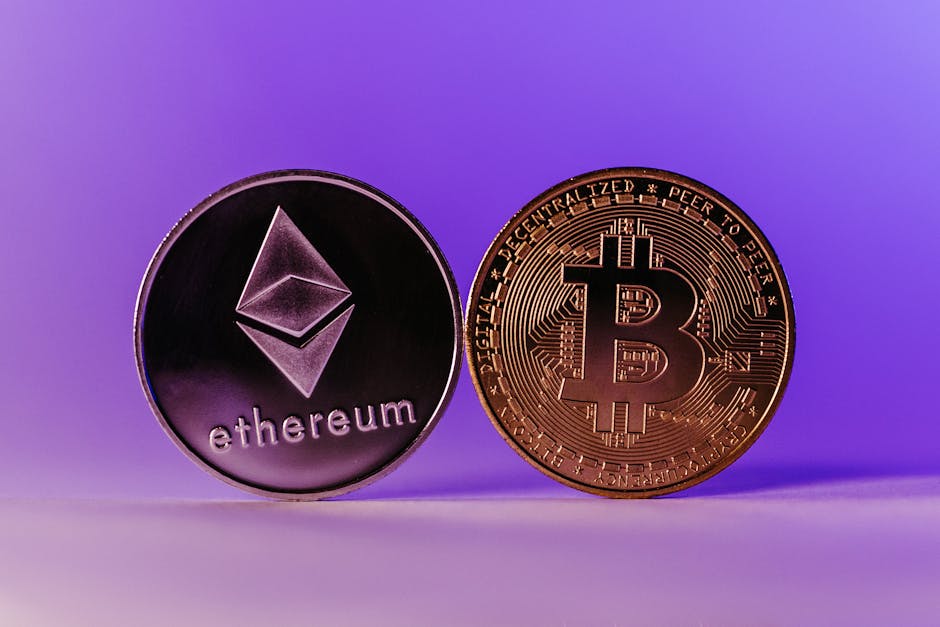
Bitcoin vs. Ethereum: A Comprehensive Investment Guide for 2023 and Beyond
Choosing between Bitcoin (BTC) and Ethereum (ETH) as an investment is a pivotal decision in the cryptocurrency landscape. Both are titans, but their underlying technology, use cases, and investment trajectories diverge significantly. Understanding these differences is crucial for constructing a diversified and potentially profitable digital asset portfolio. Bitcoin, often dubbed "digital gold," primarily functions as a store of value and a medium of exchange. Its scarcity, capped at 21 million coins, fuels its deflationary narrative, attracting investors seeking an inflation hedge. Ethereum, on the other hand, is the foundational layer for a vast ecosystem of decentralized applications (dApps), smart contracts, and non-fungible tokens (NFTs). Its Ether (ETH) cryptocurrency is essential for powering these network operations and is undergoing a transition to a proof-of-stake (PoS) consensus mechanism, promising increased efficiency and scalability. This article will delve into the investment avenues for both, exploring direct ownership, indirect exposure, and the evolving factors that influence their respective market valuations.
Directly acquiring Bitcoin and Ethereum is the most straightforward investment method. Investors can purchase BTC and ETH through a plethora of cryptocurrency exchanges. These platforms act as digital marketplaces where users can trade fiat currency (like USD, EUR, GBP) for cryptocurrencies. Popular exchanges include Coinbase, Binance, Kraken, Gemini, and many others. The process typically involves creating an account, verifying identity (KYC/AML compliance), depositing funds, and then placing buy orders for either BTC or ETH. The price of each cryptocurrency is determined by market supply and demand, fluctuating constantly. Investors can hold their purchased assets in exchange wallets or, for enhanced security, transfer them to private wallets. Private wallets, such as hardware wallets (Ledger, Trezor) or software wallets (MetaMask, Trust Wallet), provide users with control over their private keys, mitigating the risk of exchange hacks or insolvencies. The investment strategy here is typically "buy and hold," anticipating long-term price appreciation driven by adoption, technological advancements, and macroeconomic factors.
For those hesitant about direct ownership or seeking diversified exposure, indirect investment options exist. Exchange-Traded Funds (ETFs) are a significant development in this regard. Bitcoin ETFs, such as the ProShares Bitcoin Strategy ETF (BITO) and the Valkyrie Bitcoin Strategy ETF (BTF), offer investors exposure to Bitcoin’s price movements without directly holding the underlying asset. These ETFs are listed on traditional stock exchanges, making them accessible to a broader range of investors through standard brokerage accounts. While there isn’t a widely available spot Ether ETF in many jurisdictions, futures-based Ethereum ETFs have emerged, providing a similar mechanism for indirect investment. The approval of spot Bitcoin ETFs in the United States marked a watershed moment, signaling increased institutional acceptance and potentially unlocking significant capital inflows. The debate around spot Ethereum ETFs continues, with many anticipating their eventual approval, which would further democratize access to ETH investment.
Another avenue for indirect exposure is through publicly traded companies that hold Bitcoin or are heavily involved in the cryptocurrency ecosystem. MicroStrategy (MSTR) is a prime example, having accumulated a substantial Bitcoin treasury. Other companies involved in Bitcoin mining, such as Marathon Digital Holdings (MARA) and Riot Platforms (RIOT), offer an indirect play on Bitcoin’s price appreciation, albeit with added operational risks associated with mining profitability. Similarly, companies involved in Ethereum’s burgeoning dApp ecosystem, such as those developing blockchain gaming platforms or NFT marketplaces, can offer indirect exposure to Ether’s growth. This approach allows investors to participate in the cryptocurrency market through familiar equity structures, often providing a degree of regulatory clarity and established investor protections. However, it’s crucial to remember that these companies’ stock prices are also influenced by factors beyond cryptocurrency performance, including management decisions, industry competition, and broader market sentiment.
The investment thesis for Bitcoin is largely centered around its role as a potential digital store of value and an inflation hedge. Its fixed supply of 21 million coins creates inherent scarcity, contrasting with the inflationary nature of fiat currencies. As global economic uncertainties persist and concerns about fiat debasement rise, investors are increasingly looking to assets with limited supply. Bitcoin’s decentralized nature, operating on a global, permissionless network, makes it resistant to censorship and confiscation, further enhancing its appeal as a store of value. The ongoing development of the Lightning Network, a layer-2 scaling solution, aims to improve Bitcoin’s transaction speed and reduce fees, enhancing its utility as a medium of exchange for everyday transactions. Institutional adoption, evidenced by Bitcoin treasuries held by corporations and the increasing availability of Bitcoin-related financial products, continues to be a significant driver of demand and a validation of its investment potential.
Ethereum’s investment case is multifaceted, driven by its utility as the backbone of the decentralized web. The ongoing transition to Ethereum 2.0, or the Merge, and subsequent upgrades like sharding, are designed to address scalability limitations and significantly reduce transaction fees. This improved efficiency is critical for the continued growth of dApps, DeFi (Decentralized Finance), and NFTs. The DeFi ecosystem, which offers alternative financial services built on blockchain, and the booming NFT market, revolutionizing digital ownership, both rely heavily on the Ethereum network. As these sectors mature and attract more users and capital, the demand for ETH, used to pay for transaction fees (gas) and participate in network staking, is expected to increase. Staking, a core component of Ethereum’s PoS consensus, allows ETH holders to earn rewards by validating transactions and securing the network, providing a passive income stream.
Analyzing market sentiment and macroeconomic factors is crucial for both Bitcoin and Ethereum investments. For Bitcoin, sentiment is often driven by narratives surrounding institutional adoption, regulatory clarity, and its "digital gold" appeal. Macroeconomic trends such as inflation rates, interest rate policies, and geopolitical stability can significantly influence its price. A weakening dollar and rising inflation, for example, could drive investors towards Bitcoin as a perceived safe haven. For Ethereum, market sentiment is closely tied to the success of its technological upgrades, the growth of its dApp ecosystem, and the adoption of DeFi and NFTs. Regulatory developments concerning decentralized finance and digital assets can also have a substantial impact on investor confidence.
Understanding the risk profile of each asset is paramount. Bitcoin, as the first and most established cryptocurrency, is generally considered to have a slightly lower risk profile compared to Ethereum, though it remains a highly volatile asset class. Its longer track record and wider adoption provide a degree of resilience. Ethereum, while also established, is undergoing significant technological evolution. The success of its transition to PoS and future scaling solutions is crucial for its long-term value proposition. Any setbacks or unforeseen challenges in these upgrades could introduce additional volatility and risk. Both assets are subject to regulatory uncertainties, which can impact their accessibility and adoption. Furthermore, the inherent volatility of the cryptocurrency market means that significant price fluctuations are to be expected. Diversification within the crypto space and across traditional asset classes remains a key strategy for mitigating risk.
For investors looking to actively trade or capitalize on short-to-medium term price movements, derivatives markets offer additional avenues. Bitcoin and Ethereum futures contracts are available on regulated exchanges, allowing traders to speculate on future price movements without owning the underlying asset. Options contracts also exist, providing more complex trading strategies. These instruments typically require a higher level of expertise and a greater understanding of risk management due to their leveraged nature. Margin trading, where investors borrow funds to increase their trading position, is also available on many exchanges, amplifying both potential profits and losses. It is imperative for investors to thoroughly understand the risks associated with derivatives and margin trading before engaging in these activities.
The long-term outlook for both Bitcoin and Ethereum is subject to numerous variables. Bitcoin’s trajectory will likely be shaped by its continued adoption as a store of value, its potential for wider use as a medium of exchange, and its ability to withstand regulatory pressures. The scarcity narrative will remain a key driver, especially in an environment of persistent inflation concerns. Ethereum’s future is intrinsically linked to the success of its technological roadmap, particularly its scalability solutions, and the continued growth and innovation within its dApp ecosystem. The increasing utility of ETH as a gas token and a staking asset will be crucial for its demand. The ongoing competition from other smart contract platforms and the evolving regulatory landscape will also play a significant role in shaping its long-term value. Investors should conduct thorough due diligence, understand their risk tolerance, and consider consulting with financial professionals before making investment decisions in the volatile cryptocurrency market. The journey of both Bitcoin and Ethereum represents a paradigm shift in finance and technology, offering compelling, albeit risky, investment opportunities.
