
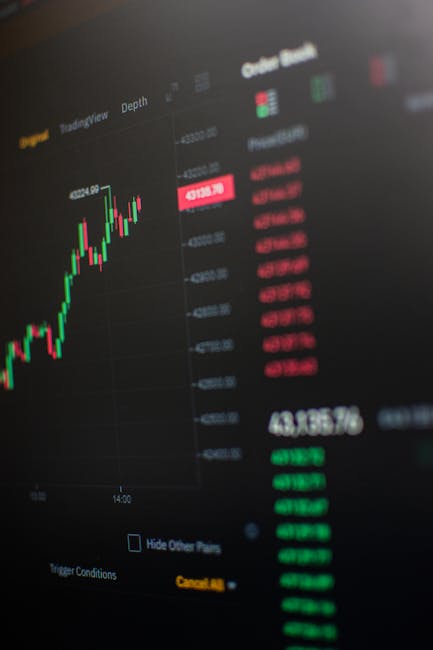
DeFi DEX Trading Volume Plummets 179% Amidst Market Correction and Shifting Investor Sentiment
The decentralized finance (DeFi) ecosystem, a burgeoning sector of the cryptocurrency market characterized by its reliance on smart contracts and blockchain technology to facilitate financial transactions without intermediaries, has recently experienced a significant downturn in the trading volume of its decentralized exchanges (DEXs). Reports indicate a staggering 179% fall in this crucial metric, a decline that signals a potential recalibration of investor interest and a broader market correction impacting even the most innovative corners of the digital asset space. This sharp contraction in trading activity on DEXs, platforms that enable peer-to-peer trading of cryptocurrencies directly from user wallets, is not an isolated incident but rather a symptom of interconnected factors ranging from macroeconomic headwinds and regulatory uncertainty to evolving investor behavior and technological advancements within the DeFi space itself. Understanding the drivers behind this substantial drop is essential for stakeholders, developers, and investors seeking to navigate the future trajectory of decentralized finance.
One of the primary catalysts for the significant decline in DEX trading volume is the prevailing macroeconomic environment. Global inflation rates have surged to multi-decade highs, prompting central banks worldwide to adopt hawkish monetary policies. Interest rate hikes, quantitative tightening, and the general tightening of liquidity have significantly reduced the risk appetite among investors. In such an economic climate, speculative assets, including cryptocurrencies and DeFi tokens, often fall out of favor as investors shift towards safer, more traditional assets like bonds and dividend-paying stocks. This flight to safety directly impacts the capital available for investment in the DeFi sector. When the broader economic outlook is uncertain, the capital that previously flowed into high-risk, high-reward ventures like DeFi dries up, leading to a proportional decrease in trading activity. The speculative fervor that propelled many DeFi protocols to new heights during bull markets dissipates when investors become more risk-averse. Consequently, the total value locked (TVL) in DeFi protocols also tends to decline, mirroring the reduced trading volume as less capital is deployed and active. This correlation between macroeconomic conditions and DeFi performance underscores the interconnectedness of traditional finance and the nascent digital asset markets.
Furthermore, increased regulatory scrutiny and uncertainty have cast a long shadow over the DeFi landscape, contributing to the decline in DEX trading volume. Governments and financial regulatory bodies globally are grappling with how to classify and regulate decentralized financial instruments. The lack of clear regulatory frameworks creates an environment of apprehension for institutional investors and even many retail participants. Fear of potential sanctions, legal repercussions, or the imposition of stringent regulations that could fundamentally alter the decentralized nature of these platforms can deter active participation. When investors perceive a higher level of risk due to regulatory ambiguity, they tend to reduce their exposure to the sector, translating into lower trading volumes on DEXs. The decentralized nature of DeFi, while a core tenet of its appeal, also presents significant challenges for regulators, leading to a prolonged period of uncertainty. This uncertainty can manifest as a "wait-and-see" approach from investors, a reluctance to commit significant capital until clearer guidelines are established. The possibility of future crackdowns or the classification of certain DeFi activities as securities can make investors hesitant to actively trade on these platforms, thus contributing to the observed volume decline.
The natural ebb and flow of cryptocurrency market cycles also plays a pivotal role in the observed decline in DEX trading volume. The cryptocurrency market is notoriously cyclical, characterized by periods of rapid growth and euphoric bull runs, followed by sharp corrections and prolonged bear markets. The substantial surge in DEX trading volume witnessed in previous years was largely fueled by the broader bull market in cryptocurrencies. As the market enters a correction phase, with prices of major cryptocurrencies like Bitcoin and Ethereum experiencing significant drawdowns, the entire crypto ecosystem, including DeFi, feels the impact. A decline in the price of underlying assets directly reduces the notional value of trades executed on DEXs. Even if the number of trades remains relatively stable, the total monetary value of those trades will decrease as asset prices fall. Moreover, during bear markets, speculative trading diminishes, and investors tend to hold onto their assets rather than engage in active trading. This shift in investor behavior directly translates to lower trading volumes on DEXs. The speculative exuberance that often drives high trading volumes during bull runs is replaced by a more cautious, risk-off sentiment during downturns, leading to a contraction in activity.
Technological challenges and user experience hurdles within the DeFi space, while not the sole drivers, also contribute to the friction that can dampen trading volumes. While DeFi offers innovative solutions, many platforms still grapple with issues such as high transaction fees (gas fees) on certain blockchains, particularly during periods of network congestion. These fees can make smaller trades economically unviable, discouraging participation for users with limited capital. Furthermore, the complexity of interacting with smart contracts, managing private keys, and understanding the nuances of different DeFi protocols can be a barrier to entry for mainstream users. While ongoing development aims to address these issues, current limitations can deter new users and lead to reduced activity from existing ones. The learning curve associated with navigating the DeFi landscape can be steep, and for many, the perceived complexity outweighs the benefits, especially when more user-friendly alternatives exist in centralized exchanges. For active traders, the efficiency and cost-effectiveness of their trading operations are paramount. If DEXs consistently present higher transaction costs or a less intuitive user interface compared to their centralized counterparts, trading volume will naturally migrate.
The increasing sophistication of competing platforms and evolving investor preferences also contribute to the dynamic nature of DeFi trading volume. While DEXs represent a significant innovation, the centralized exchange (CEX) model, with its established infrastructure, user-friendliness, and often lower trading fees for high-volume traders, continues to hold a substantial market share. As CEXs enhance their offerings and liquidity, they remain a preferred choice for many traders, especially those prioritizing ease of use and cost efficiency. Furthermore, within the DeFi space itself, there’s a constant evolution of trading mechanisms and protocols. Newer DEXs might offer innovative features like concentrated liquidity, advanced order types, or more efficient arbitrage opportunities, which can attract liquidity away from older platforms. This internal competition and migration of capital and traders to more advanced or specialized DEXs can also contribute to a net decrease in overall reported DEX trading volume on older or less competitive platforms. The market is not static; it’s a fluid environment where capital and users will gravitate towards the most attractive and efficient options available.
The “whales” and large institutional investors have a disproportionate impact on trading volumes. During periods of market downturn or uncertainty, these entities often reduce their trading activity significantly. Their withdrawal from the market, or even a reduction in their trading frequency, can lead to a substantial decrease in overall DEX volume. These large players often possess the capital and insight to capitalize on market shifts, but when the outlook is bleak, they tend to de-risk. Their reduced participation means fewer large-ticket trades, which are a significant component of total trading volume. The shift in sentiment among these key market participants is a strong indicator of broader market trends and directly influences the volume metrics of DEXs. The reduction in speculative capital, often deployed by these larger entities during bull runs, has a pronounced effect when withdrawn during bearish phases.
Finally, the very nature of DeFi’s transparency can also indirectly influence volume during a downturn. While transparency is a core tenet of blockchain technology and DeFi, it also means that declines in TVL and trading volume are readily observable. This public visibility can create a self-reinforcing cycle. As investors see reported drops in volume and TVL, it can further erode confidence and encourage more selling or a reduction in trading activity, exacerbating the initial decline. The real-time, on-chain data available in DeFi offers a clear picture of market activity, and when that picture is negative, it can lead to further negative sentiment and a contraction of activity. This transparency, while beneficial in many ways, can also amplify the psychological impact of market downturns on trading behavior.
In conclusion, the reported 179% fall in DeFi DEX trading volume is a complex phenomenon driven by a confluence of macroeconomic pressures, evolving regulatory landscapes, inherent market cycles, technological maturation, competitive dynamics, and the behavior of significant market participants. The DeFi sector, while resilient and innovative, is not immune to the broader forces shaping the global financial and digital asset markets. Navigating this period of contraction requires a deep understanding of these interconnected factors and a strategic approach to development, regulation, and investor engagement to foster sustainable growth in the decentralized finance ecosystem. The path forward will likely involve addressing user experience challenges, seeking greater regulatory clarity, and continuing to innovate in the face of a maturing and increasingly competitive digital asset market.
