
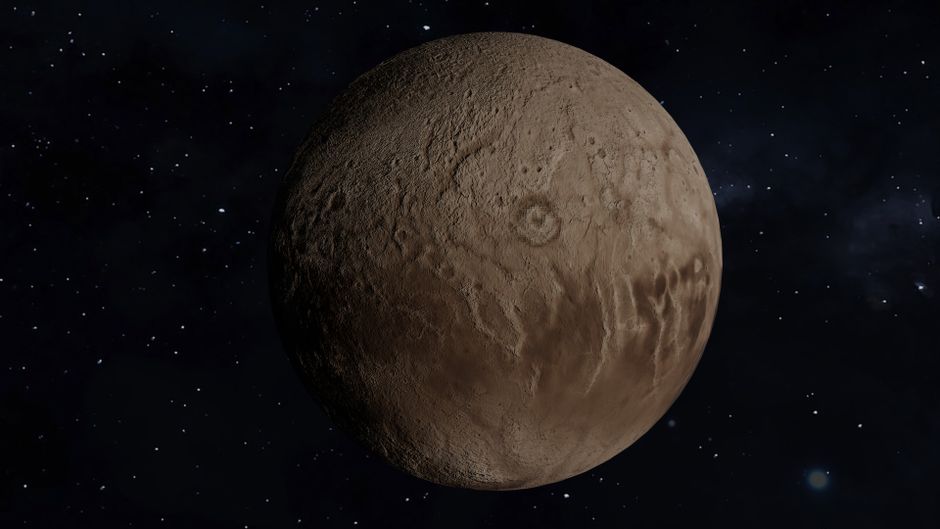
Pluto: A Kuiper Belt Enigma of Dwarf Planet Intrigue
Pluto, once considered the ninth planet of our solar system, now holds the esteemed title of dwarf planet, a classification that has only amplified its mystique and scientific intrigue. Located in the frigid, distant Kuiper Belt, a vast ring of icy bodies beyond Neptune, Pluto is a celestial object of immense scientific fascination. Its reclassification in 2006 by the International Astronomical Union (IAU) sparked considerable debate and public interest, but it also opened new avenues for understanding this unique world. The IAU’s definition of a planet hinges on three criteria: orbiting the Sun, being massive enough for its self-gravity to overcome rigid body forces so that it assumes a hydrostatic equilibrium (nearly round) shape, and clearing the neighborhood around its orbit. Pluto, while meeting the first two, fails the third, as its orbit is shared with other Kuiper Belt Objects. This distinction, however, does not diminish its inherent fascination; rather, it situates Pluto within a larger, more diverse population of trans-Neptunian objects, offering invaluable insights into the formation and evolution of our solar system.
The geological diversity of Pluto is one of its most compelling attributes, a revelation largely thanks to the New Horizons spacecraft’s historic flyby in 2015. Prior to this mission, Pluto was perceived as a uniformly cratered, icy sphere. New Horizons painted a far more dynamic and complex picture. Sputnik Planitia, a vast, heart-shaped basin of nitrogen ice, dominates one hemisphere. Its smooth, relatively young surface, devoid of significant impact craters, suggests ongoing geological activity, potentially driven by convection within the ice itself. This process, similar to boiling water where warmer material rises and cooler material sinks, implies that Pluto’s interior is not entirely frozen solid but possesses internal heat sufficient to drive these slow, ponderous movements of ice. The presence of mountains, some rivaling the height of the Rocky Mountains on Earth, further underscores Pluto’s geological complexity. These mountains are composed of water ice, which, at Pluto’s frigid temperatures, acts as a rigid, rock-like material. Their formation likely involved tectonic processes, such as faulting and uplift, indicating a history of significant crustal deformation.
The composition of Pluto’s surface is another source of profound intrigue. While nitrogen ice is prevalent in Sputnik Planitia, other ices, including methane and carbon monoxide ice, are also present, albeit in smaller quantities. The distribution of these ices varies across Pluto’s surface, creating distinct spectral signatures and color variations. Darker, reddish regions are thought to be rich in tholins, complex organic molecules formed when ultraviolet radiation and charged particles from the Sun interact with methane and nitrogen in Pluto’s thin atmosphere. The presence of these organic compounds, even in such an extreme environment, raises intriguing questions about the potential for prebiotic chemistry in the outer solar system. Furthermore, the observation of vast ice plains, vast canyons, and what appear to be ancient riverbeds, though carved by flowing methane or nitrogen instead of water, suggests a dynamic geological past involving cryovolcanism – the eruption of volatile substances instead of molten rock.
Pluto’s atmosphere, though tenuous, is a crucial element of its intrigue. Composed primarily of nitrogen, with trace amounts of methane and carbon monoxide, it is a fleeting entity that fluctuates with Pluto’s eccentric orbit around the Sun. As Pluto journeys farther from the Sun, its atmosphere freezes out and settles onto the surface. Conversely, as it approaches the Sun, the surface ices sublimate, replenishing the atmosphere. This dynamic atmospheric cycle, akin to Earth’s water cycle but driven by sublimation and freezing of ices, is a unique phenomenon. The atmosphere also exhibits hazes, likely composed of tholins, which contribute to Pluto’s characteristic reddish hue and are responsible for scattering sunlight, creating a diffuse illumination on the surface. Studying Pluto’s atmosphere provides crucial data on the interaction between solar radiation, surface composition, and atmospheric dynamics in an extreme extraterrestrial environment.
The nature of Pluto’s interior remains a significant area of ongoing research. While New Horizons provided tantalizing surface data, direct insights into its internal structure are limited. Scientists hypothesize that Pluto possesses a rocky core surrounded by a mantle of water ice. The presence of residual heat from its formation, coupled with radioactive decay within the rocky core, is believed to be sufficient to maintain a layer of liquid water beneath the ice shell. This subsurface ocean, if it exists, is of immense astrobiological interest. While the conditions are vastly different from Earth’s, the presence of liquid water is a fundamental requirement for life as we know it. Even if life doesn’t exist, understanding the potential for subsurface oceans on icy bodies in the outer solar system is crucial for comprehending the habitability potential of other celestial objects.
Pluto’s system of moons adds another layer of complexity and intrigue. Charon, its largest moon, is so massive relative to Pluto that the two are often considered a binary system, orbiting a common center of mass. This gravitational dance is unique among planetary moon systems in our solar system. Charon itself is a fascinating world, with a surface marked by canyons, mountains, and a mysterious reddish polar cap. Its presence suggests a significant impact event in Pluto’s past, possibly the origin of both Pluto and Charon. In addition to Charon, Pluto has four smaller moons: Nix, Hydra, Kerberos, and Styx. These moons are irregularly shaped and appear to be remnants of a larger impact that formed the Pluto-Charon binary. Their chaotic orbits and low densities further hint at their violent formation history and offer a window into the early dynamics of the outer solar system.
The study of Pluto offers profound insights into the formation and evolution of planetary systems. As a representative of the Kuiper Belt, Pluto provides a snapshot of the primordial building blocks that coalesced to form the planets in the inner solar system. Its composition, characterized by volatile ices and potentially organic molecules, speaks to the materials available in the frigid outer reaches of the protoplanetary disk. Understanding how these icy bodies formed, migrated, and interacted sheds light on the processes that ultimately shaped our solar system, including the migration of the giant planets, which may have played a significant role in populating the Kuiper Belt with objects like Pluto. Furthermore, Pluto’s existence and characteristics challenge our very definitions of what constitutes a planet, prompting ongoing scientific discussion and a broader appreciation for the diversity of celestial bodies in our cosmic neighborhood.
Pluto’s continued intrigue lies in the unanswered questions it presents. What are the precise mechanisms driving Sputnik Planitia’s convection? What is the extent and nature of the potential subsurface ocean? How did the complex organic molecules form and evolve on its surface? What are the long-term effects of solar radiation and charged particles on its atmosphere? The ongoing analysis of New Horizons data, combined with future observational campaigns and theoretical modeling, promises to unlock more of Pluto’s secrets. The dwarf planet, once relegated to the fringes of our understanding, has emerged as a vibrant and geologically active world, a testament to the dynamic nature of even the coldest and most distant corners of our solar system. Its story is far from over, and each new discovery further solidifies Pluto’s position as a truly intriguing celestial enigma.
