
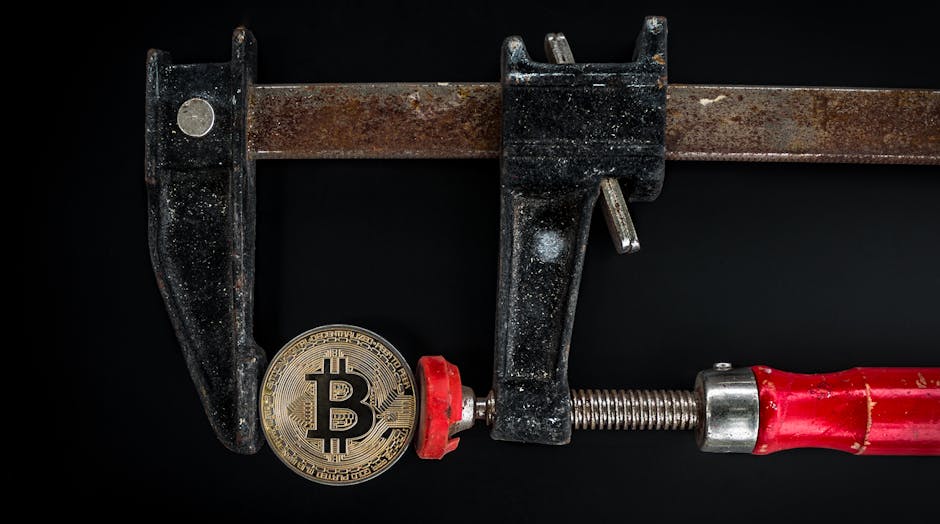
Bitcoin as a Reserve Asset: Freeing Global Finance from Sovereign Constraints
The traditional global financial system, heavily reliant on sovereign fiat currencies as reserve assets, is inherently constrained by national interests, political agendas, and the inherent debasement risks associated with centralized monetary policy. Bitcoin, with its decentralized nature, predictable supply, and pseudonymous ownership, offers a compelling alternative, potentially unlocking a new era of financial freedom for individuals, corporations, and even nations. This article explores the multifaceted implications of Bitcoin’s emergence as a potential reserve asset, focusing on its capacity to “free” global finance from the limitations imposed by existing structures.
The concept of a reserve asset is fundamental to the stability and functioning of the global economy. Traditionally, this role has been occupied by a select group of national currencies, primarily the US Dollar, which serve as a store of value, a unit of account, and a medium of exchange for international trade and investment. Central banks hold reserves of these currencies to manage their own currency’s value, settle international debts, and influence global liquidity. However, this system creates a dependency on the issuing nation’s economic and political stability. Inflation, devaluation, sanctions, and capital controls implemented by sovereign states can significantly impact the value and accessibility of these reserves, creating uncertainty and limiting financial autonomy for other nations and economic actors.
Bitcoin’s decentralized architecture is its most significant differentiating factor as a potential reserve asset. Unlike fiat currencies, whose supply is controlled by central banks, Bitcoin’s supply is capped at 21 million coins, making it inherently scarce. This scarcity is determined by a transparent and immutable protocol, removing the possibility of arbitrary inflation or debasement by a single entity. This predictable supply is a stark contrast to fiat currencies, which can be printed at will, leading to erosion of purchasing power over time. For countries or entities seeking to preserve wealth and hedge against inflation, Bitcoin’s fixed supply offers a tangible and verifiable store of value, a quality often sought in a reserve asset.
Furthermore, Bitcoin operates on a global, peer-to-peer network, transcending geographical borders and national jurisdictions. This inherent borderlessness means that Bitcoin reserves are not subject to the unilateral decisions of any single government. For instance, nations can be subjected to economic sanctions that restrict their access to foreign currency reserves held in traditional banking systems. Bitcoin, in contrast, can be held and transacted globally without needing permission from any intermediary or sovereign authority. This can “free” nations from the leverage that traditional financial powers wield through the control of reserve currencies and the associated banking infrastructure. It allows for greater financial sovereignty and resilience against geopolitical pressures.
The immutability of the Bitcoin blockchain is another crucial aspect that enhances its appeal as a reserve asset. Once a transaction is recorded on the blockchain and confirmed by the network, it cannot be altered or reversed. This provides an unprecedented level of security and auditability, ensuring the integrity of stored value. Traditional financial systems, while robust, are susceptible to manipulation, fraud, and data breaches. The transparent and distributed ledger of Bitcoin provides a verifiable record of ownership and transactions, offering a level of trust that is independent of any central authority. This immutability contributes to the long-term stability and reliability of Bitcoin as a store of value, a critical characteristic for any asset intended for reserve purposes.
The potential for Bitcoin to "free" individuals from the constraints of national monetary policies is also significant. For citizens of countries experiencing hyperinflation or restrictive capital controls, holding Bitcoin can represent a lifeline to global markets and a means to preserve their wealth. It offers an alternative to depreciating local currencies and the inability to transfer funds internationally. This democratization of access to a global reserve asset empowers individuals and small businesses, fostering financial inclusion and economic mobility. It allows for the accumulation of wealth that is not tethered to the economic fortunes of a single nation.
Corporations, too, stand to benefit from Bitcoin’s adoption as a reserve asset. Many multinational corporations hold significant reserves in various fiat currencies. Fluctuations in exchange rates, the risk of capital controls, and the costs associated with currency conversion can impact profitability and operational efficiency. Bitcoin, with its potential for price appreciation and its global accessibility, could offer a more stable and efficient way to manage corporate treasury functions. Furthermore, companies operating in unstable economic environments could use Bitcoin to hedge against currency risks and maintain the value of their assets, effectively freeing themselves from the volatility and restrictions inherent in traditional currency markets.
The concept of "freeing" also extends to the potential for Bitcoin to reduce reliance on the US Dollar as the de facto global reserve currency. This reliance has given the United States significant economic and political leverage. A more diversified reserve asset landscape, with Bitcoin playing a role, could lead to a more multipolar and balanced global financial system. This would reduce the ability of any single nation to dictate terms or exert undue influence through its reserve currency status. It would foster a more equitable playing field for international trade and finance, freeing other nations from the implicit obligations and dependencies associated with the current dollar-centric system.
The practical implementation of Bitcoin as a reserve asset for nations, however, presents several challenges. Volatility is a primary concern. While its long-term store of value proposition is strong, short-term price swings can be significant, making it a less predictable asset for immediate liquidity needs. However, as adoption grows and market capitalization increases, volatility is expected to decrease, making it more suitable for institutional and sovereign use. Furthermore, regulatory uncertainty surrounding Bitcoin in various jurisdictions can pose a hurdle. Governments are still grappling with how to classify and regulate digital assets, and clear frameworks are needed to facilitate widespread adoption as a reserve asset.
Another consideration is the technical infrastructure required for managing and securing large quantities of Bitcoin. This includes robust custody solutions, secure storage, and the integration of Bitcoin into existing financial reporting and compliance systems. However, advancements in institutional-grade custody services and the development of regulatory frameworks are rapidly addressing these concerns. The increasing involvement of major financial institutions in the Bitcoin space signals a growing maturity and readiness for institutional adoption.
The energy consumption associated with Bitcoin’s proof-of-work consensus mechanism has also been a point of contention. However, it is important to note that the energy consumed by the Bitcoin network is significantly less than the energy consumed by the traditional global financial system, including the energy required for mining fiat currency, maintaining banking infrastructure, and powering global payment networks. Furthermore, the Bitcoin network is increasingly powered by renewable energy sources, mitigating environmental concerns.
The notion of Bitcoin as a "reserve asset" also necessitates a deeper understanding of its potential role within the broader financial ecosystem. It is not necessarily about a complete replacement of existing reserve currencies, but rather a diversification and an addition to the existing toolkit. Nations and institutions may choose to allocate a portion of their reserves to Bitcoin, seeking its unique properties of scarcity, decentralization, and censorship resistance. This gradual integration could lead to a more resilient and diversified global financial system, "freeing" it from the singular vulnerabilities of relying on a single, centrally controlled fiat currency.
The development of Bitcoin as a reserve asset is an ongoing process, driven by innovation, increasing adoption, and a growing recognition of its unique properties. The narrative of "freeing" global finance from sovereign constraints is compelling, as it speaks to the desire for greater financial autonomy, security, and resilience. As Bitcoin continues to mature, its potential to serve as a global reserve asset, offering an alternative to the limitations of traditional fiat currencies, will become increasingly apparent. The implications for international finance, individual wealth preservation, and corporate treasury management are profound, ushering in a new era where financial freedom is not dictated by the policies of a single nation. The journey of Bitcoin from an obscure digital experiment to a potential cornerstone of global reserves signifies a fundamental shift in how we perceive and utilize value in the 21st century.
