
Brazil’s Political Earthquake: Unraveling the "Goes Dark" Phenomenon and Escalating Tensions
The term "goes dark" in the context of Brazilian politics has become a chilling shorthand for a series of events that have plunged the nation into a period of profound political uncertainty and escalating tension. This phrase, more metaphorical than literal, encapsulates a breakdown in transparency, a surge in confrontational rhetoric, and a perceptible weakening of democratic norms. The implications extend far beyond the hallowed halls of Brasília, resonating through society, impacting economic stability, and raising international concern. To understand this phenomenon, we must dissect its multifaceted origins, the key actors involved, the mechanisms through which it manifests, and the potential trajectories of its continued unfolding.
At its core, "goes dark" signifies a deliberate obfuscation of information and a retreat from open dialogue. This can manifest in various ways. Firstly, there’s a discernible increase in the use of executive decrees and opaque decision-making processes, bypassing legislative scrutiny and public consultation. When governmental actions become shrouded in secrecy, the public’s ability to hold its leaders accountable erodes. This breeds suspicion and distrust, creating fertile ground for conspiracy theories and further polarization. Secondly, the traditional channels of political discourse, including robust parliamentary debate and a free and independent press, have been increasingly targeted or undermined. When these vital pillars of democracy are weakened, it becomes easier for certain narratives to dominate, often fueled by misinformation and disinformation campaigns. The "goes dark" phenomenon, therefore, is not merely a coincidental occurrence; it is a symptom of a deeper struggle for political control and the very definition of democratic governance in Brazil.
Several key actors and forces have contributed to this pervasive sense of political darkness. President Jair Bolsonaro’s administration, characterized by its populist and often anti-establishment rhetoric, has played a significant role. His administration has frequently clashed with other branches of government, particularly the judiciary and the legislature, and has been accused of undermining democratic institutions. Bolsonaro’s communication style, often confrontational and dismissive of criticism, has amplified existing societal divisions. His supporters, highly engaged on social media, have often acted as a powerful echo chamber, amplifying his messages and contributing to a polarized information landscape. Conversely, opposition forces, while united in their opposition to Bolsonaro, have struggled to present a cohesive alternative vision that resonates broadly. Their efforts have often been hampered by internal divisions and a perceived inability to effectively counter the dominant narratives. The judiciary, particularly the Supreme Federal Court (STF), has found itself at the forefront of numerous legal battles, often acting as a bulwark against perceived executive overreach. These judicial interventions, while essential for upholding the rule of law, have also become a source of political contention, with some labeling them as judicial activism and others as necessary checks on power.
The mechanisms through which "goes dark" operates are diverse and interconnected. Social media platforms have become battlegrounds for political narratives, often serving as conduits for rapid dissemination of both legitimate information and outright falsehoods. The proliferation of "fake news" and coordinated disinformation campaigns has a corrosive effect on public discourse, making it increasingly difficult for citizens to discern truth from fiction. This can lead to an erosion of trust in institutions and a deepening of ideological divides. Furthermore, the politicization of state institutions, including law enforcement and federal agencies, has been a concern. When these bodies are perceived as being used for political purposes rather than impartial enforcement of the law, it further exacerbates tensions and undermines the principle of equal application of justice. The media landscape itself has been a battleground, with accusations of bias and attempts to discredit independent journalism contributing to a climate of distrust and making it harder for citizens to access reliable information.
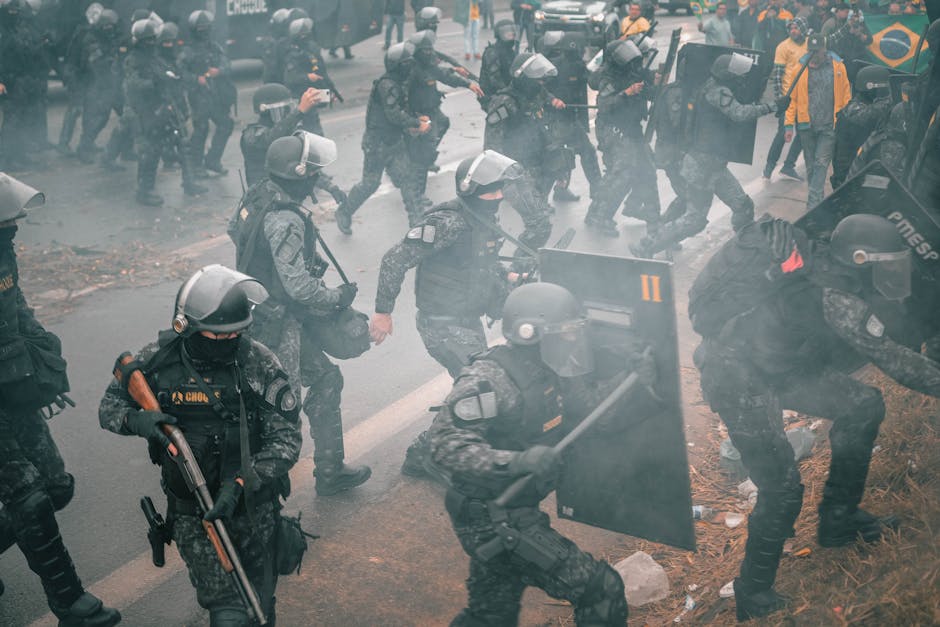
The escalating tensions are not abstract concepts; they have tangible consequences. Economically, political instability deters investment and hinders long-term growth. Investors are wary of operating in an environment where the rule of law is perceived as uncertain or where policy decisions are unpredictable. This can lead to capital flight, currency depreciation, and a general slowdown in economic activity. Socially, the heightened polarization contributes to a breakdown in civil discourse and an increase in animosity between different political factions. This can manifest in street protests, sometimes leading to violence, and a general sense of unease within society. The erosion of trust in institutions, from government to the media, also has long-term societal implications, making it harder to address complex challenges collectively.
Several specific events and trends have underscored the "goes dark" phenomenon. The repeated clashes between the Executive and the Judiciary, particularly concerning investigations into alleged misconduct and the interpretation of constitutional powers, have been a constant source of tension. The use of presidential pardons and amnesties, sometimes seen as politically motivated, has also raised concerns about the accountability of powerful individuals. The ongoing investigations into the spread of disinformation and its impact on democratic processes, including allegations of foreign interference, highlight the vulnerability of Brazil’s information ecosystem. Furthermore, the increasing frequency of protests and counter-protests, often fueled by extreme rhetoric, demonstrates the deep societal divisions that have been exacerbated. The debates surrounding electoral integrity and the security of voting systems have also become highly politicized, further contributing to a climate of uncertainty.
The international community has also been observing Brazil’s political trajectory with growing concern. The erosion of democratic norms and the weakening of institutions in a country of Brazil’s size and regional importance have implications that extend beyond its borders. Concerns about deforestation, human rights, and Brazil’s role in international climate negotiations are often intertwined with the country’s internal political stability. A politically fractured and less transparent Brazil can pose challenges to regional cooperation and global efforts to address shared problems.
Looking ahead, several scenarios are possible, none of them without their own set of challenges. A continued trajectory of increasing executive power and a further erosion of institutional checks and balances could lead to a more authoritarian form of governance. This would likely be met with significant internal resistance and international condemnation. Alternatively, a reassertion of democratic principles and a restoration of trust in institutions could emerge from sustained political pressure, judicial interventions, and a more informed and engaged citizenry. However, this path would require a significant shift in political rhetoric and a commitment to transparency and accountability from all sides. A prolonged period of political deadlock and instability is also a distinct possibility, characterized by a constant tug-of-war between different branches of government and a general sense of paralysis. This would likely prolong the economic and social costs associated with the "goes dark" phenomenon.
The struggle for transparency and accountability in Brazil is an ongoing and complex one. The "goes dark" phenomenon is a stark reminder that democratic gains are not permanent and require constant vigilance and active participation from citizens and institutions alike. The future of Brazilian democracy hinges on its ability to navigate these turbulent times, reaffirm its commitment to the rule of law, and restore the light of transparency to its political processes. The challenges are immense, but the stakes – the preservation of a democratic future for millions – are even higher. The resolution of these tensions will not be a singular event but a protracted process, requiring resilience, dialogue, and a steadfast dedication to the principles of democratic governance. The nation’s capacity to overcome this period of political darkness will be a defining chapter in its history, with profound implications for its own citizens and its standing in the global community. The persistent use of opaque methods, the silencing of dissenting voices, and the erosion of trust are not merely political tactics; they are corrosive forces that threaten the very foundations of a functioning democracy. The path forward requires a commitment to open debate, the unwavering defense of institutional independence, and a collective effort to rebuild a shared understanding of truth and democratic values. The reverberations of Brazil’s "goes dark" moment are a stark warning about the fragility of democratic systems and the constant need for vigilance in their preservation.
