

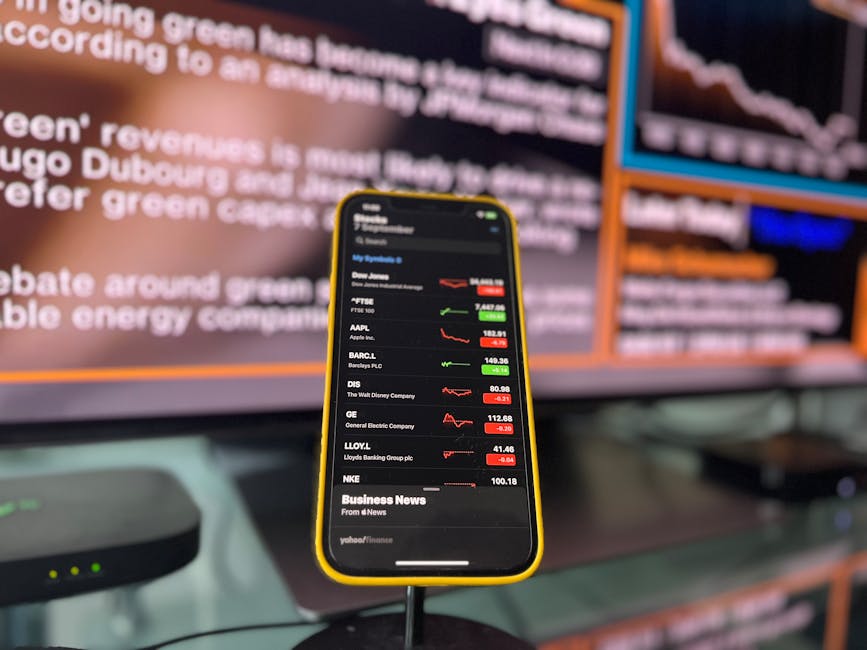
Yahoo Finance Reportedly Blocking Press: A Deep Dive into Content Control and Market Influence
Recent reports suggest that Yahoo Finance, a prominent platform for financial news and market data, is implementing a policy that effectively blocks content from numerous press outlets, raising significant concerns about information accessibility, market transparency, and the potential for concentrated influence over financial discourse. This alleged censorship, if true, represents a critical juncture for how financial news is disseminated and consumed by investors, analysts, and the general public. The ramifications extend beyond mere inconvenience, impacting the ability of individuals to make informed decisions in increasingly complex financial landscapes. Understanding the scope and implications of such a blockade requires a thorough examination of the platform’s role, the types of content being excluded, and the potential motivations behind such a restrictive approach.
The core of the issue lies in Yahoo Finance’s alleged decision to de-prioritize or entirely exclude content originating from a wide array of news providers, many of which are established and reputable sources of financial journalism. This exclusion isn’t limited to niche publications; reports indicate that a broad spectrum of media, including well-known financial news agencies and general news organizations with strong financial reporting desks, are finding their articles unindexed or inaccessible on the Yahoo Finance platform. The practical effect of this is that users searching for financial news or market analysis on Yahoo Finance may be presented with a significantly narrowed selection of sources, potentially excluding critical perspectives, investigative reporting, or simply diverse viewpoints on market events. This creates an information bottleneck, where the perception of what constitutes "essential" financial news is curated by Yahoo Finance itself.
The implications for market transparency are particularly worrying. In a healthy financial ecosystem, a multiplicity of voices and sources is crucial for uncovering market manipulation, exposing fraudulent practices, and providing a balanced understanding of economic trends. If a dominant platform like Yahoo Finance systematically filters out certain news outlets, it can inadvertently or deliberately create blind spots. This could allow for the unchallenged propagation of narratives that benefit specific entities or market actors, while crucial dissenting or investigative reports remain hidden from a significant portion of the audience. Investors relying on Yahoo Finance as a primary source of information could be operating with an incomplete or biased dataset, leading to suboptimal investment decisions and potentially exacerbating market volatility.
Several factors could be driving this alleged blockade. One possibility is a strategic shift by Yahoo Finance to prioritize its own proprietary content or content from a select group of preferred partners. This could be a move to consolidate its position as a central hub for financial information, driving traffic and engagement towards its own branded products and services. In this scenario, the platform might be seeking to control the user experience more tightly, ensuring that all content aligns with its own editorial direction or commercial interests. This approach, while potentially boosting internal metrics, comes at the significant cost of diminishing the breadth and diversity of information available to its users.
Another potential driver could be an attempt to streamline content moderation or to avoid specific types of reporting. For example, if certain press outlets are known for their critical or investigative journalism, a platform might choose to distance itself from such content to avoid controversy, legal challenges, or alienating advertisers. This is a more sinister interpretation, suggesting a deliberate effort to silence critical voices and create a more sanitized, less challenging information environment. Such a move would have serious implications for investigative journalism and the watchdog function that the press plays in the financial world.
The technical mechanisms behind such an alleged blockade could range from algorithmic adjustments to more direct content filtering. Algorithmic changes might subtly de-rank or de-prioritize articles from excluded publishers, making them less visible in search results and news feeds. Alternatively, there could be explicit content moderation policies in place that flag and prevent certain articles from being indexed or displayed at all. The opacity surrounding these processes makes it difficult to ascertain the exact methods employed, but the reported outcome is a consistent exclusion of a significant number of press outlets.
The impact on smaller or independent financial news outlets could be particularly severe. These organizations often rely on platforms like Yahoo Finance for broad distribution and visibility. If they are systematically excluded, it could significantly hinder their ability to reach a wider audience, impacting their readership, advertising revenue, and ultimately, their sustainability. This would further consolidate the financial news landscape, potentially leaving only the largest and most established media conglomerates with significant reach.
The concept of a "walled garden" of information is a growing concern in the digital age. Platforms that control large user bases can exert immense influence over what information their users consume. When these platforms begin to selectively curate or block content, they are essentially acting as gatekeepers of knowledge. In the context of financial markets, this gatekeeping role carries immense responsibility. The decision to exclude press outlets, if accurate, suggests a potential abdication of that responsibility, prioritizing commercial interests or internal agenda over the public’s right to comprehensive and diverse information.
SEO (Search Engine Optimization) is a crucial aspect of online visibility for any content provider. The alleged actions of Yahoo Finance have direct SEO implications for the excluded press outlets. Their articles, even if of high quality and relevant, will not be discoverable through Yahoo Finance’s internal search functions. This significantly reduces their potential reach and impact. Furthermore, if Yahoo Finance’s algorithms are also influencing external search engine rankings, the exclusion could have a ripple effect, making it harder for these publications to be found through general web searches as well. This creates a feedback loop of diminished visibility and reach.
The broader economic implications of such a blockade cannot be overstated. Informed decision-making is the bedrock of a functioning capitalist economy. When access to information is restricted, especially information related to financial markets, it can lead to misallocation of capital, increased risk for individual investors, and a less efficient market overall. The ability of journalists to investigate and report on corporate malfeasance, market trends, and economic policies is vital for maintaining accountability and fostering innovation. Blocking legitimate press outlets undermines this crucial function.
The lack of transparency surrounding Yahoo Finance’s alleged content policies exacerbates the problem. Without clear guidelines or public statements explaining the rationale behind the exclusions, it is difficult for publishers to understand why their content is being blocked or what steps they can take to rectify the situation. This ambiguity breeds suspicion and further erodes trust in the platform as a neutral and reliable source of financial information.
In conclusion, the reports of Yahoo Finance blocking press outlets represent a serious development with far-reaching consequences for financial journalism, market transparency, and investor education. The potential for concentrated influence, the erosion of diverse viewpoints, and the practical implications for SEO and discoverability highlight the critical need for open access to information in the financial world. If these allegations are substantiated, it calls into question the platform’s commitment to its users and the broader principles of a free and informed market. The financial community, regulators, and users alike should pay close attention to these developments and advocate for greater transparency and accessibility in financial news dissemination.

