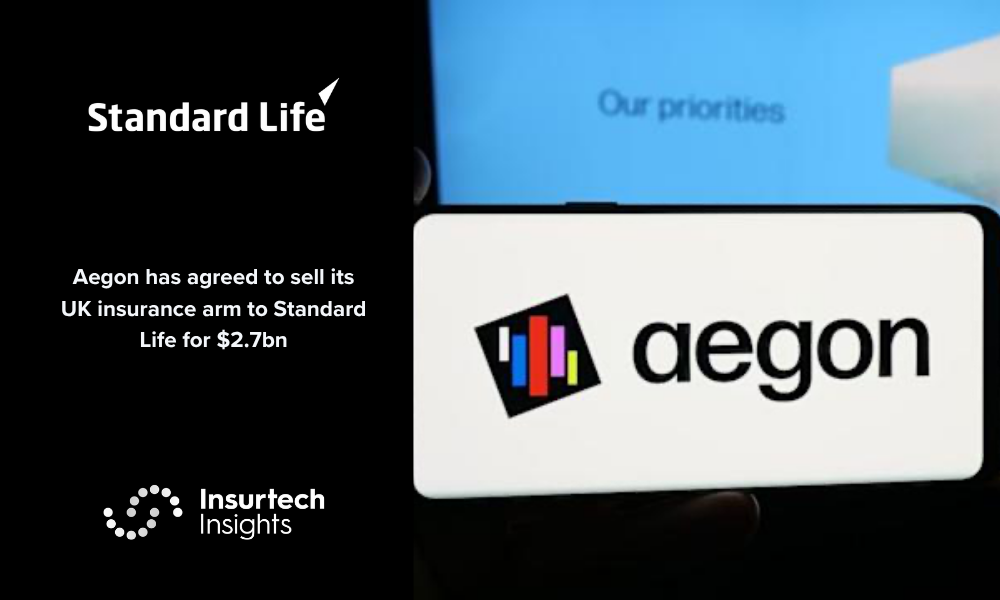
Aegon N.V. has reached a definitive agreement to divest its United Kingdom insurance, pension, and retirement operations to Standard Life, a primary brand under the Phoenix Group Holdings plc umbrella, in a transaction valued at approximately $2.7 billion. This landmark deal signals the conclusion of Aegon’s comprehensive strategic review of its British assets and underscores a fundamental shift in the company’s global geographical focus toward the North American market. The transaction, which is subject to customary regulatory approvals, represents one of the largest consolidations in the UK life and pensions sector in recent years, effectively reshaping the landscape of the British long-term savings market.
The divestment aligns with Aegon’s long-term corporate strategy to simplify its portfolio and concentrate capital on its most profitable core markets. Central to this strategy is the expansion of its United States operations, where it operates under the well-known Transamerica brand. By exiting the UK insurance market, Aegon intends to reduce its exposure to market volatility and capital-intensive business lines, opting instead for a more streamlined organizational structure that prioritizes US life insurance, retirement plans, and global asset management.
Strategic Realignment and the Pivot to North America
The decision to sell the UK insurance arm is the culmination of a multi-year effort by Aegon to reposition itself as a leader in the financial services sector. For decades, Aegon UK was a cornerstone of the group’s European operations, having built a significant presence through the acquisition of brands such as Scottish Equitable. However, the shifting regulatory environment in the United Kingdom, characterized by the introduction of the Solvency II regime and more recently the Financial Conduct Authority’s (FCA) Consumer Duty, has increased the operational costs for mid-sized players in the life and pensions space.
Aegon’s leadership, headed by CEO Lard Friese, identified that the company’s competitive advantage was most pronounced in the US retirement market. Transamerica, Aegon’s US subsidiary, maintains a massive footprint in the employer-sponsored retirement plan sector and individual life insurance. By reallocating the $2.7 billion in proceeds from the UK sale, Aegon aims to bolster Transamerica’s technology platforms, expand its distribution networks, and enhance its product offerings to meet the growing demand for retirement security among the American aging population.
Furthermore, the deal allows Aegon to retain a strategic foothold in the UK through its asset management division. Aegon Asset Management will continue to operate as a separate entity and has entered into a long-term partnership with the combined Standard Life and Aegon UK business. This arrangement ensures that Aegon continues to generate fee-based income from the UK market without the capital requirements associated with underwriting insurance policies and managing pension schemes directly.
Standard Life and the Consolidation of the UK Pension Market
For Standard Life and its parent company, Phoenix Group, the acquisition is a transformative move that cements their position as the undisputed leader in the UK’s retirement and savings sector. Phoenix Group has spent the last decade executing a highly successful "consolidator" model, acquiring legacy books of business and integrating them onto a single, efficient operating platform. The acquisition of Aegon UK represents a significant evolution of this model, as it brings in a large volume of "open" business—active pension schemes and modern savings products—rather than just closed legacy funds.
The scale of the newly combined entity is formidable. The acquisition adds millions of policyholders to Standard Life’s books, bringing the total customer base to approximately 16 million individuals. More importantly, the assets under administration (AUA) will swell to roughly £480 billion (approximately $600 billion). This scale is critical in the modern insurance industry, where massive investments in digital infrastructure and cybersecurity are required to remain competitive. By spreading these fixed costs over a larger asset base, Standard Life can achieve significant synergies and offer more competitive pricing to its customers.
The UK pensions market has been undergoing a period of rapid change since the 2015 "Pension Freedoms" reforms, which gave retirees more flexibility in how they access their savings. This has led to a surge in demand for sophisticated drawdown products and financial planning tools. By integrating Aegon’s modern digital platform with Standard Life’s brand heritage, the combined business is well-positioned to capture a larger share of the "at-retirement" market, where customers transition from saving to drawing an income.
Chronology of Aegon’s UK Operations and the Path to Divestment
The journey of Aegon in the UK market has been one of significant growth followed by a strategic narrowing of scope. To understand the context of this $2.7 billion sale, one must look at the timeline of Aegon’s British involvement:
- 1994: Aegon enters the UK market in earnest by acquiring a significant stake in Scottish Equitable, a venerable Edinburgh-based life insurer.
- 1998: Aegon takes full control of Scottish Equitable, rebranding it and focusing heavily on the group pension and individual protection markets.
- 2011-2016: Following the global financial crisis, Aegon begins a series of restructuring efforts. It sells its UK "off-pension" bond business and its UK annuity portfolio to Rothesay Life and Legal & General, signaling an early move away from capital-intensive products.
- 2016: Aegon acquires BlackRock’s UK defined contribution (DC) platform and Cofunds, the UK’s largest investment platform. This move was intended to pivot the business toward a "platform-led" model.
- 2020: Lard Friese is appointed CEO of Aegon N.V. and initiates a "strategic roadmap" to focus on core markets and high-growth opportunities.
- 2022-2023: Rumors begin to circulate in the City of London regarding the future of Aegon’s UK arm as the group sells its Central and Eastern European businesses to VIG.
- Present: The official announcement of the sale to Standard Life (Phoenix Group) for $2.7 billion, marking the end of Aegon’s era as a direct UK insurer.
Financial Data and Market Impact
The financial implications of the deal are substantial for both parties. For Aegon, the $2.7 billion (approximately £2.1 billion) price tag represents a healthy valuation for its UK business, reflecting the quality of its modern platform technology and its loyal customer base. The transaction is expected to significantly improve Aegon’s Solvency II ratio—a key measure of capital adequacy for insurers—allowing for potential increased shareholder returns through dividends and share buybacks.
For the UK market, the data highlights a trend of extreme concentration. The top five providers in the UK life and pensions space now control a vast majority of the assets under administration. With £480 billion in AUA, the combined Standard Life entity rivals other industry giants like Aviva, Legal & General, and Prudential. This concentration has drawn the attention of regulators, who are keen to ensure that such scale leads to better outcomes for consumers rather than reduced competition.
Market analysts suggest that the deal reflects the "industrialization" of the pension sector. The margins on managing individual pension pots have been squeezed by the 0.75% fee cap on workplace pensions and the high cost of compliance. In such an environment, the only way to maintain profitability is through immense scale. Standard Life’s acquisition of Aegon UK is a direct response to these economic realities.
Official Responses and Executive Leadership Perspectives
The leadership of both organizations has expressed high confidence in the long-term benefits of the merger. Lard Friese, CEO of Aegon, emphasized that the deal is not merely a retreat, but a proactive step toward a more focused future.
"The transaction represents an important step in our ambition to become a leading US life insurance and retirement group," Friese stated. "The terms reflect our commitment to creating value for shareholders, and through our shareholding we will benefit from further value creation in the combined business. Standard Life is the right owner for Aegon UK and a good home for our employees: we share the same values and a strong commitment to customers, and together the businesses will create the UK’s largest retirement savings and income provider. Aegon’s asset management business in the UK will remain an important asset management partner to the new combined business."
Andy Briggs, CEO of Phoenix Group (representing Standard Life), highlighted the cultural and strategic alignment between the two firms. Briggs has been a vocal advocate for improving the "financial wellbeing" of the British public, and he views this acquisition as a tool to achieve that goal.
"With financial wellbeing at the heart of everything it does, Aegon UK’s values and culture are aligned with our own," Briggs said. "Together, we will not only be stronger, we will be better—helping our customers achieve better outcomes and greater financial security in later life. I look forward to welcoming everyone in Aegon UK to Standard Life in due course and working together to capture the huge potential in front of us."
Implications for Customers and Employees
One of the most critical aspects of a merger of this magnitude is the impact on the workforce and the existing customer base. Aegon UK employs thousands of staff, primarily in Edinburgh and London. Standard Life has indicated that it intends to maintain a significant presence in these financial hubs, utilizing the expertise of the Aegon team to help manage the transition. However, as with any large-scale merger, there are expectations of "operational efficiencies," which often involve the consolidation of back-office functions and IT systems over several years.
For the 16 million customers involved, the immediate impact is expected to be minimal. Standard Life has committed to a seamless transition, with existing policy terms and conditions remaining unchanged. In the long term, customers may benefit from the combined group’s increased investment in digital portals, mobile apps, and financial education tools. The integration of Aegon’s platform technology—which was highly regarded in the industry for its advisor-facing tools—into the Standard Life ecosystem is expected to be a major selling point for financial advisors.
Broader Impact on the UK Financial Services Sector
The sale of Aegon UK is indicative of a broader "de-globalization" trend within the insurance industry. Many European and North American insurers are retreating from international markets to focus on their home territories where they have the deepest expertise and the most significant market share. We have seen similar moves from AXA, Zurich, and MetLife in recent years.
Furthermore, this deal highlights the UK’s status as a global hub for pension consolidation. The UK has one of the largest and most sophisticated pension markets in the world, and the move toward massive "mega-funds" mirrors trends seen in Australia and Canada. By creating a provider with $600 billion in assets, the UK is creating entities that have the "firepower" to invest in large-scale infrastructure projects and private markets, which aligns with the UK government’s desire to see pension capital used to stimulate the domestic economy.
As the transaction moves toward completion, the industry will be watching closely to see how the integration progresses. The success of this deal will be measured by whether the combined entity can truly deliver "better outcomes" for retirees while maintaining the technical innovation that Aegon was known for. For Aegon, the focus now turns entirely to the United States, where the pressure will be on Transamerica to deliver growth that justifies the exit from the British market.