
The completion of the China-Europe Arctic Express’s maiden voyage in December marks a transformative moment in global maritime logistics, signaling the transition of the Northern Sea Route from a theoretical alternative to a functional commercial corridor. The vessel Istanbul Bridge, the largest container ship to ever navigate the Arctic path along Russia’s northern coastline, concluded a journey that required two months of active navigation and three years of meticulous logistical preparation. This milestone serves as a centerpiece of China’s "Polar Silk Road," an ambitious extension of the Belt and Road Initiative (BRI) designed to integrate Arctic shipping and energy extraction into Beijing’s broader infrastructure diplomacy. As polar ice continues to recede at unprecedented rates due to global warming, the opening of this corridor offers a shorter transit between Asia and Europe, yet it simultaneously ignites intense debates regarding environmental safety, international sanctions, and the shifting geopolitical balance in the High North.
The Strategic Vision of the Polar Silk Road
China’s interest in the Arctic is neither new nor accidental. In a comprehensive 2018 policy white paper, the Chinese government officially designated itself as a "near-Arctic state," a term that drew both curiosity and concern from the eight permanent members of the Arctic Council. The document laid the groundwork for the Polar Silk Road, articulating a vision where Chinese enterprises would invest in northern shipping infrastructure, resource exploration, and scientific research. Beijing’s strategy is rooted in the "blue economic passage" concept, seeking to diversify its trade routes and reduce its historical dependence on the Malacca Strait and the Suez Canal, both of which are vulnerable to congestion and geopolitical instability.
The Northern Sea Route (NSR) offers a compelling economic proposition. By traveling along the Russian coast from the Kara Gate in the west to the Bering Strait in the east, vessels can potentially reduce the distance between East Asian ports and Northern Europe by as much as 40% compared to the traditional route via the Suez Canal. For a massive container ship like the Istanbul Bridge, these savings translate into reduced fuel consumption and shorter turnaround times, provided the conditions are navigable. However, the realization of this shortcut depends heavily on China’s deepening partnership with Russia, which exercises sovereign control over the majority of the route.
Chronology of a Milestone Voyage
The voyage of the Istanbul Bridge was the culmination of years of diplomatic and technical coordination between Chinese shipping interests and Russian authorities. While smaller vessels and specialized ice-breaking tankers have used the NSR for years, the successful transit of a large-scale commercial liner service represents a proof-of-concept for high-volume containerized trade.
The preparation phase, beginning in 2021, involved rigorous assessment of ice-class requirements and the scheduling of nuclear-powered icebreaker escorts. In September 2024, the momentum accelerated when China’s NewNew Shipping Line signed a series of landmark agreements to invest five billion rubles (approximately $53 million USD) into a logistics complex at Provideniya Bay. This facility is intended to serve as a primary hub for vessels entering or exiting the eastern gate of the NSR. Simultaneously, plans were finalized to develop container shipping capabilities through the ice-free port of Murmansk, ensuring a year-round gateway at the western end of the corridor. These investments represent a long-term commitment to the route’s viability, moving beyond seasonal trials toward a permanent maritime presence.
The Geopolitical Axis: Moscow, Beijing, and Rosatom
The development of the Northern Sea Route is inextricably linked to the current geopolitical climate, specifically the strengthening of the Russia-China "no limits" partnership in the wake of Western sanctions. Russia asserts extensive regulatory control over the 5,600-kilometer passage, mandating a permit-based system for all transiting vessels. Under Russian law, ships must often utilize Russian pilotage services and, in many ice-heavy sectors, icebreaker escorts provided by the state-owned nuclear energy corporation, Rosatom.
Rosatom’s role extends far beyond maritime safety. As a central pillar of Russia’s military-industrial complex, the corporation’s management of the NSR provides a critical revenue stream for the Russian state. The fees collected from Chinese and other international vessels for transit permits and icebreaker services directly support an entity deeply involved in Russia’s strategic operations. Observers note that China’s systematic push into the NSR provides Russia with a vital economic lifeline, helping to offset the impact of Western energy sanctions by facilitating the flow of crude oil and liquefied natural gas (LNG) to Asian markets.
The Rise of the Shadow Fleet and Sanctions Evasion
A critical 2025 report titled Vessels on the Northern Sea Route, published by the Bellona Environmental Transparency Center, highlights a concerning trend in Arctic traffic. The report, authored by experts who relocated from Russia to Norway in 2022, reveals that the NSR has become a primary conduit for Russia’s "shadow fleet." This fleet consists of aging, poorly insured, and often incorrectly certified tankers used to transport Russian hydrocarbons to China and India in defiance of G7 price caps and Western sanctions.
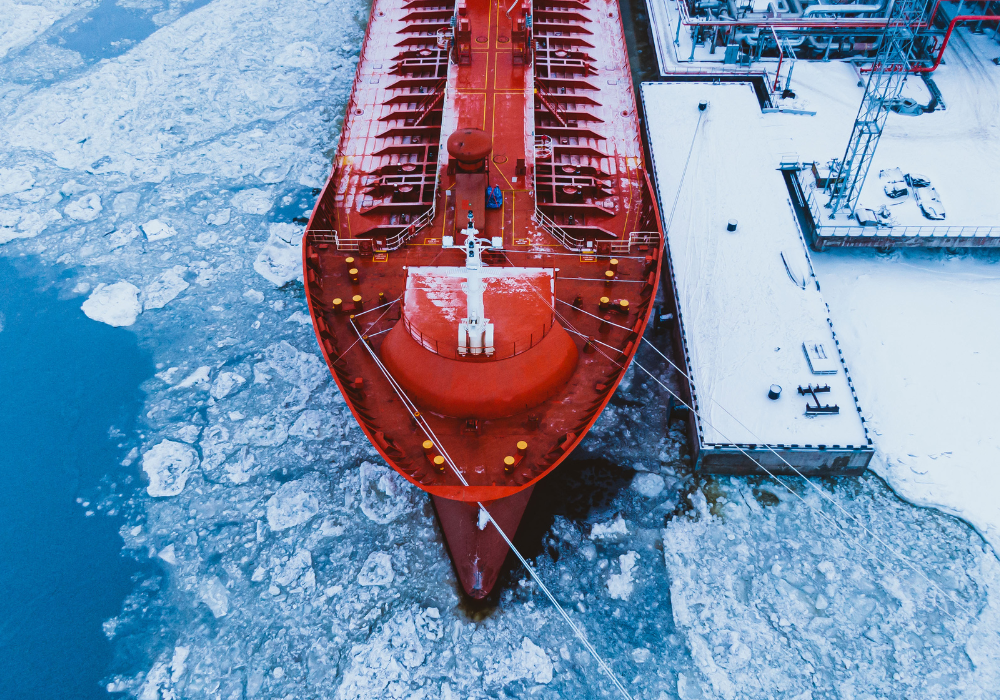
The data provided by Bellona underscores the scale of the risk. In 2024, Rosatom issued 1,312 permits to 975 different vessels to enter the NSR. Of these, 100 were non-Russian flagged ships, including 33 LNG tankers and 22 oil tankers. Alarmingly, the report found that approximately one-third of these vessels lacked the necessary ice-class certification required for safe Arctic navigation. Furthermore, more than half of the oil tankers were over 15 years old, an age at which the structural integrity of a hull becomes a significant concern when navigating through pack ice. The use of these "substandard" vessels in one of the world’s most hazardous environments creates a high probability of a maritime catastrophe.
Environmental Risks and the Safety Debate
The international shipping community remains deeply divided over the ethics and safety of Arctic transit. While China celebrates the Istanbul Bridge voyage as a victory for global trade, major Western shipping giants have expressed profound reservations. Søren Toft, Chief Executive of the Mediterranean Shipping Company (MSC), has been a vocal critic, stating that "safe navigation cannot be assured" in the region. MSC, along with other industry leaders like Hapag-Lloyd and Nike, has previously pledged to avoid the NSR to protect the fragile Arctic ecosystem.
The Clean Arctic Alliance, an influential coalition of non-governmental organizations, has raised "red flags" regarding the inaugural China-Europe Arctic Express. Sian Prior, the alliance’s lead adviser, argues that the introduction of large container ships increases the risk of catastrophic oil spills and the emission of black carbon. Black carbon, a byproduct of heavy fuel oil combustion, settles on ice and snow, reducing their reflectivity and accelerating the melting process—a feedback loop that further destabilizes the global climate.
Andrew Dumbrille, the alliance’s North American adviser, points to a lack of emergency-response infrastructure as a primary concern. The NSR lacks the specialized equipment and personnel required to contain an oil spill in icy waters. In the event of a breach, oil could remain trapped under ice for months, making cleanup nearly impossible and wreaking long-term damage on indigenous communities and wildlife, including polar bears, whales, and migratory birds.
Supporting Data: Traffic and Cargo Trends
Despite the controversy, the volume of traffic along the Northern Sea Route continues to climb. A comparison of the 2024 and 2025 seasons reveals a steady upward trajectory:
- Total Transit Voyages: The 2025 summer–autumn season saw 103 transit voyages, an increase from 97 in 2024.
- Oil and Gas Dominance: Of the vessels transiting in 2024, 34 were tankers carrying approximately 1.9 million tons of crude oil.
- Container Growth: While tankers dominate, container traffic is rising. Fifteen container ships made the journey in 2024, up from 11 the previous year, transporting roughly 400,000 tons of goods.
- Permit Statistics: The 1,312 permits issued by Rosatom in 2024 represent a record high, reflecting a 12% increase in administrative activity related to the route.
These figures indicate that while container shipping is the "new" face of the NSR, the route’s primary function remains the export of Russian energy. China’s role is dual-purpose: it acts as the primary customer for these energy exports and the primary developer of the logistical infrastructure needed to move them.
Broader Impact and Implications for Global Governance
The emergence of the Polar Silk Road challenges the existing framework of Arctic governance. Historically, the Arctic was a region of "low tension" where cooperation on scientific and environmental issues took precedence over military and economic competition. However, the integration of the NSR into the Belt and Road Initiative suggests a shift toward a more transactional and geopolitically charged environment.
The systematic use of the NSR by China and Russia creates a "fait accompli" that Western powers are struggling to address. While the United States and its allies emphasize the importance of the Arctic as a "Global Commons," the Russia-China axis is effectively privatizing the benefits of the route through bilateral agreements and state-controlled oversight. This creates a regulatory vacuum where commercial ambition may outpace the development of international safety and environmental standards.
As the Istanbul Bridge returns to its home port, it leaves behind a transformed Arctic landscape. The "shortcut at the top of the world" is no longer a dream but a burgeoning reality. The challenge for the international community in the coming decade will be to reconcile the undeniable economic allure of the Northern Sea Route with the urgent need to protect the planet’s most vulnerable ecosystem and maintain the rule of international law in an increasingly fragmented world. For China, the Polar Silk Road is a triumph of long-term planning; for the Arctic, it may be the beginning of an era of unprecedented risk.