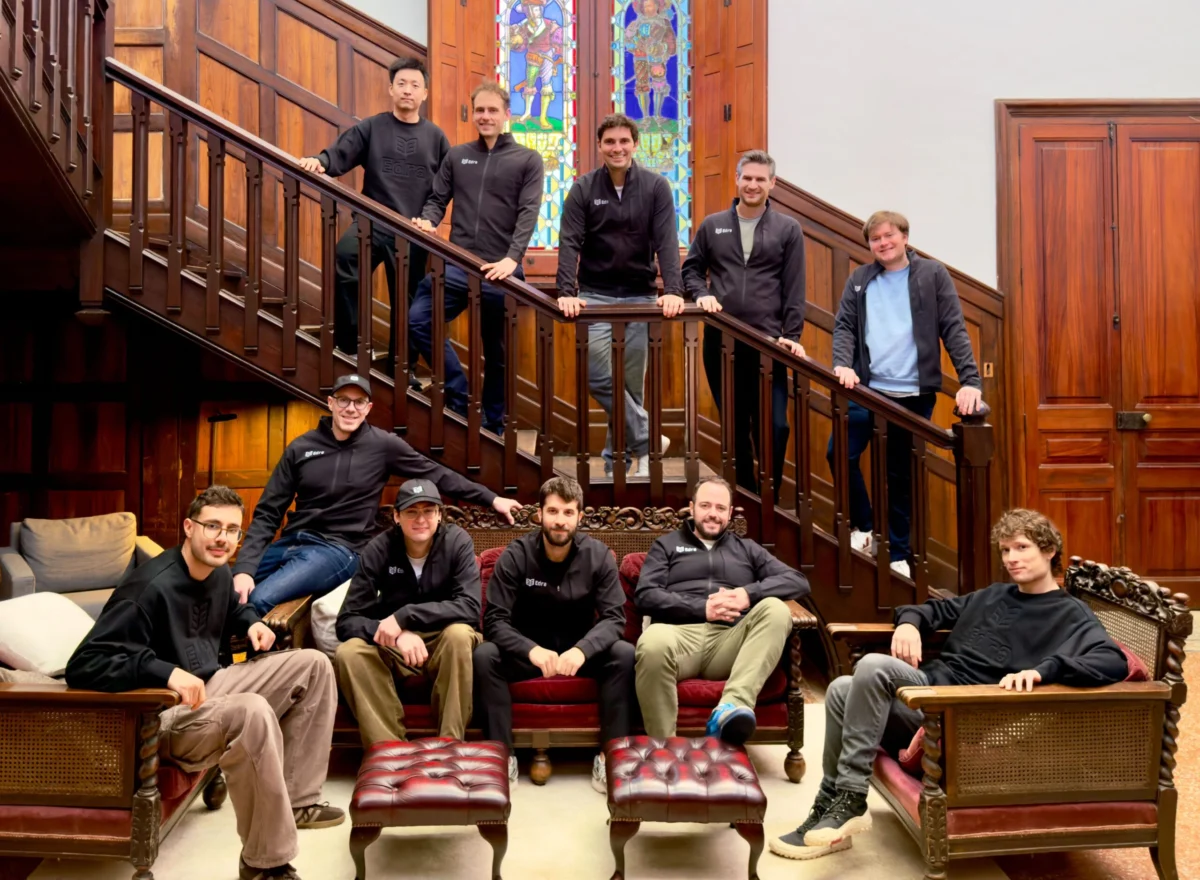
Eugen Alpeza and Yannis Karamanlakis’s pioneering startup, Edra, has emerged from stealth mode, announcing a significant seed funding round aimed at transforming how artificial intelligence agents interact with enterprise knowledge. The company’s innovative approach focuses on converting siloed, "tribal" corporate knowledge into dynamic, actionable context, thereby dramatically enhancing the effectiveness of AI agents in real-world business operations. This breakthrough promises to address a pervasive challenge in the current AI landscape: the steep learning curve and high implementation costs associated with general-purpose AI in bespoke enterprise environments.
The Core Problem: AI’s Knowledge Deficit in the Enterprise
The fundamental challenge Edra seeks to solve lies in the inherent individuality of every company. Even within the same industry, businesses operate with unique escalation paths, intricate workarounds, and a wealth of tacit knowledge accumulated over years. This institutional memory, often residing in the minds of long-serving employees, is rarely codified in a way that is readily digestible by artificial intelligence. Consequently, when a general-purpose AI is introduced into such an environment, it begins with a blank slate.
The process of bringing these AI agents up to speed is typically arduous, involving extensive manual documentation, the deployment of specialized engineers, and the engagement of costly consultants. This "onboarding" process is not a one-time event; it requires constant re-evaluation and updates whenever business processes evolve. This creates a significant bottleneck and a recurring expense for many organizations, leaving them struggling to leverage the full potential of AI. Industry analysts have noted that the average enterprise spends upwards of 30% of its AI budget on data preparation and integration, a figure that Edra’s solution aims to drastically reduce.
The Visionaries Behind Edra: A Palantir Pedigree
The genesis of Edra is rooted in the deep experience of its co-founders, Eugen Alpeza and Yannis Karamanlakis, both former leaders at Palantir Technologies. Eugen Alpeza spent seven years at Palantir, playing a pivotal role in shaping the company’s U.S. commercial go-to-market strategy. His tenure included spearheading Palantir’s engagement with AT&T, a landmark deployment characterized by its scale and complexity. In 2023, Alpeza was instrumental in the launch of Palantir’s AI Platform, working directly under CEO Alex Karp.
Alongside Alpeza, Yannis Karamanlakis co-created the "Forward Deployed AI Engineer" role at Palantir, a position specifically designed to bridge the gap between cutting-edge AI research and practical, large-scale production deployments. Karamanlakis was the inaugural Forward Deployed AI Engineer, leading a team focused on transitioning Large Language Models (LLMs) from experimental demos to robust, scalable production systems. His prior achievements include leading a significant commercial AI project that developed a recruiting search engine, which reportedly increased placement rates for a staffing firm by an impressive 129%.
Having known each other since their university days – a friendship spanning 13 years – Alpeza and Karamanlakis harbored a long-held ambition to build a company together. Their shared vision and complementary expertise, forged in the demanding environment of enterprise AI deployment, form the bedrock of Edra.
Edra’s Innovative Solution: Living Knowledge Bases
Edra’s core innovation lies in its elegant and data-centric methodology. Instead of relying on humans to meticulously document processes, Edra analyzes the vast troves of data that companies already generate. This includes data from support tickets, emails, system logs, and internal chat histories. By sifting through this information, Edra constructs a dynamic, living knowledge base that accurately reflects the operational realities of the business, not just theoretical workflows.

This approach offers several key advantages. Firstly, it bypasses the laborious and often incomplete nature of traditional documentation. Secondly, the knowledge base is not static; it continuously learns and improves as users interact with it, ensuring that the AI remains contextually relevant to evolving business practices. Crucially, unlike proprietary "black-box" fine-tuning methods, Edra’s system is transparent and editable. Users can trace the AI’s reasoning, understand precisely what it has learned, and make necessary adjustments, fostering trust and control.
This ability to create contextually aware AI agents is transformative. For instance, an AI customer support agent trained on Edra’s dynamic knowledge base would not only understand general product information but also be aware of specific customer issues, past resolutions, internal escalation procedures, and even the unique language and jargon used within the organization. This level of nuanced understanding allows for more accurate responses, faster resolution times, and a significantly improved customer experience.
Early Successes and Market Validation
The early results from Edra’s pilot programs have been highly encouraging. The company has identified particularly strong use cases in areas where data is abundant and the need for efficient automation is acute, such as IT Service Management (ITSM) and customer technical support. In these domains, Edra’s ability to quickly ingest and contextualize operational data has led to demonstrable improvements in efficiency and effectiveness.
Early customers, who have experienced firsthand the benefits of Edra’s solution, are reportedly enthusiastic and are actively expanding their deployments. While specific customer names and detailed performance metrics from these early engagements are not yet publicly disclosed, the positive sentiment and aggressive expansion plans suggest a strong market fit and significant value proposition. Industry observers anticipate that successful early adopters will likely become case studies, further accelerating Edra’s market penetration.
Investment Rationale: People and Technology
The investment in Edra is underpinned by a strong belief in the founding team and their technological vision. As noted by investors, the decision to back Edra was heavily influenced by the exceptional synergy between Eugen Alpeza and Yannis Karamanlakis. Alpeza is described as a commercially astute leader, adept at building trust with even the most skeptical clients and inspiring confidence in complex solutions. Karamanlakis, on the other hand, is recognized for his deep technical prowess, the kind of partner who can navigate and solidify the most challenging technical aspects of AI deployment. Their combined dynamic is seen as a significant competitive advantage.
This "people-first" investment philosophy, coupled with Edra’s innovative approach to enterprise AI, has attracted significant interest from venture capital firms. The successful seed funding round signals strong confidence in Edra’s ability to capture a substantial share of the rapidly growing enterprise AI market. The global AI market is projected to reach over $1.5 trillion by 2030, with enterprise solutions forming a significant portion of this growth. Edra’s focus on contextualization addresses a critical unmet need within this expansive market.
Broader Implications for Enterprise AI
Edra’s success could have far-reaching implications for the broader adoption and effectiveness of AI in enterprises. By democratizing access to sophisticated, context-aware AI, Edra has the potential to:
- Accelerate Digital Transformation: Companies will be able to implement AI solutions faster and with greater confidence, speeding up their digital transformation initiatives.
- Reduce AI Implementation Costs: The need for extensive manual data preparation and specialized engineering resources will be significantly diminished, making AI more accessible to a wider range of businesses, including small and medium-sized enterprises.
- Enhance Operational Efficiency: By providing AI agents with a deep understanding of specific business processes, companies can achieve higher levels of automation and efficiency across various functions.
- Improve Employee Productivity: Employees can be freed from repetitive tasks and empowered with AI tools that augment their capabilities, leading to increased productivity and job satisfaction.
- Mitigate Knowledge Loss: Edra’s living knowledge base offers a robust solution to the problem of institutional knowledge loss, ensuring that critical operational insights are preserved and accessible, even as employees transition.
The company’s focus on transparency and editability also addresses growing concerns about AI governance and explainability, providing a framework for more responsible AI deployment within organizations. As Edra continues to develop and scale its platform, it is poised to become a key enabler of the next generation of intelligent enterprises, where AI agents function not as generic tools, but as deeply informed and highly effective collaborators. The company’s trajectory will be closely watched as it aims to set a new standard for AI integration in the complex world of business.