The global carbon removal market has reached a significant milestone with the announcement of a massive three-year offtake agreement between Exomad Green, a leading producer of biochar, and Supercritical, a prominent carbon removal marketplace. Under the terms of this expanded partnership, Supercritical will facilitate the purchase of up to 500,000 tons of biochar carbon removal (BCR) credits. These credits are sourced directly from Exomad Green’s rapidly expanding operations in Bolivia, signaling a shift in the voluntary carbon market (VCM) toward high-durability, verified sequestration methods.
This agreement represents one of the largest single biochar offtake deals to date, underscoring the growing corporate demand for permanent carbon removal solutions over traditional avoidance credits. The collaboration builds upon a successful history between the two entities, as Supercritical has already facilitated the sale of more than 100,000 tons of Exomad Green’s credits to corporate buyers seeking to meet stringent net-zero commitments.
The Mechanics of Biochar and Exomad Green’s Operational Scale
Exomad Green has distinguished itself in the carbon dioxide removal (CDR) sector by leveraging sustainable forestry residues to create biochar—a carbon-rich, charcoal-like substance produced through pyrolysis. This process involves heating organic waste biomass in a low-oxygen environment, which prevents the carbon from decomposing and returning to the atmosphere as CO2. Instead, the carbon is "locked" into a stable, solid form that can remain sequestered in the soil for centuries.
The company’s operations are centered in Bolivia, where it utilizes waste from sustainably managed forestry residues. By converting this waste into biochar, Exomad Green addresses two environmental challenges simultaneously: reducing the risk of forest fires and methane emissions from decaying biomass, and providing a powerful soil amendment for local agriculture.
Currently, Exomad Green operates two large-scale biochar facilities in Bolivia. To meet the soaring demand reflected in the new Supercritical agreement, the company is in the process of constructing a third facility. This new plant is expected to become operational later this year, further cementing Exomad’s status as a global leader in the BCR space. The company has already delivered over 320,000 tons of durable carbon removal, achieving a year-over-year production increase of more than 200%.
Supercritical’s Role in the Carbon Removal Ecosystem
Based in London and founded in 2021, Supercritical has quickly emerged as a critical intermediary in the transition to a net-zero economy. The firm operates a marketplace dedicated exclusively to high-quality carbon removal, vetting projects with a rigorous internal framework to ensure they meet the highest standards of permanence, additionality, and measurability.
Supercritical’s influence is substantial; the company estimates it facilitates approximately 35% of all corporate carbon removal purchases globally. By aggregating demand from corporate giants and mission-driven startups alike, Supercritical provides the financial certainty that developers like Exomad Green need to scale their physical infrastructure.
With the addition of this 500,000-ton agreement, Supercritical has now facilitated nearly two million tons of carbon removal across a diverse portfolio of technologies. This portfolio includes not only biochar but also direct air capture (DAC), enhanced rock weathering (ERW), mineralization, and other permanent pathways. This diversification is essential for a nascent market that requires multiple technological approaches to reach the gigaton scale necessary to combat climate change.
A Chronology of Collaboration and Growth
The partnership between Exomad Green and Supercritical has evolved rapidly, reflecting the broader acceleration of the CDR industry:
- 2021-2023: Initial Engagements: Supercritical began vetting Exomad Green’s Bolivian operations as part of its mission to identify scalable, high-integrity removal projects.
- 2024-2025: Scaling Milestones: The two companies successfully facilitated the removal of 100,000 tons of CO2. During this period, Exomad Green proved its ability to deliver physical tons, a rarity in a market often characterized by "pre-purchase" agreements for future delivery.
- April 2026: The 500,000-Ton Breakthrough: The signing of the three-year agreement secures Exomad Green’s remaining 2026 inventory and sets firm allocations for 2027 and 2028.
This timeline demonstrates a transition from experimental pilot purchases to large-scale, multi-year procurement strategies. For Exomad Green, this provides the bankability required for capital-intensive expansions. For Supercritical, it ensures a steady supply of high-quality credits for its clients in a market where demand frequently outstrips supply.
Scientific Integrity and the Puro.earth Standard
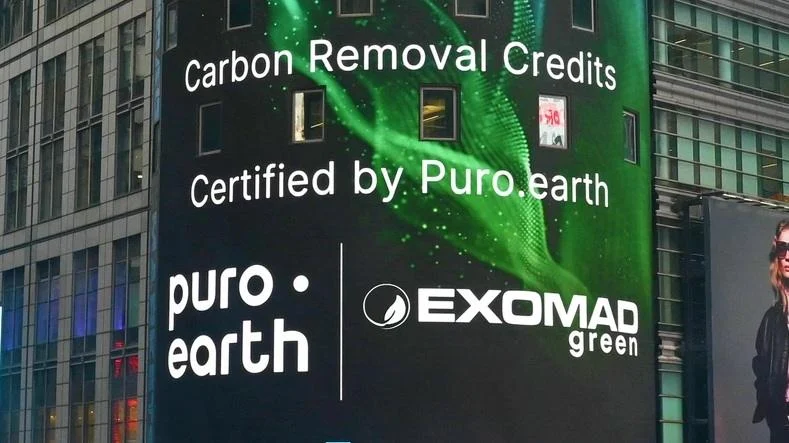
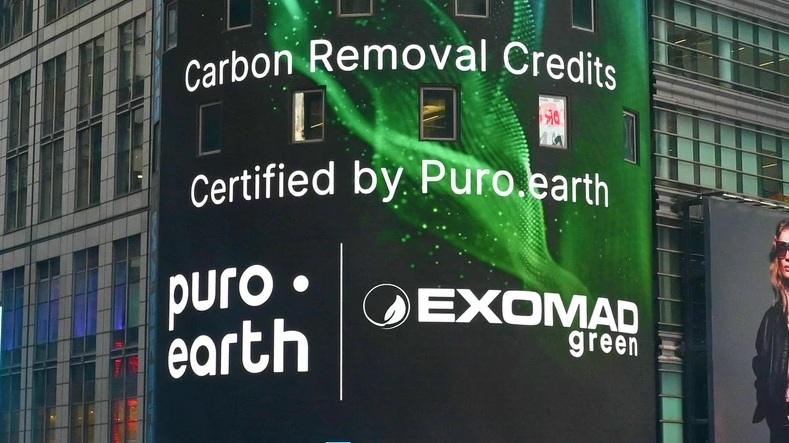
A critical component of this agreement is the certification of the credits. All credits generated under this deal are certified under the Puro.earth biochar methodology. Puro.earth, a leading carbon credit standard and registry for engineered carbon removal, provides the rigorous third-party verification necessary to give buyers confidence.
The Puro.earth standard requires a lifecycle assessment (LCA) that accounts for all emissions associated with the production and transport of biochar. It also mandates "permanence" requirements, ensuring the carbon remains sequestered for a minimum of 100 years. By adhering to these standards, Exomad Green ensures its credits are "institutional grade," suitable for use in ESG reporting and regulatory compliance frameworks.
Economic and Agricultural Impact in Bolivia
Beyond the climate benefits, the Exomad Green project provides significant socio-economic advantages to local communities in Bolivia. Once the biochar is produced, it is delivered to local farmers for use in agricultural soil improvement programs.
Biochar acts as a "soil sponge," increasing water retention, improving nutrient availability, and reducing the need for chemical fertilizers. In regions like the Chiquitania, where soil degradation and unpredictable rainfall patterns threaten food security, biochar serves as a tool for climate adaptation. This "circular" model—where forestry waste is transformed into an agricultural asset—ensures that the project creates local value, which is a key metric for many corporate carbon buyers focused on "beyond-carbon" co-benefits.
Leadership Perspectives on the Agreement
Diego Justiniano, CEO of Exomad Green, emphasized the importance of operational readiness in a market that has often been criticized for over-promising. "We’ve delivered over 320,000 tonnes, and this agreement puts that operational capacity into the market where buyers need it most—verified, near-term supply," Justiniano stated. "Not a future promise, but tonnes available today."
His sentiment was echoed by Michelle You, CEO of Supercritical, who highlighted the strategic balance of the carbon market. "Long-term offtakes and short-term spot purchases are equally important to building the market," You noted. "This agreement provides immediate access to high-quality, near-term supply from the leading biochar producer in the world."
The statements from both CEOs reflect a maturing industry where "delivery" is becoming the primary metric of success. As corporate buyers face increasing scrutiny over their climate claims, the ability to point to physical tons of carbon sequestered in soil provides a level of transparency that traditional forestry-based "offset" projects often lack.
Broader Implications for the Global Carbon Market
The Exomad-Supercritical deal arrives at a pivotal moment for the voluntary carbon market. Recent years have seen a flight to quality, as buyers move away from low-cost avoidance credits (such as protecting existing forests) toward high-cost, high-durability removal credits.
1. Price Stability and Market Liquidity
Large offtake agreements like this one help stabilize prices in the BCR market. By committing to 500,000 tons over three years, Supercritical provides a price signal that encourages other producers to enter the market and other buyers to lock in prices before supply tightens further.
2. Validation of Biochar as a Leading CDR Pathway
While Direct Air Capture (DAC) often receives more media attention, biochar is currently the most scalable and cost-effective form of permanent carbon removal. This deal reinforces the idea that biochar will likely be the "workhorse" of the CDR industry through 2030, providing the bulk of the permanent removals while other technologies continue to lower their cost curves.
3. Shift Toward "Ex-Post" Credits
The emphasis on "tonnes available today" marks a shift toward ex-post credits (credits issued after the removal has occurred) rather than ex-ante credits (promises of future removal). This reduces the "delivery risk" for corporate buyers, making carbon removal a more viable line item in corporate sustainability budgets.
Future Outlook: The Path to Gigaton Scale
As Exomad Green prepares to bring its third facility online, the company is positioning itself for even greater expansion. The scalability of the biochar model depends on the availability of biomass and the proximity of agricultural sinks. In South America, the potential for this synergy is vast.
For Supercritical, the challenge lies in continuing to vet and onboard new projects that meet their rigorous standards. As more companies set Science Based Targets (SBTi) that require the use of permanent removals to neutralize residual emissions, the demand for agreements of this magnitude is expected to grow exponentially.
The 500,000-ton agreement between Exomad Green and Supercritical is more than just a commercial transaction; it is a blueprint for how the carbon removal industry can scale. By combining industrial-scale production in the Global South with sophisticated market access in the Global North, these two companies are demonstrating that the tools to achieve significant, measurable carbon sequestration are already operational and ready for deployment.