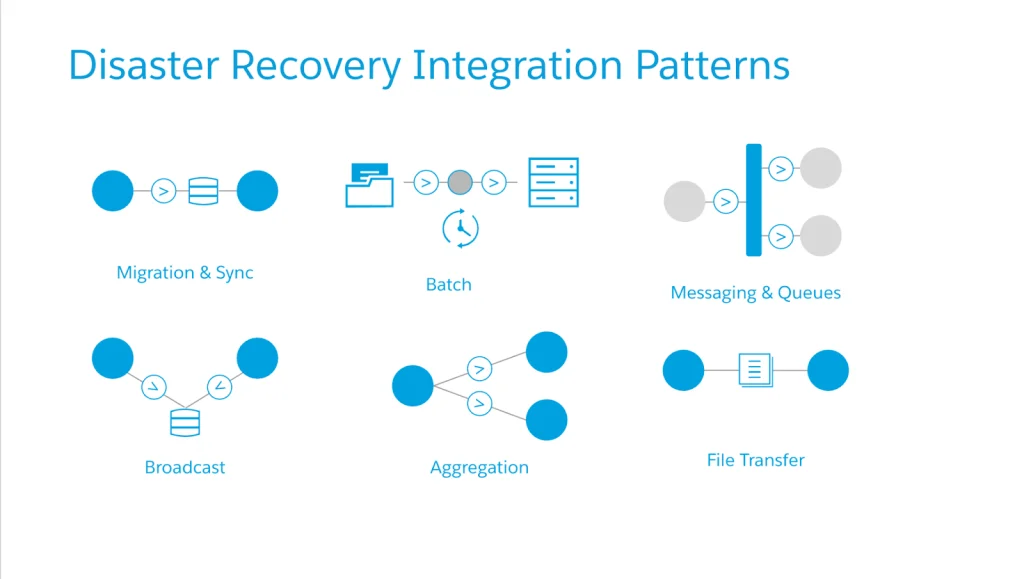
The global financial services sector is currently navigating an era of unprecedented volatility, where the transition from traditional banking to digital-first infrastructure has exposed institutions to a complex array of systemic risks. From the catastrophic global IT outage caused by a faulty security software update in July 2024 to the increasing frequency of climate-driven natural disasters and sophisticated state-sponsored cyberattacks, the question for financial leaders has shifted from whether a disaster will occur to how quickly the institution can resume operations when it does. As banks, credit unions, and insurance providers modernize their stacks through cloud transformation, the integration of robust Disaster Recovery (DR) and Business Continuity Planning (BCP) has evolved from a back-office IT concern to a primary regulatory and strategic mandate.
The Escalating Risk Profile of Modern Finance
The landscape of risk for financial institutions has expanded significantly beyond the traditional concerns of market fluctuations and credit defaults. Today, operational resilience is the cornerstone of institutional stability. The recent history of the industry is marked by "black swan" events that have tested the limits of digital infrastructure. For instance, the 2024 CrowdStrike incident demonstrated how a single line of faulty code could paralyze global payment systems, grounding flights and halting transactions for hours. Similarly, the rise in ransomware-as-a-service (RaaS) has made financial data a high-value target for digital extortion, where the recovery of encrypted data can take days or weeks if a proper backup and recovery strategy is not in place.
Furthermore, political upheaval and regional conflicts have introduced new variables into the disaster recovery equation. Financial institutions operating across borders must now account for the sudden loss of access to regional data centers due to geopolitical sanctions or physical infrastructure damage. Natural disasters, fueled by shifting global climate patterns, also pose a persistent threat to physical hardware and localized server farms. For a sector that serves as the circulatory system of the global economy, any significant downtime can trigger a domino effect, impacting consumer confidence, business liquidity, and overall economic stability.
The Regulatory Imperative: Beyond Voluntary Compliance
In response to these threats, global regulators have significantly increased their oversight of business continuity planning. In the United States, the Federal Deposit Insurance Corporation (FDIC) and the Securities and Exchange Commission (SEC) have moved toward more stringent requirements for data availability and disaster preparedness. The FDIC mandates that all insured institutions maintain a comprehensive DR strategy, often conducting rigorous audits to ensure that alternate processing sites are not only available but are capable of handling critical financial data in real-time.
Internationally, the introduction of the Digital Operational Resilience Act (DORA) in the European Union has set a new global benchmark. DORA requires financial entities to ensure they can withstand, respond to, and recover from all types of ICT-related disruptions and threats. Failure to meet these standards can result in heavy financial penalties, often reaching millions of dollars, and—perhaps more damaging—the imposition of public censures that erode market reputation.
Compliance frameworks such as the Payment Card Industry Data Security Standard (PCI DSS) and the Sarbanes-Oxley Act (SOX) also play a critical role. These regulations demand that transaction records be preserved with high integrity for audit purposes. In a disaster scenario, the loss of these records is not merely an operational failure but a legal breach that can lead to the revocation of banking licenses.

Key Metrics: Recovery Time Objective (RTO) and Recovery Point Objective (RPO)
A sophisticated disaster recovery strategy is built upon two foundational metrics: the Recovery Time Objective (RTO) and the Recovery Point Objective (RPO). These metrics define the "how fast" and "how much" of a recovery plan.
- Recovery Time Objective (RTO): This represents the maximum tolerable duration of downtime after a disaster occurs. For mission-critical banking services, such as real-time payment processing or ATM networks, the RTO is often measured in minutes or even seconds. For less critical internal administrative functions, the RTO might be extended to several hours.
- Recovery Point Objective (RPO): This refers to the maximum amount of data loss an institution can tolerate, measured in time. An RPO of zero means that no data loss is acceptable, requiring real-time synchronous data replication. In the financial sector, where a single missing transaction can lead to massive reconciliation errors, low RPOs are essential.
The alignment of these objectives determines the deployment model an institution chooses. A "Cold Site" offers a basic infrastructure but requires significant time to set up and restore data, making it unsuitable for critical services. A "Warm Site" maintains pre-configured hardware and periodically updated data, offering a middle ground. The gold standard, however, is the "Hot Site" or "Active-Active" configuration, where data is mirrored in real-time across geographically diverse locations, allowing for an almost instantaneous failover with zero data loss.
The Role of Integration and Cloud Transformation
As financial institutions migrate to the cloud to reduce the total cost of ownership (TCO) and increase agility, the role of integration platforms like MuleSoft’s Anypoint Platform has become pivotal. Modern disaster recovery is no longer just about backing up a database; it is about ensuring that the entire "application network"—the web of interconnected APIs and services—remains functional.
MuleSoft provides a portable runtime environment that can be deployed across on-premise servers, private clouds, and public clouds (such as AWS, Azure, or Google Cloud). This flexibility allows financial institutions to build a hybrid architecture where, if a primary cloud provider experiences a regional outage, workloads can be transparently shifted to a secondary provider or an on-premise data center. This "single pane of glass" approach to management allows IT teams to monitor high-availability settings and scalability requirements across multiple locations simultaneously, ensuring that mission-critical integrations remain resilient.
Data Protection and Geographic Diversity
A critical component of any DR strategy is geographic diversity. Relying on a single localized data center leaves an institution vulnerable to regional disasters such as floods, earthquakes, or power grid failures. By leveraging third-party colocation facilities or multi-region cloud environments, financial institutions can decouple their operations from physical location risks.
However, moving data between sites introduces its own set of risks. Data in transit is a prime target for interception. Therefore, a robust DR strategy must include end-to-end encryption and secure network tunnels to ensure that sensitive customer information remains protected during the replication process. The use of secure, connected application networks ensures that even during a failover, data integrity is maintained and compliance with privacy laws like GDPR or CCPA is not compromised.
The Economic and Reputational Impact of Failure
The financial cost of inadequate disaster recovery is staggering. Industry data from the IBM Cost of a Data Breach Report suggests that the average cost of a breach in the financial sector is significantly higher than the global average, often exceeding $5 million per incident when including lost business, detection, and escalation costs.

Beyond the immediate financial loss, the "reputation risk" mentioned by industry analysts is perhaps the most difficult to recover from. In an era where switching banks is easier than ever due to the rise of FinTech competitors and "open banking" initiatives, a prolonged outage can lead to a mass exodus of deposits. When customers lose confidence in a bank’s ability to provide access to their funds, the damage to the brand’s trust equity can be irreparable, leading to a long-term decline in market share and valuation.
Chronology of a Disaster Recovery Response
To understand the practical application of these strategies, one can look at the typical chronology of a disaster response in a mature financial institution:
- Detection (T+0): Automated monitoring systems detect a service interruption or a breach.
- Assessment (T+5 minutes): The Incident Response Team determines if the event qualifies as a "disaster" under the Enterprise Continuity Plan (ECP).
- Activation (T+10 minutes): The DR plan is triggered. Traffic is rerouted to secondary sites using global load balancers.
- Synchronization (T+15 minutes): Systems verify the integrity of the data at the recovery site, ensuring the RPO has been met.
- Communication (T+30 minutes): Internal stakeholders and regulators are notified of the failover, maintaining transparency.
- Restoration (T+2 hours to Days): While the business operates on the backup site, IT teams work to resolve the root cause at the primary site before eventually "failing back" to normal operations.
Future Outlook: Toward Autonomous Resilience
Looking forward, the financial industry is moving toward "autonomous resilience," where AI and machine learning are used to predict potential failures before they occur. Predictive analytics can identify patterns in network traffic or hardware performance that precede an outage, allowing for proactive shifting of workloads.
Despite these technological advancements, the human element remains vital. Only 20% of organizations currently report that their disaster recovery plans are fully integrated into their overall business continuity plans. This gap represents a significant vulnerability. True resilience requires a cultural shift within financial institutions, where disaster preparedness is viewed not as a checkbox for auditors, but as a core component of the value proposition to customers.
In conclusion, the increasing frequency of both manmade and natural disasters necessitates a sophisticated, multi-layered approach to disaster recovery. By combining high-availability architectures, geographic diversity, and flexible integration platforms like MuleSoft, financial institutions can protect their data, maintain compliance, and ensure that they remain operational even in the face of the unexpected. In the high-stakes world of global finance, the ability to recover is just as important as the ability to perform.