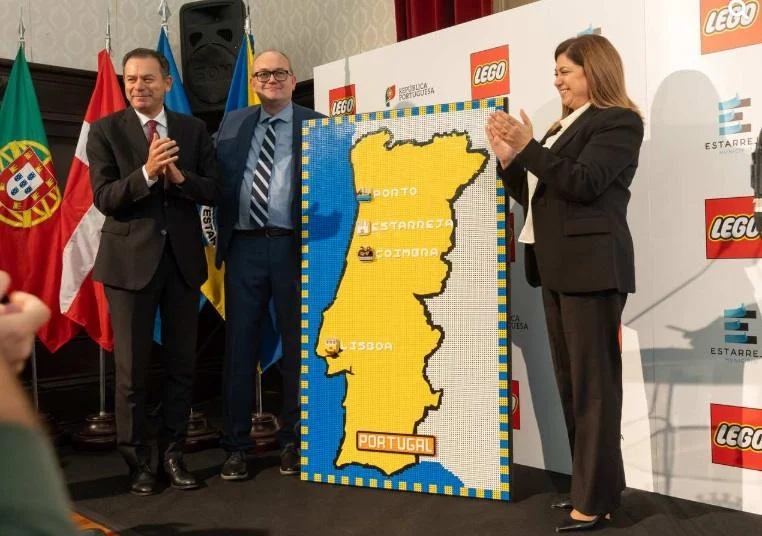
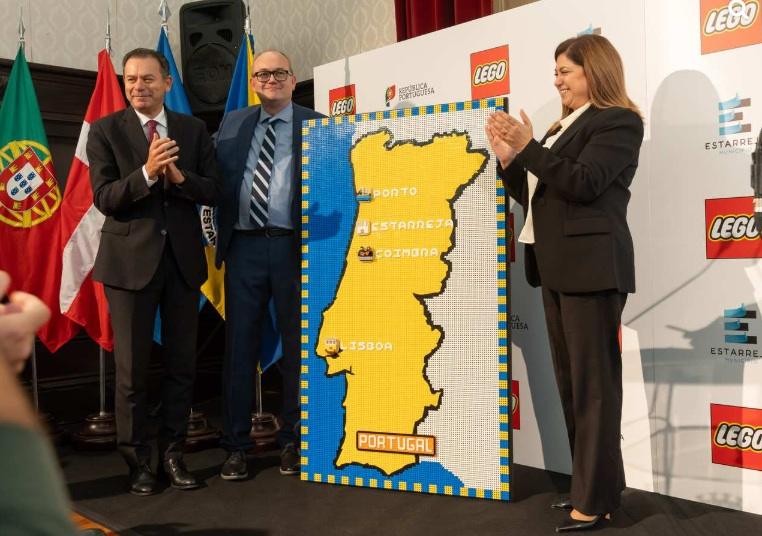
The LEGO Group, the world’s largest toy manufacturer by revenue, has officially announced a landmark investment of €1 billion to construct a state-of-the-art production facility in Estarreja, Portugal. This ambitious project, which represents one of the company’s most significant capital expenditures in recent history, is designed to serve as a global benchmark for sustainable manufacturing. Spanning 115,000 square meters, the facility is slated to break ground in the first half of 2027, with full operational capacity expected by 2030. This development signals a major shift in the company’s supply chain strategy, prioritizing carbon neutrality and advanced automation in response to the growing global demand for its iconic plastic bricks.
Strategic Context and Corporate Sustainability Goals
The decision to establish a major hub in Portugal is not an isolated development but rather the latest iteration of LEGO’s broader "Sustainability Ambition." For over a decade, the Danish toy giant has been under increasing pressure from consumers, regulators, and environmental advocates to decouple its massive production output from carbon-intensive processes. By 2026, the company had already begun to pivot its global manufacturing footprint to prioritize on-site renewable energy generation.
LEGO’s sustainability strategy is multifaceted, focusing on three core pillars: reducing carbon emissions, transitioning to sustainable materials, and circularity. The Estarreja facility is intended to synthesize these pillars into a single, high-efficiency ecosystem. By targeting LEED Platinum certification—the highest standard for sustainable building design—the company is positioning the factory to exceed standard regulatory requirements for industrial energy consumption.
The Roadmap to 2030: A Project Timeline
The timeline for the Estarreja plant is aggressive, reflecting the company’s urgency in meeting its internal climate targets.
- Q4 2026: Official announcement and finalization of site planning in Estarreja, Portugal.
- H1 2027: Scheduled commencement of construction activities, including land preparation and foundational work.
- 2027–2029: Multi-year construction phase involving the integration of renewable energy infrastructure, including on-site solar arrays and advanced battery storage systems.
- 2030: Planned commissioning of the facility and the beginning of phased production operations.
This timeline is designed to align with the company’s global goal of reducing absolute greenhouse gas emissions by 37% by 2032 compared to a 2019 baseline. The Portugal plant will play a pivotal role in this reduction by ensuring that a significant portion of European production is powered by carbon-free electricity from the moment the machines begin running.
Engineering the Future: Sustainability and Innovation
The Estarreja facility is set to be the most technologically advanced site in the LEGO Group’s global portfolio. According to internal technical specifications, the factory will source 100% of its energy needs from renewable sources. A critical component of this energy strategy is the reliance on on-site infrastructure, which is projected to provide approximately 80% of the plant’s total power consumption. This will be achieved through an extensive deployment of photovoltaic solar panels across the facility’s vast roof space and adjacent land, supported by sophisticated battery energy storage systems (BESS) to manage intermittency.
Beyond energy, the factory is engineered for water stewardship. Given the increasing scarcity of water resources in Southern Europe, the plant will feature a comprehensive rainwater harvesting, treatment, and recycling system. This "closed-loop" water strategy is designed to minimize the facility’s footprint on local municipal supplies. Furthermore, the surrounding landscape will be managed to foster biodiversity, with specific zones designated as pollinator habitats, demonstrating a holistic approach to environmental stewardship that goes beyond mere carbon accounting.
Leadership Perspective on Operational Resilience
Carsten Rasmussen, Chief Operations Officer at the LEGO Group, has emphasized that the project is as much about operational resilience as it is about sustainability. In a statement regarding the announcement, Rasmussen noted: "This new factory will be our most automated and advanced site, using innovative technologies to enhance productivity, sustainability, and operational resilience. Connected systems and platforms will work seamlessly together to support a highly responsive, future-ready operation."
Industry analysts observe that this investment reflects a growing trend among multinational corporations to "near-shore" manufacturing. By consolidating production closer to major European consumer markets, LEGO reduces its reliance on long-distance logistics, thereby lowering Scope 3 emissions associated with shipping and transport.
Global Context: A Trend of Decarbonized Manufacturing
The Portugal project follows a series of similar investments by the LEGO Group globally, illustrating a consistent trend of integrating renewable energy into its manufacturing base:
- Billund, Denmark: The company is currently developing a 116 MW solar park designed to match 100% of the electricity consumption of its global headquarters.
- Virginia, USA: The construction of the company’s first U.S.-based factory includes an 80-acre solar farm with over 40,000 solar panels, aimed at providing sufficient renewable energy for its stateside operations.
These projects serve as a blueprint for the Estarreja facility. By embedding energy generation into the design phase of new plants, LEGO is effectively mitigating the risk of future energy price volatility and insulating itself against the potential imposition of carbon taxes or tighter emissions regulations in the European Union.

Economic and Environmental Implications
The €1 billion investment is expected to provide a significant economic boost to the Estarreja region, creating jobs in high-tech manufacturing and engineering. However, the environmental implications are arguably more far-reaching. The transition to 100% renewable energy for a facility of this scale demonstrates that heavy industrial manufacturing does not necessarily have to come at the cost of environmental degradation.
From an ESG (Environmental, Social, and Governance) perspective, the project serves as a compelling case study for investors. As global institutional capital continues to flow into companies with verifiable sustainability metrics, LEGO’s move to transparently report and execute on these targets strengthens its position as a market leader. The focus on LEED Platinum status ensures that the building itself will be audited against rigorous third-party standards, providing stakeholders with confidence that the company’s "green" claims are substantiated by physical, measurable infrastructure.
Analysis: Challenges and Opportunities
While the vision for the Estarreja facility is clear, the company faces inherent challenges in the execution phase. Scaling renewable energy storage to account for 80% of factory operations requires sophisticated power management software and consistent, high-efficiency solar yield. Furthermore, the integration of automation into every facet of the supply chain requires a highly skilled workforce, necessitating local partnerships with educational institutions in Portugal to ensure a pipeline of talent capable of managing Industry 4.0 manufacturing environments.
Despite these challenges, the shift toward a decentralized, renewably-powered manufacturing model represents a hedge against the global energy transition’s uncertainties. By owning its power generation, LEGO is essentially becoming its own utility provider, a strategy that offers long-term financial stability and a clear competitive advantage in a market increasingly sensitive to corporate environmental impact.
Conclusion
The announcement of the Estarreja factory is a definitive statement that sustainability is no longer a peripheral corporate social responsibility effort but a core driver of modern industrial strategy. By committing €1 billion to a facility that emphasizes renewable energy, biodiversity, and advanced automation, the LEGO Group is setting a new standard for the toy industry and the broader manufacturing sector. As the global economy continues to grapple with the realities of climate change, the success of this project will likely influence future capital allocation decisions across the manufacturing landscape, proving that large-scale production and environmental stewardship can coexist through deliberate, long-term investment.