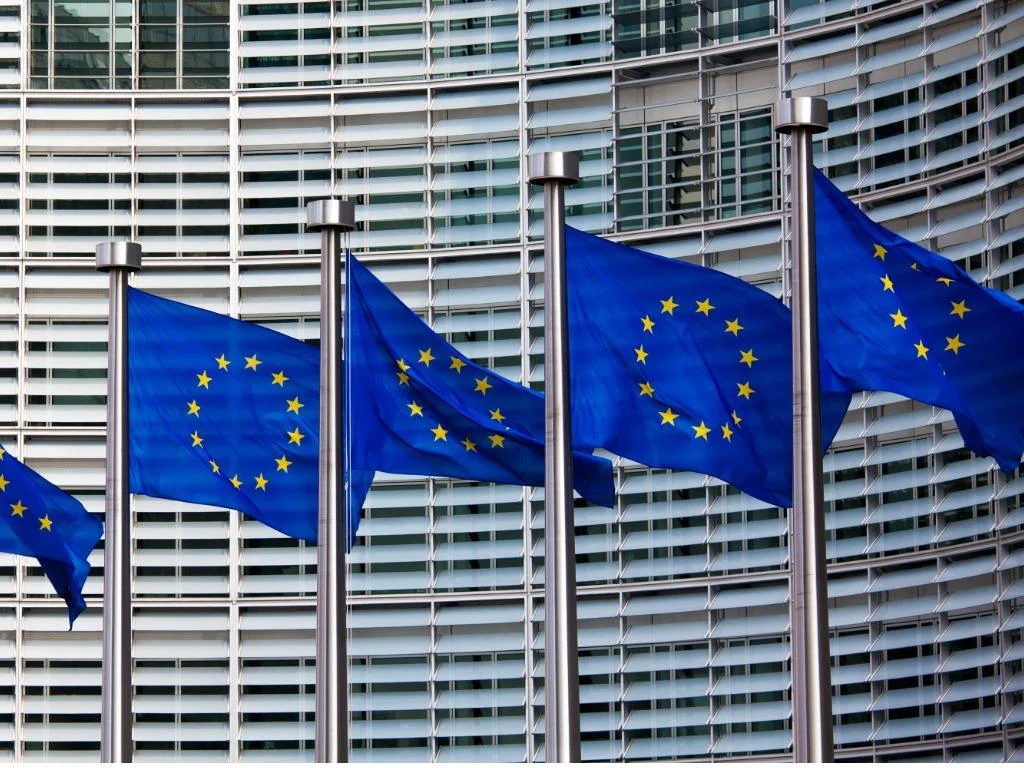
The European Commission has officially adopted two new delegated acts designed to streamline the reporting requirements for companies navigating the EU Taxonomy. This regulatory update marks a significant shift in the European Union’s approach to sustainable finance, aiming to reduce the administrative burden on corporations while ensuring that capital continues to flow toward environmentally beneficial projects. By refining the criteria for what constitutes a "sustainable" economic activity, the Commission seeks to bolster the integrity of the EU Taxonomy as the gold standard for global green investment frameworks.
The Evolution of the EU Taxonomy: A Brief Chronology
The EU Taxonomy, which entered into force in 2020, was established as a core component of the EU Sustainable Finance Framework. It serves as a rigorous classification system, providing a common language for investors and companies to define and identify activities that make a substantive contribution to environmental objectives.
- 2020: The Taxonomy Regulation is enacted, establishing the legal framework for defining sustainable economic activities.
- 2021: The first set of reporting requirements becomes operational, focusing on the climate mitigation and adaptation objectives.
- 2023–2024: Industry feedback begins to highlight significant challenges regarding the complexity of the "Do No Significant Harm" (DNSH) criteria and the excessive documentation required for compliance.
- 2025: The "Omnibus I" process is implemented, introducing initial simplification measures such as reducing the number of mandatory data points in reporting templates.
- November 2026: The European Commission adopts the latest delegated acts to further refine sector-specific criteria and simplify the DNSH assessment process.
- January 1, 2028: The new changes are scheduled to become applicable to corporate reporting.
Addressing the Compliance Burden
Since its inception, the EU Taxonomy has played a pivotal role in redirecting capital. Data indicates that between 2021 and 2026, approximately €1.2 trillion has been invested into taxonomy-aligned activities. However, despite this success, the framework has faced criticism from both small and large enterprises regarding the difficulty of implementation.
The European Commission’s decision to adopt these new delegated acts stems from extensive consultations with industry stakeholders, financial institutions, and environmental NGOs. Many participants reported that the previous requirements were often duplicative or misaligned with existing industrial standards. By removing these hurdles, the Commission aims to increase the adoption rate of taxonomy reporting among firms that were previously deterred by the sheer complexity of the process.
Key Revisions to Environmental and Climate Criteria
The new delegated acts introduce a suite of changes across several high-impact sectors, including forestry, manufacturing, energy, transport, and real estate. These revisions are designed to make the taxonomy more intuitive for corporate sustainability teams while maintaining the environmental rigor required to prevent greenwashing.
One of the most notable changes concerns the construction and real estate sector. Previously, meeting the criteria for building renovations was an arduous task that often required extensive energy audits. The new rules allow for building renovations to qualify as sustainable if they result in an improvement of two Energy Performance Certificate (EPC) classes. Furthermore, the renovation of individual homes and apartments is now exempted from certain circular economy and pollution prevention requirements, which had previously proved difficult to verify for small-scale residential projects.
In terms of climate risk, the Commission has introduced greater flexibility in how physical climate risk assessments are conducted. Mobile assets—such as those used in transport and logistics—are now exempt from certain climate risk assessments that were previously mandatory for stationary assets. Additionally, the process of demonstrating compliance with water and biodiversity protection criteria has been simplified; companies can now leverage existing environmental permits and regulatory filings to satisfy these requirements, rather than generating new, duplicative documentation.
The Significance of "Do No Significant Harm" (DNSH)
The DNSH principle is a cornerstone of the EU Taxonomy, requiring that an activity contributing to one environmental objective must not harm any of the others. While theoretically sound, in practice, the DNSH criteria were often cited as the most difficult aspect of compliance.
The new delegated acts seek to rationalize these requirements. By aligning the taxonomy with updated EU legislation and integrating technological advancements, the Commission has clarified how companies can demonstrate compliance without unnecessary friction. This alignment is expected to reduce the time and cost associated with sustainability reporting, allowing companies to focus on the actual environmental outcomes of their projects rather than the administrative minutiae of reporting.
Economic and Market Implications
The simplification of the EU Taxonomy is likely to have a profound impact on the European sustainable finance market. Financial analysts suggest that by lowering the barrier to entry for reporting, a larger number of companies will be able to demonstrate their sustainability credentials. This, in turn, is expected to expand the pool of available "green" assets for investment funds.
"The regulatory landscape is maturing," noted one market analyst familiar with the European green bond market. "By making the Taxonomy more practical, the Commission is essentially making it a more useful tool for investors. When the criteria are too complex, companies opt out. When they are clear, we see a surge in high-quality data that investors can actually use to make informed decisions."

However, critics and some environmental advocacy groups have expressed caution, warning that the simplification must not result in a "watering down" of environmental standards. The European Commission has emphasized that while the requirements are being streamlined, the fundamental ambition of the EU Green Deal—to achieve climate neutrality by 2050—remains unchanged. The revisions are framed as an optimization of the process, not a reduction in the environmental bar.
Official Procedures and Future Implementation
The road to implementation involves a structured legislative process. Following the adoption of the delegated acts, the documents have been submitted to the European Parliament and the Council of the European Union for a four-month scrutiny period. During this time, lawmakers will evaluate the revisions to ensure they remain consistent with the broader objectives of the Taxonomy Regulation.
Pending approval, the changes are set to take effect on January 1, 2028. This lead time is intended to give companies sufficient opportunity to adjust their reporting systems and align their internal processes with the new criteria.
Conclusion: A Strategic Pivot Toward Pragmatism
The adoption of these new delegated acts represents a strategic pivot for the European Commission. By moving from a highly theoretical and rigid framework toward one that acknowledges the practical realities of industrial operations, the Commission is positioning the EU Taxonomy for long-term viability.
As European companies prepare for the 2028 application date, the focus will shift toward integrating these simplified criteria into their annual reporting cycles. For investors, the result should be a more consistent, transparent, and accessible dataset that allows for better comparisons between companies and sectors. Ultimately, the success of these measures will be measured not just by the reduction in administrative costs, but by the continued acceleration of capital flow into projects that support a sustainable, circular, and carbon-neutral economy.
The European Commission’s commitment to refining the Taxonomy reflects a broader recognition that for sustainability policies to be successful, they must be implementable at scale. As the framework continues to evolve, the global community will be watching closely to see if this model of "simplified but rigorous" regulation can serve as a template for other jurisdictions looking to implement their own sustainable finance frameworks. The shift underscores a growing consensus: the transition to a sustainable future is not just an environmental imperative, but a structural economic transformation that requires clear, actionable, and consistent rules of the road.