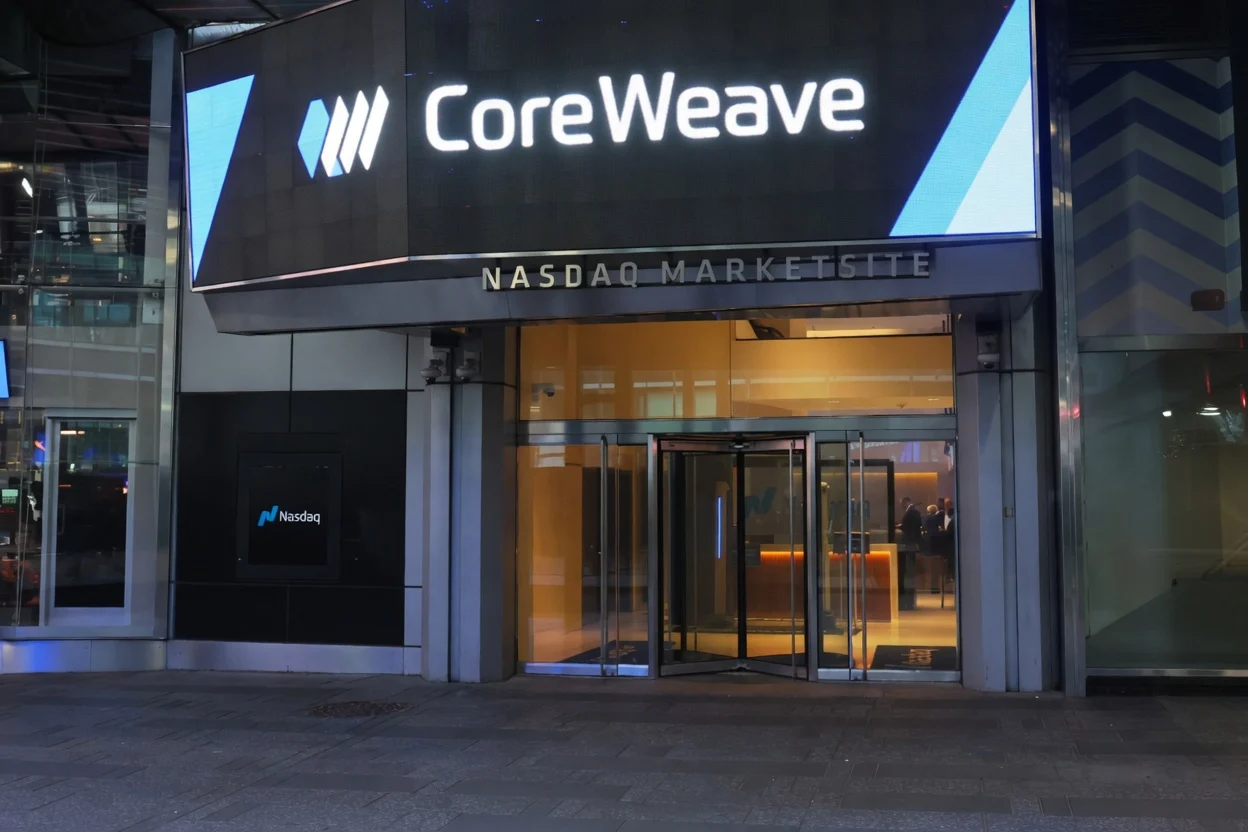
CoreWeave Inc. (CRWV) experienced a minor after-hours stock rebound, ticking up 2.33% to reach $43.56 following a modest 0.08% decline during regular trading hours to close at $42.57. This post-market movement comes on the heels of major financial developments revealing that the prominent artificial intelligence infrastructure provider is in active negotiations for a monumental $4.5 billion loan. The proposed financing vehicle, which is heavily backed by a lucrative service contract with tech titan Meta Platforms and secured by high-value Nvidia graphics processing units (GPUs), is designed to accomplish a dual objective for the capital-intensive firm: drastically expand its nationwide computing capacity while simultaneously securing significantly lower borrowing costs to manage its ballooning balance sheet.
Financial heavyweights Morgan Stanley and Mitsubishi UFJ Financial Group are currently spearheading the arrangement of this critical debt package. According to insiders familiar with the ongoing discussions, the banking syndicate could officially launch the loan sale as early as next week, though final negotiations regarding precise terms, covenants, and exact timing remain fluid. CoreWeave’s primary target is to secure at least $4 billion through this structured facility, providing the firm with fresh liquidity to fuel its aggressive physical expansion across North America.
Structure of the Proposed Financing Facility
The mechanics of the prospective $4.5 billion loan are tailored to match the unique capital expenditure cycles of the AI cloud computing sector. The financing is structured as a delayed-draw term loan, a mechanism that grants CoreWeave the flexibility to access capital in carefully managed stages rather than taking on the entirety of the debt burden at once. Under this arrangement, proceeds from the loan will be held securely in escrow until specific operational milestones are met, ensuring that funds are released exclusively for approved capital expenditures, most notably the acquisition of advanced hardware.
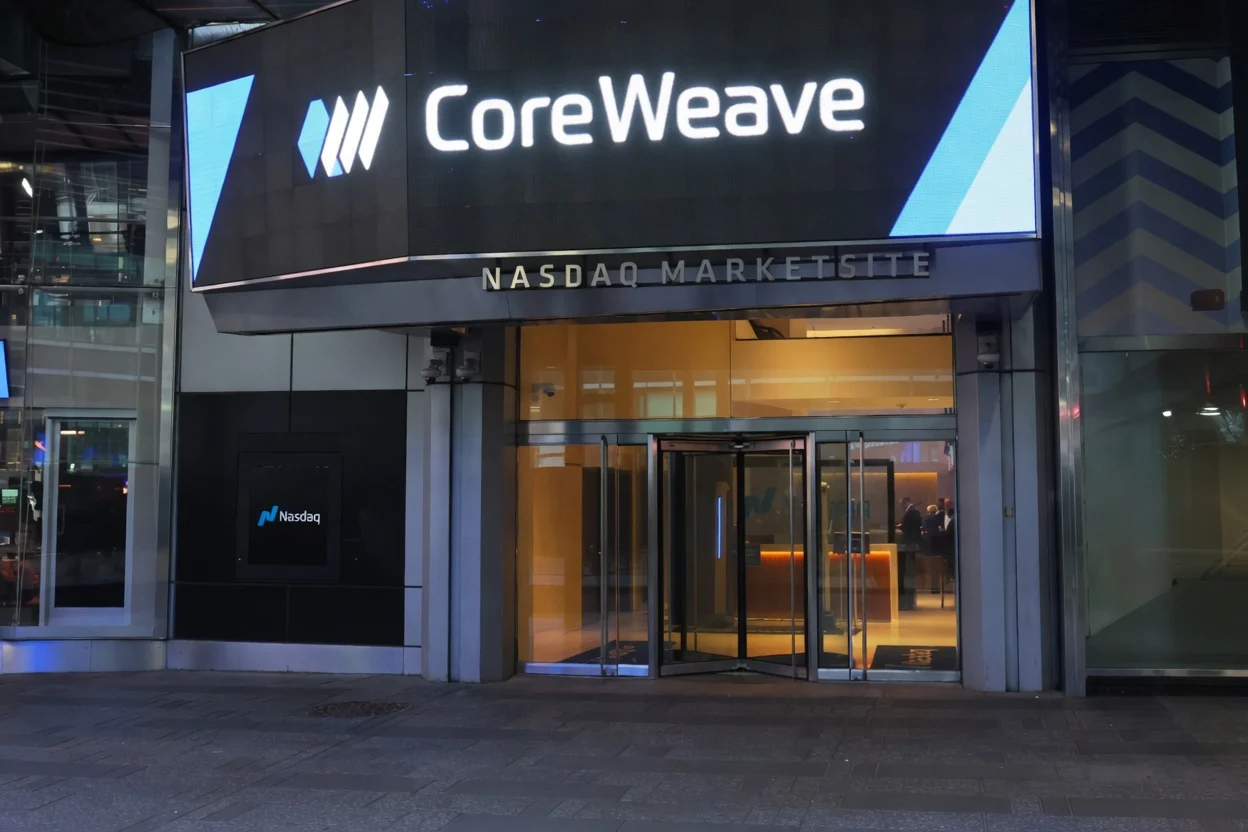
CoreWeave intends to channel a significant portion of these funds toward the procurement of cutting-edge Nvidia GPUs. These high-performance processors are earmarked for the company’s massive, state-of-the-art data center facility located in Dalton, Georgia—a strategic hub designed to scale up computational throughput for enterprise-level clients requiring dense AI training and inference capabilities.
What makes this particular credit facility distinct is its robust collateral package. By leveraging physical Nvidia hardware alongside guaranteed future revenues derived from its multi-year service agreement with Meta Platforms, the financing structure is engineered to achieve an investment-grade credit rating. This stands in stark contrast to CoreWeave’s corporate standing as a whole, which currently carries a speculative-grade rating from major credit agencies. By utilizing concrete customer contracts and tangible tech assets as collateral, the underwriting banks can mitigate perceived default risks, thereby passing the savings on to the borrower in the form of drastically reduced interest rates.
Mitigating the Burden of Escalating Debt Costs
The financial incentive for CoreWeave to secure this asset-backed loan becomes immediately clear when examining the broader credit landscape the company has navigated over the past year. The proposed credit facility carries an anticipated yield ranging between 7% and 7.5%. This pricing environment is remarkably favorable when compared against the 14% to 16% interest rates attached to CoreWeave’s unsecured debt issuance around the time of its most recent earnings call.
The stark disparity between these yields underscores the vital economic benefits of transitioning away from unsecured corporate borrowing toward asset-backed and customer-anchored financing models. In recent months, traditional debt markets have shown palpable anxiety regarding CoreWeave’s aggressive debt accumulation. The company’s 9% corporate bonds maturing in 2031 experienced a sharp sell-off, plunging to record lows and pushing their overall yield to an alarming 18%. This severe downward pressure on secondary bond markets reflected mounting investor skepticism regarding the firm’s long-term capacity to service its mounting liabilities amid a fiercely competitive and capital-hungry AI landscape.

Furthermore, indicators in the derivatives market have painted a challenging picture for the credit profile of high-growth AI infrastructure providers. Credit default swap (CDS) pricing associated with CoreWeave recently implied a notable statistical probability of default over a five-year horizon, underscoring why shifting toward lower-cost, asset-backed credit facilities has become an absolute operational imperative for executive leadership.
Rapid Expansion and the Trajectory of Total Liabilities
To fully understand CoreWeave’s current financial positioning, one must examine the staggering velocity at which the company has scaled its operations. Founded as a specialized cloud provider tailored to GPU-heavy workloads, CoreWeave has been forced to commit tens of billions of dollars to secure scarce hardware components and construct specialized, power-dense data centers capable of supporting generative AI training models.
The company’s balance sheet reflects this hyper-growth strategy. Total debt obligations expanded precipitously from approximately $21.4 billion in December 2025 to a staggering $46.9 billion by September 2026. This exponential increase in liabilities directly correlates with massive capital expenditures directed toward procuring advanced semiconductors and expanding localized data center real estate. While these investments have successfully positioned CoreWeave as an indispensable utility provider for Silicon Valley’s largest AI developers, they have concurrently subjected the firm’s financial architecture to intense scrutiny from institutional bondholders and equity analysts alike.
Management has explicitly recognized the necessity of stabilizing this debt trajectory. During its November 10 earnings conference call, executive leadership outlined a revised financial roadmap emphasizing disciplined capital allocation. Executives explicitly reaffirmed their strategic intent to pivot away from high-yield, unsecured debt issuances, choosing instead to rely on structured project financing, customer prepayments, and asset-backed credit facilities to fund future operational growth.

The Pivotal Role of the Meta Platforms Partnership
At the center of CoreWeave’s financing strategy lies its deep, expanding commercial relationship with Meta Platforms. As one of the world’s leading investors in artificial intelligence infrastructure, Meta utilizes CoreWeave’s specialized cloud infrastructure to power its expansive suite of machine learning models and consumer-facing AI features.
The economic scale of this partnership is immense. Computing capacity agreements between CoreWeave and Meta were valued at approximately $14.2 billion in 2025, a figure that projected outward to reach an estimated $21 billion by the close of 2026. This multi-billion-dollar revenue pipeline serves as the ultimate financial anchor, providing institutional lenders with the confidence required to underwrite massive debt facilities at reasonable interest rates.
This is not the first time CoreWeave has leveraged its relationship with Meta to optimize its capital structure. In March 2026, the company successfully closed an $8.5 billion loan backed heavily by its commitments with Meta. The prospective $4.5 billion credit facility represents a continuation of this calculated corporate strategy—transforming long-term enterprise software and computing contracts into tradable financial collateral. By treating guaranteed future cash flows from tier-one technology giants as balance sheet assets, CoreWeave has carved out a unique pathway to liquidity that bypasses the prohibitive costs of traditional corporate bond markets.
Industry Implications and Future Outlook
The broader implications of CoreWeave’s financial maneuvers extend far beyond the balance sheet of a single enterprise, offering a window into the evolving economics of the artificial intelligence boom. As the capital expenditure cycle for generative AI shifts from initial experimentation to enterprise-wide scaling, infrastructure providers are discovering that traditional venture capital and high-yield debt markets are insufficient to sustain their long-term growth trajectories.
By pioneering sophisticated asset-backed financing structures tied directly to customer service agreements and high-demand hardware like Nvidia GPUs, CoreWeave is establishing a new playbook for capital formation within the deep-tech sector. If Morgan Stanley and Mitsubishi UFJ Financial Group successfully syndicate the $4.5 billion loan in the coming weeks, it could trigger a broader trend across the industry, encouraging other data center operators and cloud providers to seek out similar structured financing solutions.
For CoreWeave itself, successfully closing this facility at the targeted 7% to 7.5% yield range would provide vital financial breathing room, sharply reducing annual interest expenses and allowing the firm to redirect capital toward technological innovation and geographic expansion. While negotiations regarding the final covenants and closing timeline remain ongoing, the market’s cautious optimism—evidenced by the post-market uptick in CRWV shares—suggests that investors recognize the transformative potential of securing lower-cost capital anchored by elite tech partnerships.