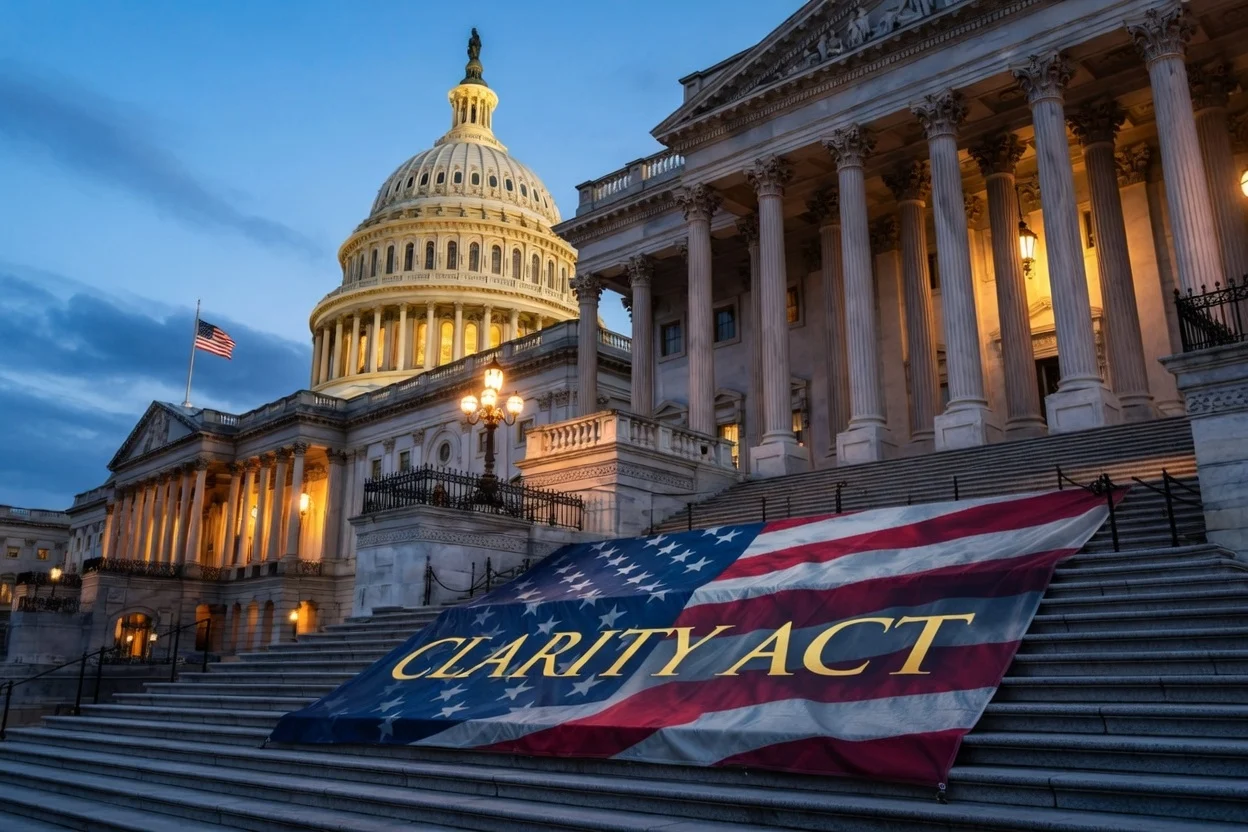
House Democratic lawmakers are currently engaged in preliminary internal discussions regarding a comprehensive cryptocurrency market structure bill intended to redefine regulatory jurisdiction, significantly expand consumer protections, and impose strict ethics limitations on federal officials. The discussions, which surfaced publicly following reports from industry journalist Eleanor Terrett on November 4, draw heavily upon previously stalled legislative efforts, including Representative Maxine Waters’ proposed amendments to the CLARITY Act and the Ethics-focused Stop TRUMP in Crypto Act.
As the legislative branch prepares for the incoming Congress following the recent midterm elections, these early-stage talks signal a potential strategic shift in how the Democratic caucus plans to approach digital asset regulation. While no official legislative text has been formally introduced or scheduled for a floor vote, the ongoing deliberations highlight a concerted effort to recalibrate the balance of power between the Securities and Exchange Commission (SEC) and the Commodity Futures Trading Commission (CFTC), while injecting rigorous consumer safeguards into an increasingly institutionalized digital asset economy.
Legislative Origins and the Evolution of the Waters Proposals
The core framework of the discussions centers on expanding Representative Maxine Waters’ Crypto Investor and Consumer Bill of Rights, which was initially introduced as a sweeping amendment package to the broader CLARITY Act in early 2025. Representative Waters, the ranking member of the House Financial Services Committee, designed her original proposals to establish rigorous baseline protections for retail cryptocurrency investors who have historically faced risks associated with unregulated or under-regulated centralized exchanges, platform insolvencies, and liquidity freezes.
Under the parameters of the earlier 2025 amendment, the proposed provisions sought to mandate strict consumer safeguards. These included guaranteeing customer access to withdrawals within a 24-hour window, establishing mandatory asset custody standards designed to protect client holdings in the event of platform bankruptcy, and prohibiting exchanges from trading ahead of customer orders—a practice commonly known as front-running. Furthermore, the provisions called for continuous 24/7 customer support infrastructure, mandatory insurance frameworks comparable to the Securities Investor Protection Corporation (SIPC) coverage enjoyed by traditional equities investors, and regular monthly reserve attestations verified by independent certified public accountants.
Despite these detailed consumer-focused proposals, the initial legislative path proved difficult. House records from 2025 indicated that a procedural motion to allow formal consideration of the Waters amendment failed by a narrow margin of eight votes to four, effectively blocking its inclusion in the broader measure at that time.
Legislative rules dictate that unfinished bills do not automatically carry over from one session of Congress to the next. Consequently, even though lawmakers spent months negotiating the language during previous sessions, proponents of the consumer bill of rights must reintroduce the provisions from scratch in the upcoming congressional term. Industry sources indicate that the current discussions among Democratic staffers aim to bundle these consumer-centric clauses with broader market structure guidelines to form a unified, comprehensive legislative vehicle.
Chronology of the CLARITY Act and Regulatory Stalemate
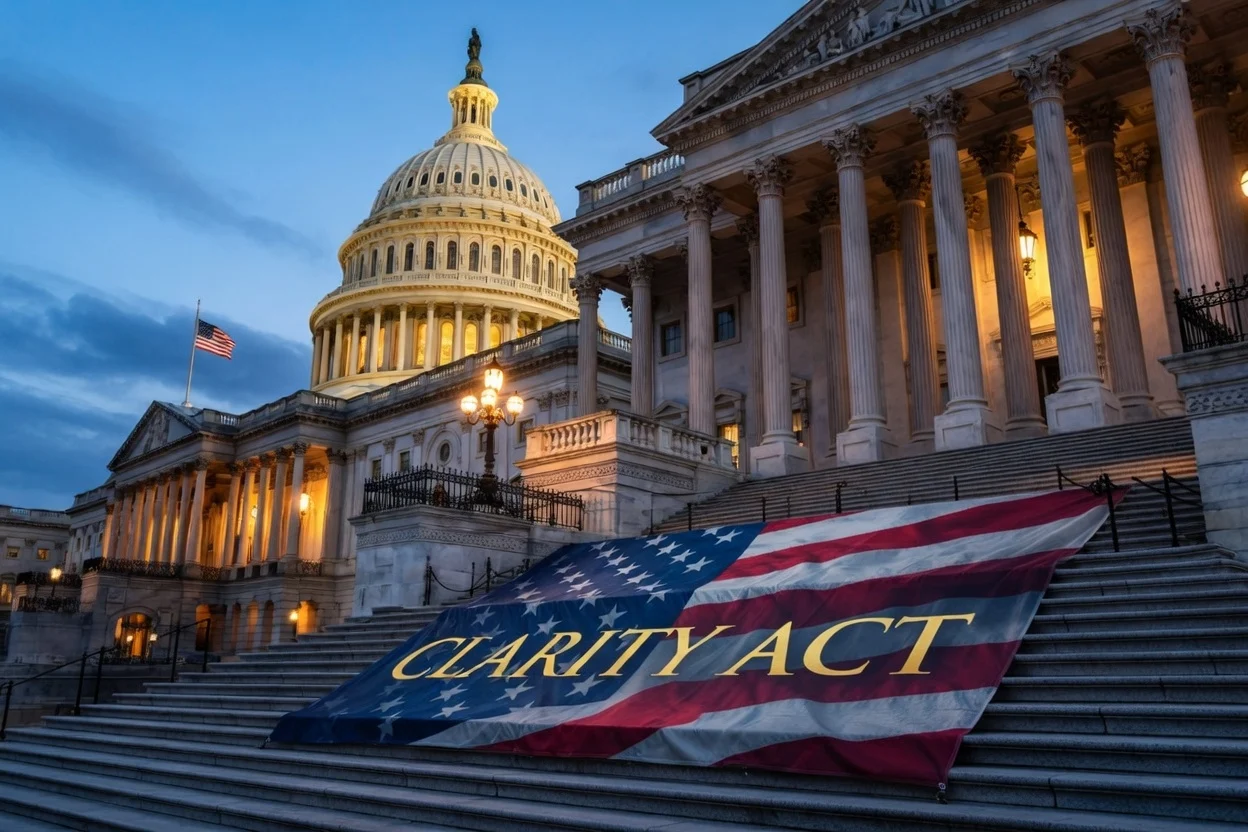
The broader conversation surrounding digital asset market structure has been defined by legislative gridlock throughout 2025 and 2026. The most notable vehicle for these discussions, the CLARITY Act, experienced a decisive setback on September 15, when a procedural cloture vote in the Senate failed to reach the required three-fifths supermajority.
The roll call recorded 49 votes in favor of advancing the legislation and 50 opposed. This crucial vote merely concerned opening the floor for formal debate and amendments, rather than a final vote on the passage of the bill itself. Nevertheless, the outcome left comprehensive federal crypto legislation in limbo and exposed deep partisan and inter-chamber divisions regarding how digital assets should be classified and regulated.
While the CLARITY Act stalled, federal regulatory agencies continued to adjust their posture independently. On November 2, SEC staff released updated guidance addressing network governance, decentralization criteria, and the specific circumstances that indicate central control over a blockchain system. The guidance attempted to draw clear distinctions between genuinely functioning, decentralized blockchain networks and those under the effective control of centralized developers or foundations. However, the agency explicitly noted that the document reflected staff views only, carried no formal legal force, and created no new binding legal obligations or compliance mandates for market participants.
Integrating Ethics Restrictions and the Stop TRUMP in Crypto Act
In addition to market structure and consumer protection, the emerging Democratic discussions reportedly incorporate strict ethics requirements targeting high-ranking federal officials. These provisions build upon the legislative history of the Stop TRUMP in Crypto Act, a bill introduced in May 2025 by Representative Waters alongside key committee Democrats.
The Stop TRUMP in Crypto Act was designed to prevent conflicts of interest by explicitly targeting cryptocurrency business ventures, promotional activities, and digital asset trading involving material nonpublic information. The scope of the earlier measure covered the President, the Vice President, members of Congress, and their immediate family members, reflecting growing concerns over the intersection of political power and private financial interests within the rapidly evolving digital asset sector.
While Terrett’s reports indicate that further ethics restrictions on federal officials remain a prominent component of the current House discussions, the precise scope and final wording of these provisions have not yet been finalized. Inclusion of such measures could introduce significant political friction, particularly given the executive branch’s veto power and the complex dynamics between congressional Democrats and the presidential administration.
Shifts in Congressional Power and SEC-CFTC Oversight Debate
The political backdrop for these legislative discussions shifted notably following the November congressional elections, which altered the balance of power within Capitol Hill. With incoming Democratic majorities or enhanced legislative leverage in key committees, party leaders gain substantial influence over hearing schedules, investigative priorities, and the introduction of primary bills.
A central point of contention in the emerging market structure discussions involves the division of regulatory authority between the SEC and the CFTC. While crypto industry advocates and Republican lawmakers have historically favored legislation that grants the CFTC primary oversight over digital asset spot markets—viewing the agency as more accommodating to innovation—the emerging Democratic framework leans toward bolstering SEC supervision. According to reports from industry insiders, Republican analysts and congressional observers have initially characterized the Democratic initiative as a "messaging bill," suggesting that the proposals may be designed to stake out a firm ideological position rather than secure immediate bipartisan passage.
Passing any comprehensive crypto market structure bill remains an uphill battle. The legislative process requires eventual bicameral compromise between the House and the Senate, followed by presidential assent. Even if congressional majorities successfully pass a package containing stringent oversight and ethics restrictions, President Donald Trump retains the constitutional authority to veto legislation, presenting a formidable barrier to provisions specifically aimed at executive branch financial activities.
Broader Economic and Market Implications
The ongoing policy debates in Washington carry substantial implications for the trajectory of the United States digital asset industry. Institutional participants, decentralized finance (DeFi) developers, and centralized exchanges are closely monitoring the legislative maneuvers, as the final statutory definitions of digital assets, regulatory jurisdictions, and compliance mandates will dictate operational costs and market access for years to come.
Analysts note that a framework heavily weighted toward SEC oversight could increase compliance burdens for token issuers and intermediaries, aligning digital asset markets more closely with traditional securities regulations. Conversely, advocates for consumer protection argue that without mandatory reserve attestations, bankruptcy protections, and stringent anti-fraud rules, retail investors remain unacceptably exposed to systemic shocks, platform insolvencies, and market manipulation.
As the next Congress prepares to convene, the debate over the crypto market structure bill is poised to serve as a primary battleground for economic policy, federal regulatory authority, and governmental ethics. Whether these preliminary discussions materialize into a cohesive, bipartisan statute or remain a defining statement of legislative priorities will depend heavily on the shifting dynamics between lawmakers, regulators, and the White House in the months ahead.