Mazama Energy, a Texas-based pioneer in the field of next-generation geothermal technology, has successfully closed a $135 million Series B funding round. This significant capital injection underscores the accelerating market confidence in "superhot" rock geothermal energy as a viable solution for the global energy transition. As utility companies and grid planners grapple with the dual challenges of rising electricity demand and the necessity for carbon-free baseload power, Mazama’s technology—designed to tap into extreme heat deep within the Earth’s crust—has positioned itself as a critical frontier in the quest for 24/7 renewable energy.
The Series B round was co-led by Centaurus Capital and Doerr Capital, with substantial participation from industry heavyweights including ConocoPhillips and Shell Ventures. Other contributors included SiteGround Capital, H. Barton Asset Management, and the Jeffrey and Marieke Rothschild Foundation, alongside returning early-stage backers Khosla Ventures and Gates Frontier. The influx of capital is earmarked for the commercialization of Mazama’s proprietary drilling and heat-harvesting systems, specifically facilitating "Project Ceres," a U.S. Department of Energy-backed initiative designed to scale horizontal well development.
The Evolution of Enhanced Geothermal Systems (EGS)
The geothermal sector has historically been constrained by geography, relying on naturally occurring hydrothermal reservoirs that are limited to specific tectonic regions. However, the emergence of Enhanced Geothermal Systems (EGS) has fundamentally shifted the paradigm. By creating man-made reservoirs through advanced drilling and hydraulic techniques, companies like Mazama can access heat in regions previously thought unsuitable for geothermal production.
Mazama Energy has distinguished itself by focusing on "superhot" rock—geological formations that reach temperatures exceeding 375°C (700°F). While traditional geothermal wells operate at significantly lower temperatures, usually below 200°C, superhot systems provide a vastly superior energy density. According to industry analysis, transitioning from conventional geothermal temperatures to the superhot regime can yield up to ten times the power output per well.
A Chronology of Innovation
The path to this $135 million milestone has been marked by a series of technical breakthroughs:
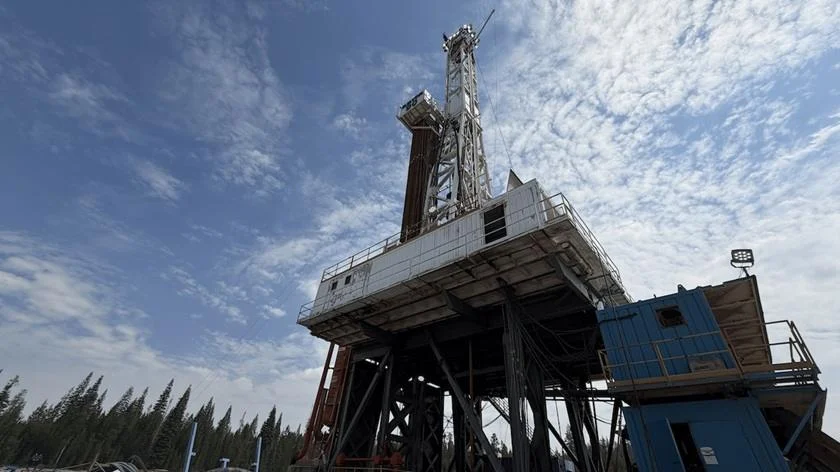
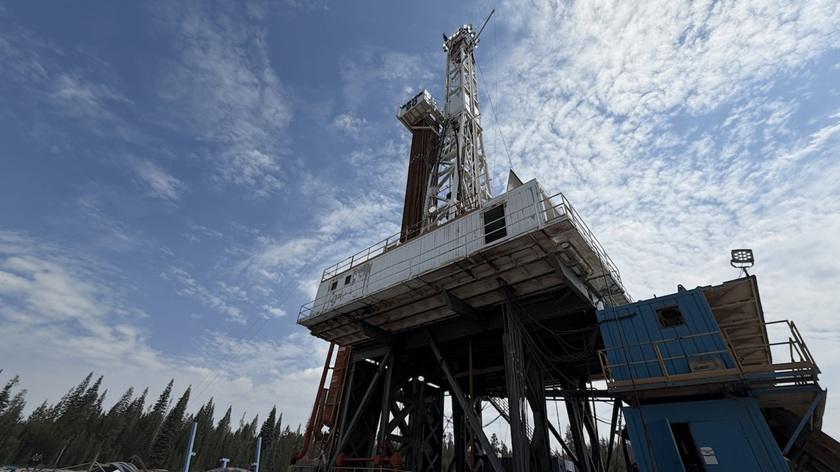
- 2025: Mazama Energy set an industry record for the hottest engineered geothermal system in history. Working at a test well in Newberry, Oregon, the company achieved temperatures of 629°F (331°C), proving that its drilling and reservoir diagnostics could survive the extreme conditions of the deep subsurface.
- 2026 (Early): The company initiated "Project Athena," a more ambitious drilling effort aimed at reaching depths and temperatures approaching 750°F (400°C). This project served as a proof-of-concept for the viability of deep-crust energy extraction.
- September 2026: The announcement of the $135 million Series B round, intended to propel the company into the commercialization phase.
- 2027 (Projected): The target date for "Project Ceres" to achieve 15 MWe of capacity per well, with active power generation being fed into the grid for the first time.
Technical Advantages and Resource Efficiency
One of the most compelling aspects of Mazama’s technology is its resource footprint compared to other renewables. As the transition to wind and solar continues to face hurdles related to land use, intermittency, and transmission constraints, geothermal offers a dense, reliable alternative.
Mazama claims that its approach requires 75% less water than conventional geothermal developments. Furthermore, the efficiency gains achieved by tapping into high-temperature, supercritical water allow for a drastic reduction in the number of wells required to sustain a commercial power plant—as much as an 80% reduction in drilling volume. By reducing the surface infrastructure footprint, the company aims to minimize the environmental impact of its projects, making it a more attractive proposition for permitting agencies and local communities.
Industry Context and the "Baseload" Imperative
The investment in Mazama follows a broader trend of institutional capital flowing into the geothermal space. The most notable indicator of this shift was the recent $1.9 billion IPO of Fervo Energy, which signaled to global markets that geothermal is ready to move beyond its niche status.
Grid operators are increasingly anxious about the "duck curve"—a phenomenon where solar generation peaks during the day but drops off just as evening demand surges. Unlike wind and solar, which require extensive and expensive battery storage to provide round-the-clock power, geothermal provides a constant, dispatchable baseload. As aging coal and gas plants are retired, the demand for high-capacity-factor clean energy is at an all-time high. Superhot geothermal sits at the nexus of this requirement, offering a source of power that is as stable as a fossil fuel plant but completely carbon-free.

Leadership and Investor Perspectives
Sriram Vasantharajan, CEO of Mazama Energy, emphasized that the recent funding is not merely about expansion but about integration. "At Newberry, we have demonstrated the critical pieces together: extreme-temperature drilling, reservoir creation and heat harvesting, at temperatures no other engineered geothermal system has achieved," Vasantharajan stated. "We are now driving that integrated system toward greater speed, efficiency and scale."
John Doerr, Chairman of Doerr Capital and Kleiner Perkins, underscored the importance of the technology in the broader climate context. "The world needs vastly more electricity, and we need to produce it cleanly and affordably," Doerr noted. "Superhot geothermal has the potential to be a major new source of 24/7 clean power, delivering dramatically more energy with less land, water, and infrastructure. Mazama is making that promise real."
Broader Economic and Environmental Implications
The implications of Mazama’s success are far-reaching. If the company can successfully scale its technology to multi-gigawatt levels, it could provide a blueprint for a global energy transition that relies less on the variability of weather and more on the consistent, inexhaustible heat of the Earth’s core.
However, the path to commercialization remains challenging. Drilling into superhot, high-pressure environments requires materials science innovations that can withstand intense corrosion and thermal stress. Furthermore, securing the regulatory approvals for large-scale geothermal exploration involves complex environmental reviews and public engagement.
Despite these hurdles, the diverse range of investors—from venture capital firms to major oil and gas players like ConocoPhillips and Shell—suggests a consensus that the technical risks are manageable. The involvement of oil and gas giants is particularly telling; these companies possess the expertise in deep-well drilling, reservoir engineering, and subsurface management that is directly transferable to superhot geothermal projects.

Strategic Roadmap for 2027 and Beyond
Looking ahead, Mazama’s strategic roadmap focuses on the validation of its 10 GWe resource potential at the Newberry site. By obtaining independent certification, the company intends to provide the level of certainty required by large-scale institutional lenders and utilities looking to sign long-term Power Purchase Agreements (PPAs).
Following the implementation of Project Ceres, the company plans to evaluate additional sites across the United States and international markets. The ability to export this technology to countries with high geothermal potential—such as those along the Pacific "Ring of Fire"—could transform the energy landscape for millions, providing a path to energy independence that does not rely on imported fuels.
As the company enters this next phase, the focus will shift from the laboratory and experimental drilling to industrial-scale manufacturing and deployment. With $135 million in the bank and a clear path toward the 2027 power generation targets, Mazama Energy has established itself as a bellwether for the next wave of clean energy infrastructure. Whether it can meet the aggressive timelines required to impact global emissions remains to be seen, but the backing of some of the world’s most influential investors provides the strongest possible vote of confidence in the viability of superhot geothermal power.